Cite this page
“Mongol Conquest of Baghdad — March 15, 1258.” thisDay, 15 Mar. 2026, thisday.info/blog/15-march-2026/. Accessed 3 Oct. 2026.
Mongol Conquest of Baghdad — March 15, 1258. (2026, March 15). thisDay. Retrieved October 3, 2026, from https://thisday.info/blog/15-march-2026/
“Mongol Conquest of Baghdad — March 15, 1258.” thisDay. March 15, 2026. Accessed October 3, 2026. https://thisday.info/blog/15-march-2026/.
What was Mongol Conquest of Baghdad?
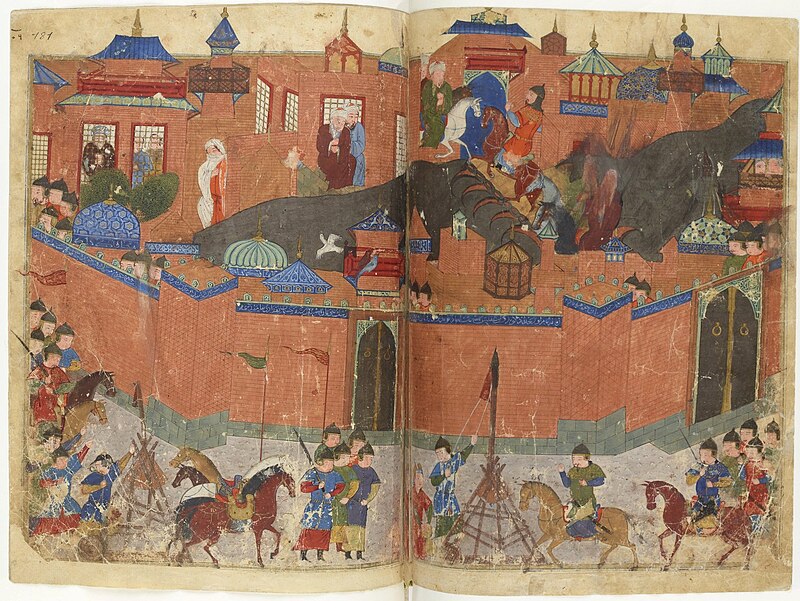
The Mongol conquest of Baghdad occurred on March 15, 1258, marking the end of the Abbasid Caliphate. It was a pivotal event in Middle Eastern history, led by Hulagu Khan.
Key facts about the Mongol Conquest of Baghdad
| Event | Mongol Conquest of Baghdad |
|---|---|
| Date | March 15, 1258 |
| Location | Baghdad, Iraq |
| Key Figure | Hulagu Khan |
| Significance | End of the Abbasid Caliphate, significant impact on Middle Eastern history |
| Legacy | Lasting impact on the political and cultural landscape of the Middle East |
People in this story
Overview
The Mongol conquest of Baghdad was a pivotal event in Middle Eastern history, occurring on March 15, 1258. The city, which had been the capital of the Abbasid Caliphate for over 500 years, was besieged by the Mongol forces led by Hulagu Khan. The siege lasted for several days, during which time the city's defenses were breached and the caliph, Al-Musta'sim, was killed.
The conquest of Baghdad was a result of the city's refusal to surrender to the Mongols. The caliph, Al-Musta'sim, had been warned of the Mongol approach, but he failed to take adequate measures to defend the city. The Mongols, on the other hand, were well-prepared and had a large army at their disposal.
The fall of Baghdad marked the end of the Abbasid Caliphate, which had been a dominant force in the Islamic world for centuries. The conquest also had a significant impact on the cultural and intellectual landscape of the Middle East, as many scholars and intellectuals were killed or displaced during the siege.
The Mongol conquest of Baghdad was part of a larger campaign of conquest by the Mongols, who had been expanding their empire for several decades. The conquest of Baghdad was a significant milestone in this campaign, as it marked the end of a major Islamic power and paved the way for further Mongol expansion in the Middle East.

Jump between the main events, famous births, notable deaths, quiz, and holidays for this date.
Eyewitness Accounts
The conquest of Baghdad was documented by several contemporary historians, including Ibn al-Athir and Rashid-al-Din Hamadani. According to these accounts, the siege of Baghdad was a brutal and devastating event, during which many civilians were killed or displaced.
The historian Ibn al-Athir wrote that the Mongols 'killed everyone they found, men, women, and children, and they spared no one.' He also noted that the city was plundered and many of its inhabitants were taken prisoner.
The reliability of these sources is generally accepted by historians, although some have questioned the accuracy of certain details. Nonetheless, these accounts provide a vivid picture of the conquest of Baghdad and its impact on the city and its inhabitants.
"The Mongols 'killed everyone they found, men, women, and children, and they spared no one.'"
Aftermath
The immediate aftermath of the conquest of Baghdad was marked by widespread destruction and chaos. Many of the city's inhabitants were killed or displaced, and the city's infrastructure was severely damaged. The Mongols also plundered the city, taking many of its treasures and artifacts.
In the medium term, the conquest of Baghdad had a significant impact on the political landscape of the Middle East. The end of the Abbasid Caliphate created a power vacuum, which was filled by various regional powers and dynasties. The Mongols also established their own administrative systems in the region, which had a lasting impact on the governance and politics of the Middle East.
In the long term, the conquest of Baghdad marked a significant turning point in Middle Eastern history. The end of the Abbasid Caliphate marked the end of a major Islamic power, and the beginning of a new era of regional fragmentation and competition. The conquest also had a lasting impact on the cultural and intellectual landscape of the Middle East, as many scholars and intellectuals were killed or displaced during the siege.
Legacy
The Mongol conquest of Baghdad on March 15, 1258, was a pivotal event in Middle Eastern history, marking the end of the Abbasid Caliphate and the beginning of a new era of regional fragmentation and competition. The conquest had a significant impact on the cultural and intellectual landscape of the Middle East, as many scholars and intellectuals were killed or displaced during the siege.
The conquest of Baghdad also had a lasting impact on the politics and governance of the Middle East, as the Mongols established their own administrative systems in the region. The conquest marked a significant turning point in Middle Eastern history, and its legacy can still be seen today.
As we reflect on the Mongol conquest of Baghdad, we are reminded of the complexities and challenges of human history. The conquest was a brutal and devastating event, but it also marked the beginning of a new era of cultural and intellectual exchange between East and West.
Our Take: What Went Right & What Went Wrong
What Went Right
- Effective Military Strategy: The Mongols' military strategy was effective in breaching the city's defenses and capturing the caliph. Their use of siege engines and cavalry was well-coordinated and ultimately led to the fall of the city. This strategy has been studied by military historians and strategists for centuries.
- Administrative Efficiency: The Mongols established an efficient administrative system in the region, which allowed them to govern the conquered territories effectively. This system was based on the principles of meritocracy and fairness, and it helped to maintain stability and order in the region.
- Cultural Exchange: The Mongol conquest of Baghdad also facilitated cultural exchange between East and West. Many scholars and intellectuals were able to travel and exchange ideas, which helped to spread knowledge and learning throughout the region.
What Went Wrong
- Brutal Violence: The Mongol conquest of Baghdad was marked by brutal violence and destruction. Many civilians were killed or displaced, and the city's infrastructure was severely damaged. This violence was unnecessary and had a lasting impact on the city and its inhabitants.
- Lack of Mercy: The Mongols showed little mercy to the city's inhabitants, killing many of them and taking others prisoner. This lack of mercy was a hallmark of the Mongol conquests, and it had a profound impact on the psychology and culture of the region.
- Destruction of Cultural Heritage: The Mongol conquest of Baghdad also resulted in the destruction of many cultural and historical artifacts. Many of the city's libraries and museums were destroyed, and many of its scholars and intellectuals were killed or displaced. This destruction of cultural heritage was a significant loss for the region and the world.
- Long-term Instability: The Mongol conquest of Baghdad also created long-term instability in the region. The end of the Abbasid Caliphate created a power vacuum, which was filled by various regional powers and dynasties. This instability had a lasting impact on the politics and governance of the Middle East.
We think that the Mongol conquest of Baghdad is a reminder of the complexities and challenges of human history. The conquest was a brutal and devastating event, but it also marked the beginning of a new era of cultural and intellectual exchange between East and West. As we reflect on this event, we are reminded of the importance of understanding and learning from the past, in order to build a better future for all. The legacy of the Mongol conquest of Baghdad can still be seen today, and it serves as a reminder of the power of human ingenuity and resilience.