
People in this story
Explore this event
 The wider storyWhat Happened During Krakatoa’s Final Stage Before August 27?An analysis of the final paroxysmal stage of the 1883 Krakatoa eruption, tracing the sequence from early Strombolian activity to the catastrophic collapse that generated the loudest sound in recorded history.Read the full history
 Key facts about the 1883 eruption of Krakatoa
| Event | Krakatoa begins final paroxysmal stage |
|---|---|
| Date | August 26, 1883 |
| Location | Sunda Strait, Indonesia |
| Key Figure | A large crater approximately 900 metres (3,000 ft) in diameter formed, with a cavity from which issued plumes of steam |
| Source Detail | The volcanic island of Krakatoa is located in the Sunda Strait. |
| Confirmed Outcome | The eruption lasted more than five months. |



First Reports From the Scene

Historical records confirm that the eruption of Krakatoa began its final paroxysmal stage in August eighteen eighty three, following months of increasing volcanic activity. Strombolian activity started on May twentieth, with steam venting regularly from the Perboewatan cone. Observers noted that ash reached high altitudes and explosions were audible in distant cities. The third explosion of that day, at ten oh two a.m., produced the loudest sound in history. The acoustic wave was heard in Perth and Rodrigues. Additional seismic activity was reported until February eighteen eighty four, though later reports were dismissed by investigator Rogier Verbeek.
The chronicle of the Krakatoa eruption details a progression from initial steam venting to catastrophic collapse. Early reports from May described fine white dust covering the islands and energetic explosions hurling pumice against the wind. A large crater formed, issuing plumes of steam. The acoustic pressure wave circled the globe more than three times. At least thirty six thousand four hundred seventeen deaths are attributed to the eruption and resulting tsunamis. Significant effects were felt worldwide. Rogier Verbeek investigated the eruption, dismissing reports after October eighteen eighty three. The source confirms the location in the Sunda Strait, then part of the Dutch East Indies.
Timeline: the road to Krakatoa and its aftermath
- 1880 Earthquake damaged a lighthouse in the Australian Northern Territory
- May 20, 1883 Strombolian activity began on the volcanic island of Krakatoa
- May 26, 1883 Excursion party reported fine white dust and explosions from Perboewatan
- August 26, 1883 Krakatoa began its final paroxysmal stage
- August 27, 1883 Most significant eruption destroyed over 70 percent of the island
- February 1884 Additional seismic activity was reported until this date
Rescue, Response, and Fallout

The immediate aftermath of Krakatoa began as soon as events on August 26, 1883 were over. The immediate consequences of the catastrophic eruption extended far beyond the physical destruction of the island itself, creating a global phenomenon that was recorded in scientific literature. This sound was heard in Perth, Western Australia, which is located three thousand one hundred ten kilometers away from the source. It was also audible in Rodrigues, near Mauritius, at a distance of four thousand eight hundred kilometers. These reports highlight the extraordinary reach of the volcanic activity. The widespread nature of these effects required careful documentation and analysis by contemporary observers who sought to understand the scale of the disaster.
Following the main eruptive phase, seismic activity continued to be reported in the region until February eighteen eighty four. However, the validity of these later reports was subject to scrutiny by investigators. Rogier Verbeek conducted a subsequent investigation into the eruption to determine the accuracy of the ongoing seismic claims. This investigative work provided a definitive endpoint to the recorded seismic events associated with the Krakatoa eruption, distinguishing between genuine activity and potential misinterpretations of later tremors. On 27 August, the island had its most significant eruption, which destroyed over 70% of the island and its surrounding archipelago, the island collapsing into a caldera.
The Questions the Disaster Left Behind

The destruction of over seventy percent of the island and its collapse into a caldera marked a dramatic geological transformation. The volcanic explosivity index of six underscores the intensity of the event, which remains one of the deadliest in recorded history. This sound was heard thousands of kilometers away, demonstrating the far-reaching effects of the eruption. The event serves as a critical case study in understanding the power of volcanic forces and their ability to influence global conditions. The detailed records of the eruption provide valuable insights into the mechanisms of such catastrophic events.
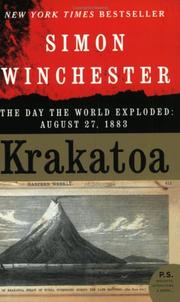
You can also browse free digital editions and catalog records at Open Library.
Analysis: 1883 eruption of Krakatoa
What the evidence supports and leaves unresolved
What the record supports
- Precise Acoustic Documentation: The third explosion at 10:02 a.m. remains the loudest known sound in history. It was heard 3,110 kilometers away in Perth, Western Australia, and 4,800 kilometers away in Rodrigues near Mauritius.
- Clear Chronological Progression: In the 1883 eruption of Krakatoa source record, the record effectively outlines the chronological development of the eruption, starting with strombolian activity on May 20 and steam venting from the Perboewatan cone. It details the formation of a large crater, the quietening of initial violence, and the subsequent gain in strength by June 19. This step-by-step documentation of seismic and eruptive phases provides a coherent narrative of the geological events leading up to the final paroxysmal stage in August.
- Investigative Verification of Timeline: The source highlights the role of Rogier Verbeek in investigating the eruption and dismissing reports of seismic activity after October 1883. This specific action by Verbeek helps to establish a definitive endpoint for the significant volcanic events, distinguishing between genuine activity and later misinterpretations. This investigative detail adds credibility to the timeline and clarifies the duration of the eruption's primary phase.
Limits and unresolved questions
- Limited Casualty Context: While the source states that at least 36,417 deaths are attributed to the eruption and tsunamis, it does not provide a detailed breakdown of how these casualties occurred or the specific locations most affected. The lack of granular data on the human toll limits the ability to fully understand the distribution of the disaster's impact across the Dutch East Indies and surrounding regions.
- Ambiguous Early Phase Details: In the 1883 eruption of Krakatoa source record, the source mentions that eruptions quietened after initial violence but does not specify the exact duration or intensity of this quiet period before the strength gained again on June 19. This gap in the chronological record leaves some ambiguity regarding the precise nature of the volcanic activity during the interim weeks, making it difficult to fully reconstruct the day-to-day progression of the early phase.
- Missing Global Effect Specifics: The record notes that significant additional effects were felt worldwide in the days and weeks after the eruption but does not elaborate on what these specific effects were. Without details on atmospheric changes or climate impacts, the full extent of the worldwide consequences remains unclear beyond the acoustic and seismic data.
This entry highlights the beginning of the final paroxysmal stage on August 26, 1883. The source provides precise data on acoustic reach and the volcanic explosivity index. Rogier Verbeek's investigation adds historical verification to the timeline. The record lacks detailed information on specific global effects beyond sound waves and the exact distribution of casualties.
Evidence Map: How We Checked the Central Claim
What the sources verify and how they were used
This comparison separates the event page selected for the account from the independently verified page used to corroborate it.
Central claim checked: The 1883 eruption of Krakatoa begins its final, paroxysmal, stage.
| Direct source | Verification role | Coverage |
|---|---|---|
| 1883 eruption of Krakatoa · Wikipedia Accessed 2026-08-26 | Selected event record | Supports the central claim shown above. |
| The eruption of Krakatoa, and subsequent phenomena : Royal Society (Great Britain). Krakatoa Committee : Free Download, Borrow, and Streaming : Internet Archive · archive.org Accessed 2026-08-26 | Independent corroboration | Supports the central claim shown above. |
You Might Also Like


What caused the 1883 eruption of Krakatoa?
The lead-up included Earthquake damaged a lighthouse in the Australian Northern Territory; Strombolian activity began on the volcanic island of Krakatoa; Excursion party reported fine white dust and explosions from Perboewatan.
Key figures included By W.J.L. Wharton.
In the aftermath: Most significant eruption destroyed over 70 percent of the island; Additional seismic activity was reported until this date.
The third explosion at 10:02 a.m.