
Short answer
What was The Komagata Maru Incident - March 8, 1914?
The Komagata Maru Incident - March 8, 1914 took place on March 8, 1914 in Vancouver, Canada.
EventKomagata Maru Incident
DateMarch 8, 1914
LocationVancouver, Canada
Key FigureGurdit Singh
SignificanceRacist immigration policies in Canada
LegacyImportant milestone in the fight against racism in Canada
Did You Know?
Overview

The Komagata Maru Incident was a pivotal event in Canadian history that took place on March 8, 1914. The incident involved a ship called the Komagata Maru, which was carrying 376 Indian immigrants, mostly Sikhs, who were seeking a better life in Canada. However, when the ship arrived in Vancouver, the immigrants were denied entry due to the Continuous Passage regulation, which was designed to keep out immigrants from India.
The Continuous Passage regulation was a law that required immigrants to come to Canada by continuous journey from their country of origin, without stopping at any other port. However, there were no direct ships from India to Canada, making it impossible for Indians to meet this requirement. The regulation was clearly designed to keep out immigrants from India, and it was enforced strictly by the Canadian authorities.
When the Komagata Maru ship arrived in Vancouver, the immigrants on board were not allowed to disembark. The ship was forced to stay in the harbor for several weeks, during which time the immigrants were not provided with adequate food or water. The situation became increasingly desperate, and the immigrants began to protest and demand that they be allowed to enter Canada.
The Komagata Maru Incident was widely reported in the media at the time, and it sparked widespread outrage and protests in India and among the Indian diaspora in Canada. The incident was seen as a clear example of racism and discrimination, and it highlighted the need for greater equality and justice in Canadian society.





Eyewitness Accounts
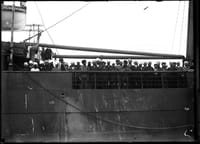
One of the most detailed accounts of the Komagata Maru Incident comes from the ship's captain, Gurdit Singh. In his diary, Singh describes the harsh conditions on board the ship and the desperate situation of the immigrants. He also describes the racist attitudes of the Canadian authorities, who seemed determined to keep the Indians out of Canada.
Another account of the incident comes from a Canadian journalist who was present in Vancouver at the time. The journalist describes the scene in the harbor, where the Komagata Maru ship was anchored, and the desperate immigrants on board. He also describes the protests and demonstrations that took place in Vancouver, as Indians and other supporters demanded that the immigrants be allowed to enter Canada.
Historians have widely accepted the accounts of Gurdit Singh and other eyewitnesses as accurate descriptions of the Komagata Maru Incident. However, some details of the incident are still disputed, and there are different interpretations of the events that took place. Nevertheless, the incident is widely recognized as a significant event in Canadian history, and it continues to be studied and remembered today.
"We were treated like animals, not human beings."
Aftermath
The immediate aftermath of the Komagata Maru Incident was marked by widespread outrage and protests in India and among the Indian diaspora in Canada. The incident was seen as a clear example of racism and discrimination, and it highlighted the need for greater equality and justice in Canadian society. In the weeks and months that followed, there were numerous protests and demonstrations in Vancouver and other cities, as Indians and other supporters demanded that the immigrants be allowed to enter Canada.
In the medium term, the Komagata Maru Incident led to significant changes in Canadian immigration policy. The incident highlighted the need for more equitable and just policies, and it led to the eventual repeal of the Continuous Passage regulation. The incident also led to greater awareness and recognition of the contributions of Indian immigrants to Canadian society, and it paved the way for greater diversity and inclusion in Canada.
In the long term, the Komagata Maru Incident has been recognized as a significant milestone in the fight against racism in Canada. The incident has been the subject of numerous books, films, and documentaries, and it continues to be studied and remembered today. In 2016, the Canadian government officially apologized for the incident, recognizing the harm and injustice that it caused to the Indian immigrants and their families.
Legacy
The Komagata Maru Incident was a pivotal event in Canadian history that highlighted the need for greater equality and justice in Canadian society. The incident was a clear example of racism and discrimination, and it led to significant changes in Canadian immigration policy. Today, the incident is recognized as a significant milestone in the fight against racism in Canada, and it continues to be studied and remembered as an important part of Canadian history.
The Komagata Maru Incident is also relevant to the modern world, as it highlights the ongoing struggles of immigrants and minorities in Canada and around the world. The incident shows the importance of standing up against racism and discrimination, and it highlights the need for greater diversity and inclusion in our societies. As we reflect on the Komagata Maru Incident, we are reminded of the importance of treating all people with dignity and respect, regardless of their race, ethnicity, or national origin.
As we look back on the Komagata Maru Incident, we are struck by the courage and resilience of the Indian immigrants who were denied entry into Canada. Despite the harsh conditions and racist attitudes they faced, they continued to fight for their rights and dignity. Their story is a powerful reminder of the importance of standing up against injustice and fighting for what is right, even in the face of overwhelming opposition.
Our Take: What Went Right & What Went Wrong
What Went Right
- Courage of the immigrants: The Indian immigrants on board the Komagata Maru ship showed remarkable courage and resilience in the face of overwhelming opposition. Despite the harsh conditions and racist attitudes they faced, they continued to fight for their rights and dignity. Their courage and determination are an inspiration to us all, and they remind us of the importance of standing up against injustice and fighting for what is right.
- Changes in immigration policy: The Komagata Maru Incident led to significant changes in Canadian immigration policy, including the eventual repeal of the Continuous Passage regulation. These changes have had a lasting impact on Canadian society, and they have paved the way for greater diversity and inclusion in Canada. Today, Canada is recognized as a leader in promoting diversity and inclusion, and the Komagata Maru Incident played an important role in shaping this aspect of Canadian identity.
- Official apology: In 2016, the Canadian government officially apologized for the Komagata Maru Incident, recognizing the harm and injustice that it caused to the Indian immigrants and their families. This apology was an important step towards healing and reconciliation, and it marked a significant milestone in the ongoing struggle for justice and equality in Canada.
What Went Wrong
- Racist attitudes: The Komagata Maru Incident was marked by racist attitudes and discrimination, which were perpetuated by the Canadian authorities and other segments of Canadian society. These attitudes were unjust and inhumane, and they caused significant harm and suffering to the Indian immigrants and their families. Today, we recognize the harm caused by these attitudes, and we are working to overcome the legacy of racism and discrimination in Canada.
- Lack of accountability: The Komagata Maru Incident highlighted a lack of accountability in Canadian society, particularly with regards to the treatment of immigrants and minorities. The incident showed that racist attitudes and discriminatory policies could be perpetuated with impunity, and that those responsible for these actions could avoid accountability. Today, we recognize the need for greater accountability and transparency in Canadian society, particularly with regards to the treatment of immigrants and minorities.
- Ongoing struggles: The Komagata Maru Incident is a reminder of the ongoing struggles faced by immigrants and minorities in Canada and around the world. Despite the progress that has been made, there is still much work to be done to overcome the legacy of racism and discrimination, and to promote greater diversity and inclusion in our societies. As we reflect on the Komagata Maru Incident, we are reminded of the importance of ongoing activism and advocacy, and the need for continued efforts to promote justice and equality for all.
- Institutional failure: The Komagata Maru Incident was also marked by institutional failure, particularly with regards to the Canadian government and other authorities. The incident showed that these institutions could perpetuate racist attitudes and discriminatory policies, and that they could fail to protect the rights and dignity of immigrants and minorities. Today, we recognize the need for greater accountability and transparency in these institutions, and the importance of promoting diversity and inclusion in all aspects of Canadian society.
We think that the Komagata Maru Incident is a powerful reminder of the importance of standing up against injustice and fighting for what is right. The incident shows the harm caused by racist attitudes and discriminatory policies, and it highlights the need for greater diversity and inclusion in our societies. As we reflect on the Komagata Maru Incident, we are reminded of the importance of treating all people with dignity and respect, regardless of their race, ethnicity, or national origin. We believe that this incident is an important part of Canadian history, and it continues to be relevant to the modern world.
Want to learn more? Read the full article on
Wikipedia.
Historical data sourced under CC BY-SA 4.0.
You Might Also Like
Related questions
Questions readers ask about The Komagata Maru Incident
Explore connected topic hubs
About this article