Battle of Konzer Brücke: August 11, 1675
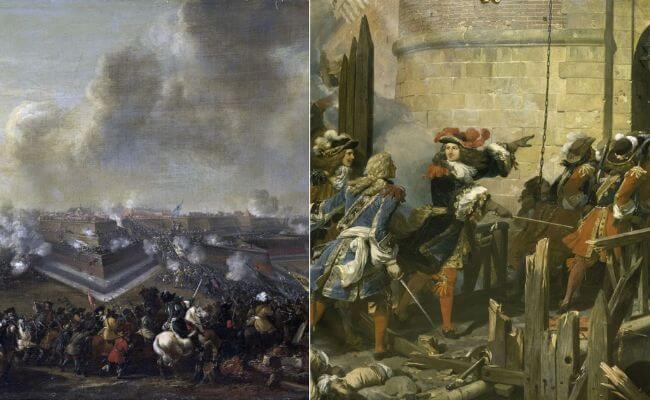
Quick Facts
| Event | Battle of Konzer Brücke |
|---|---|
| Date | August 11, 1675 |
| Location | Konz, near Trier (present-day Germany) |
| Context | Franco-Dutch War |
| French Commander | François de Créquy |
| Imperial Commanders | Charles IV, Duke of Lorraine, Duke of Brunswick-Lüneburg, Otto Caretto de Grana |
| Forces | French ~14,000; Imperial ~17,000 |
| Casualties | French: ~2,500 killed/wounded, ~2,400 captured, lost 10 guns; Imperial: ~1,100 killed/wounded |
| Outcome | Imperial victory, siege of Trier lifted |
Overview
On August 11, 1675, during the Franco-Dutch War, an Imperial army defeated the French at the key crossing of the Saar River at Konz. The battle marked a turning point in the Rhineland campaign.
Marshal François de Créquy led approximately 14,000 French troops in a bid to relieve the besieged city of Trier. They were halted by Imperial forces commanded by Charles IV of Lorraine and Otto de Grana.
The Imperialists held the high ground of Grana Heights which allowed them to hold the city against the French. After three hours of struggle, the French collapsed, abandoning their artillery and supply wagons. The Imperial army pursued them for over 50 kilometers back toward Trier, which surrendered shortly thereafter.
A monument commemorating General Grana’s tactical maneuver was erected in 1892 on the Granahöhe near the battlefield.
Conclusion
The Battle of Konzer Brücke proved to be a crucial defensive victory for the Empire, stopping French advances and saving Trier from capture. It reinforced the growing strength of the anti-French coalition in Western Europe and paved the way toward the Peace of Nijmegen in 1678.