Death of Genghis Khan: Founder of the Mongol Empire
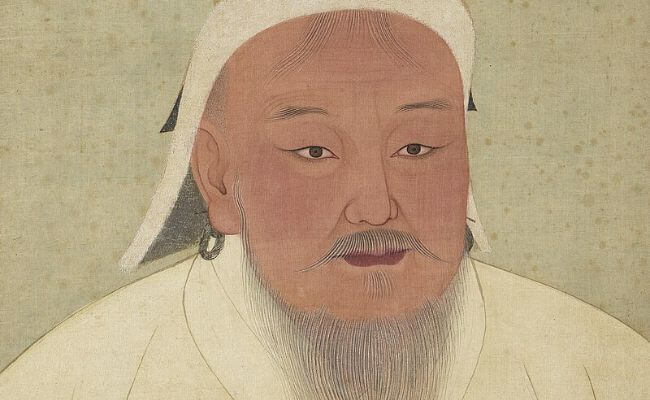
Quick Facts
| Name | Genghis Khan (Temüjin) |
|---|---|
| Born | c. 1162, Delüün Boldog, Mongolia |
| Died | August 18, 1227, during campaign in Western Xia (China) |
| Title | Great Khan of the Mongol Empire |
| Reign | 1206 – 1227 |
| Empire | Mongol Empire (largest contiguous land empire in history) |
| Successors | Ögedei Khan (son) and later descendants, including Kublai Khan |
| Legacy | Unified Mongol tribes, reshaped Eurasia, promoted trade and communication across the Silk Road |
Overview
On August 18, 1227, Genghis Khan, one of history’s most formidable conquerors, died while leading a campaign against the Western Xia dynasty in China. The exact circumstances of his death remain a mystery, with theories ranging from injury in battle to illness.
Born as Temüjin around 1162, he united the fractious Mongol tribes under his leadership and proclaimed himself “Genghis Khan” (Universal Ruler) in 1206. Over two decades, he expanded the Mongol Empire across vast territories, from the steppes of Asia into Eastern Europe, creating the largest contiguous empire the world has ever seen.
His empire covered nearly 22% of Earth’s landmass, stretching from the Pacific Ocean to the heart of Europe. The Mongol conquests reshaped global history, opening trade routes along the Silk Road, enabling cultural exchange, and spreading technologies and ideas across continents.
After his death, his son Ögedei Khan succeeded him as Great Khan, continuing the expansion. Later descendants, including Kublai Khan, would go on to establish the Yuan dynasty in China.
Conclusion
Genghis Khan’s death in 1227 marked the end of an extraordinary life but not the end of his empire. His descendants carried his vision forward, extending Mongol influence across Eurasia.
Though often remembered for the brutality of his campaigns, Genghis Khan also reshaped global trade, governance, and cultural interaction. His legacy is complex: a conqueror, a unifier, and a figure whose impact is still felt in world history.