Battle of Manzikert: August 26, 1071
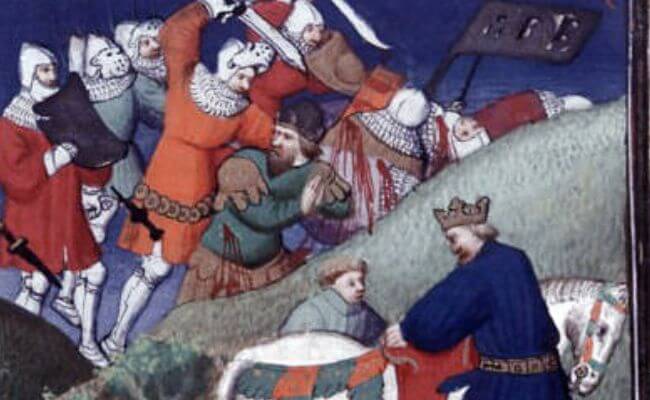
Quick Facts
| Event | Battle of Manzikert |
|---|---|
| Date | August 26, 1071 |
| Location | Near Manzikert, Anatolia (modern-day Turkey) |
| Belligerents | Byzantine Empire vs. Seljuk Empire |
| Commanders | Romanos IV Diogenes (Byzantine) and Alp Arslan (Seljuk) |
| Outcome | Decisive Seljuk victory |
| Significance | Start of Byzantine decline in Anatolia, paving way for Turkish dominance |
Overview
On August 26, 1071, the Byzantine Empire suffered one of its most catastrophic defeats at the Battle of Manzikert. Emperor Romanos IV Diogenes led a vast army to confront the Seljuk Turks under Sultan Alp Arslan in eastern Anatolia.
Despite initial successes, the Byzantines were betrayed by internal rivals, leading to confusion and collapse. Emperor Romanos was captured by Alp Arslan, who treated him with surprising kindness before ransoming him back. However, the political chaos that followed destabilized the empire.
The defeat shattered Byzantine control over much of Anatolia, opening the region to Turkish settlement and marking the beginning of the empire’s long decline. It also contributed to the call for Western aid that would later spark the Crusades.
Conclusion
The Battle of Manzikert was more than just a military defeat. It was a turning point in medieval history. The Byzantines lost not only a battle but the heart of their empire in Anatolia. This shift in power transformed the balance of the Middle East and Europe, with lasting consequences for centuries to come.
For the Seljuks, the victory affirmed their dominance in the region, while for the Byzantines, it marked the beginning of an irreversible decline that no reform or alliance could ultimately stop.