Nuremberg Chronicle 1493 Illustrated World History
Quick Facts
| Title | Nuremberg Chronicle (Liber Chronicarum) |
|---|---|
| Compiler | Hartmann Schedel |
| Illustrators | Michael Wolgemut, Wilhelm Pleydenwurff |
| Publisher | Anton Koberger |
| Date Published | 12 July 1493 |
| Language | Latin and German editions |
| Woodcuts | ~1804 illustrations from ~643 woodblocks |
Overview
The Nuremberg Chronicle, also known as Liber Chronicarum, was compiled by humanist Hartmann Schedel and published in 1493 in Nuremberg. It is a richly illustrated universal history blending biblical narrative with classical and contemporary events.
Published simultaneously in Latin and German, it stands among the largest early printed books, featuring over 1,800 woodcut illustrations created from approximately 643 blocks by Michael Wolgemut and Wilhelm Pleydenwurff. A young Albrecht Dürer worked in Wolgemut’s workshop and may have contributed to some designs.
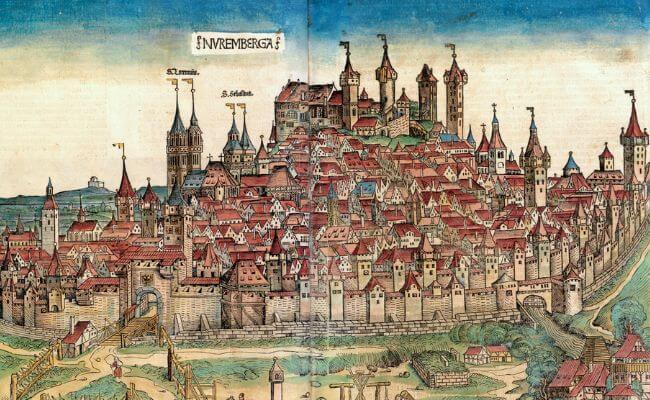
Its iconic city views like those of Nuremberg, Cologne, Florence and Paris, helped elevate German humanist culture and printing artistry to international prominence during the Renaissance.
Conclusion
The Nuremberg Chronicle is a landmark of early publishing and visual storytelling. Its integration of text and image broke new ground in 1493, setting standards for illustrated books and humanist history.
Its lavish woodcuts and detailed cityscapes reflect a transformative moment in Renaissance print culture, celebrating both biblical tradition and civic pride. To this day, it remains a treasured symbol of medieval scholarship and artistic collaboration.
Over half a millennium later, the Chronicle still fascinates historians, collectors, and art lovers a testament to the enduring power of images and printed words.