Apollo 11 Moon Landing July 1969, First Steps on the Moon
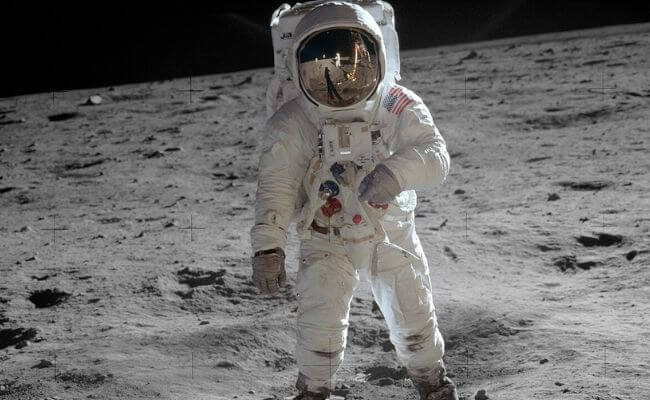
Quick Facts
| Mission | Apollo 11 |
|---|---|
| Launch Date | 16 July 1969 |
| Landing Date | 20 July 1969 (Tranquility Base) |
| Crew | Neil Armstrong, Buzz Aldrin, Michael Collins |
| Rocket | Saturn V |
| Lunar EVA Duration | 2 h 31 m on lunar surface |
| Samples Collected | 47.5 lb (21.5 kg) |
| Return to Earth | Landing 24 July 1969 in Pacific Ocean |
Overview
Apollo 11 was NASA’s historic mission achieving the first crewed Moon landing. The Saturn V rocket lifted off from Kennedy Space Center on July 16, 1969, carrying Neil Armstrong, Buzz Aldrin, and Michael Collins.
On July 20 the Lunar Module Eagle touched down in the Sea of Tranquility. Armstrong and Aldrin descended the ladder first, with Armstrong uttering his legendary line, and Armstrong spent ~6.5 hours after landing preparing for EVA, followed by Aldrin 19 minutes later. Together, they performed experiments, planted the US flag, and collected 47.5 lb of lunar material.
Michael Collins orbited solo in Command Module Columbia while performing essential support duties. The mission returned safely to Earth on July 24, completing an 8‑day journey and returning humanity from another world.
Conclusion
Apollo 11 remains a defining moment in human history, symbolizing our drive to explore and pushing the limits of technology and courage. The success of the mission fulfilled JFK’s vision and launched a legacy of space exploration.
Buzz Aldrin’s iconic image on the lunar surface underscores both the personal and collective triumph of the mission. As nations worldwide watched, he and Armstrong left a plaque reading “We came in peace for all mankind,” a message that resonates still.
The mission’s heritage extends beyond its records: it spurred advances in science, engineering, and international cooperation and continues to inspire new generations toward Mars and beyond.