Scopes Monkey Trial Verdict: July 21 1925
Quick Facts
| Event | Scopes Monkey Trial Verdict |
|---|---|
| Date | July 21 1925 |
| Location | Dayton, Tennessee |
| Defendant | John T. Scopes (teacher) |
| Charge | Violating Tennessee’s Butler Act (teaching evolution) |
| Verdict | Guilty, fined $100 (later overturned) |
| Significance | National debate on science, education, and church‑state separation |
Overview
On July 21, 1925, the highly publicized trial in Dayton, Tennessee came to a dramatic close when teacher John T. Scopes was found guilty for teaching Darwin’s theory of evolution in violation of the state's Butler Act, which prohibited such instruction.
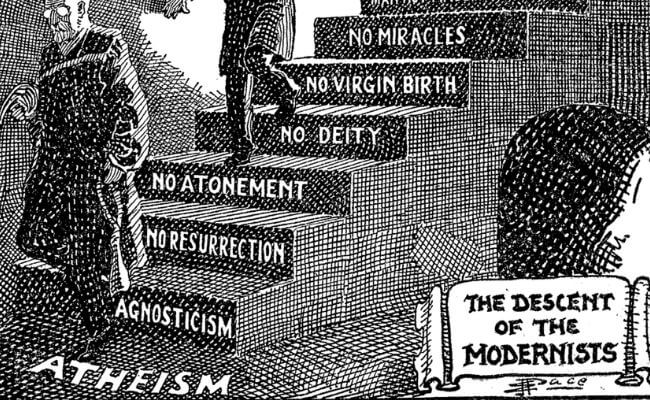
The trial, featuring famed attorneys Clarence Darrow and William Jennings Bryan, became a flashpoint in the cultural battle between modernist and fundamentalist perspectives. It captured national attention, turning a small-town courtroom into a symbol of America’s broader conflict over science and religion.
Although Scopes received a $100 fine (equivalent to about $1,600 today), the conviction was later overturned on a technicality. Still, the trial intensified the conversation around academic freedom, educational policy, and the role of religion in public schools.
Conclusion
The Scopes Monkey Trial remains a defining moment in American history. A dramatic confrontation over science, religion, and education. Its legacy endures in ongoing debates about curriculum, censorship, and the separation of church and state.
Though Scopes himself became a minor figure, the trial propelled issues of academic freedom and scientific integrity into the national consciousness. Its cultural ripple effects are still felt in classrooms and courtrooms today.
As we mark the trial’s centenary, it continues to remind us that intellectual inquiry often challenges existing beliefs, and that laws can no longer suppress the pursuit of knowledge without igniting public scrutiny.