October 5–6, 1789: Women’s March on Versailles
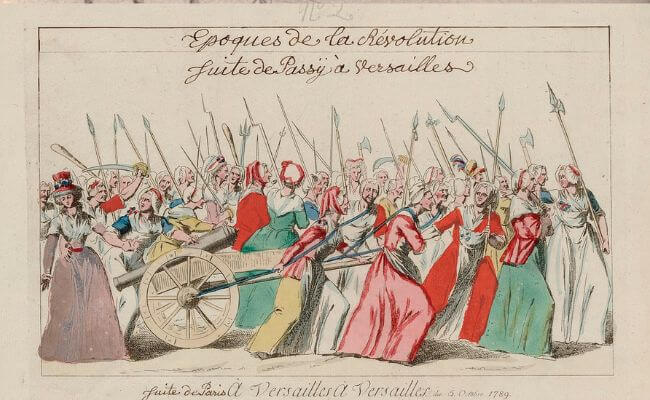
Quick Facts
| Event | Women’s March on Versailles |
|---|---|
| Date | October 5–6, 1789 |
| Location | Versailles, France (march from Paris) |
| Participants | Parisian women, some armed, demanding bread and reform |
| Target | King Louis XVI, royal court in Versailles |
| Outcome | King and royal family moved to Paris; symbolic victory for revolutionaries |
Overview
On October 5–6, 1789, thousands of women, driven by scarcity of bread and anger over political inequities, marched from Paris to Versailles. They demanded action from King Louis XVI and bring him closer to the people.
The march began amid a bread shortage and economic crisis. The women confronted guards, disrupted proceedings, and eventually forced access to the palace. Over two days, the crowd’s pressure compelled the king and his court to relocate to Paris, effectively placing the monarchy under the influence of the revolution.
The event became a powerful symbol of popular sovereignty and direct political action. It showed that ordinary citizens, especially women in this case could shape the course of the French Revolution.
Conclusion
The Women’s March on Versailles is remembered as a turning point in the early French Revolution. By marching on the seat of royal power, the protesters forced real political change and redefined the relationship between ruler and citizen.