September 18, 1931: The Mukden Incident
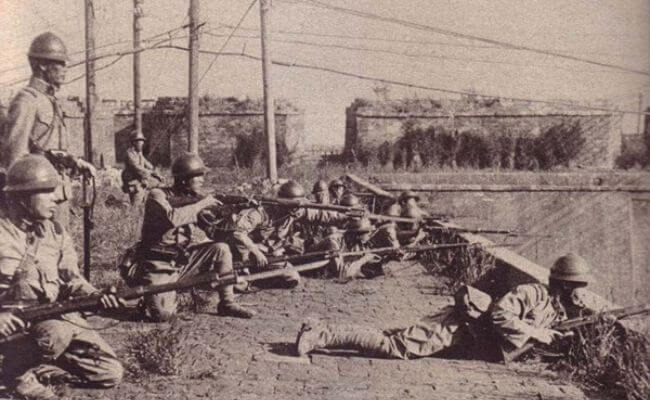
Quick Facts
| Event | Mukden Incident |
|---|---|
| Date | September 18, 1931 |
| Location | Mukden (Shenyang), Manchuria |
| Perpetrators | Japanese Kwantung Army |
| Pretext | Explosion on the South Manchuria Railway blamed on Chinese forces |
| Outcome | Japan invaded and occupied Manchuria, establishing the puppet state of Manchukuo |
| Significance | Marked the beginning of Japanese expansionism leading into World War II |
Overview
Japanese forces staged what became known as the Mukden Incident, a small explosion occurred along the Japanese-controlled South Manchuria Railway near Mukden (today’s Shenyang), which the Japanese military falsely blamed on Chinese forces.
In reality, the blast was orchestrated by members of the Japanese Kwantung Army, who used it as a justification to invade Manchuria. Within days, Japanese troops occupied key cities, and by early 1932 they had established the puppet state of Manchukuo, installing the last Qing emperor, Puyi, as its nominal ruler.
The international community, including the League of Nations, condemned Japan’s actions but failed to take effective measures. Japan later withdrew from the League, further undermining international diplomacy in the interwar period.
Conclusion
The Mukden Incident is widely regarded as the spark that ignited Japan’s imperial expansion in Asia. It marked the beginning of a period of aggressive militarism that would culminate in the Second Sino-Japanese War and contribute to the outbreak of World War II in the Pacific.
This event revealed the weaknesses of international institutions in restraining aggression and foreshadowed the turbulent global conflicts of the 1930s and 1940s.