September 22, 1359: The Battle of Araviana
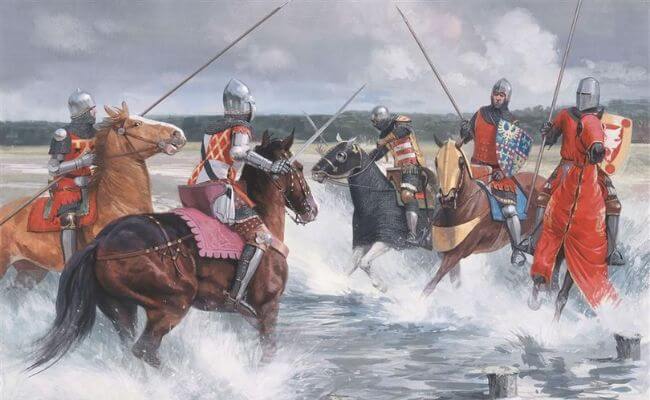
Quick Facts
| Event | Battle of Araviana |
|---|---|
| Date | September 22, 1359 |
| Location | Araviana, Spain |
| Conflict | War of the Two Peters |
| Combatants | Crown of Aragon vs. Crown of Castile |
| Leaders | Peter IV of Aragon vs. Peter of Castile |
| Outcome | Aragonese victory despite Castilian numerical superiority |
| Significance | Demonstrated Aragon’s resilience and intensified the long-running conflict |
Overview
The War of the Two Peters saw one of its most dramatic episodes: the Battle of Araviana. An Aragonese cavalry force, though outnumbered, faced and defeated a larger Castilian army. The victory was celebrated as a demonstration of Aragonese skill, discipline, and determination in the face of overwhelming odds.
The War of the Two Peters (1356–1375), fought between Peter IV of Aragon and Peter of Castile, was marked by shifting alliances and bitter feuds. France, Portugal, and even England were at times drawn into the dispute, making the Iberian Peninsula a key theater of late medieval power struggles.
The battle underscored the volatile nature of medieval Spain, where rival kingdoms clashed not only for territorial dominance but also for prestige and legitimacy. While the victory did not end the war, it strengthened Aragon’s standing in the conflict.
Conclusion
The Battle of Araviana remains a striking reminder of the War of the Two Peters and the deep rivalries that shaped medieval Spain. Though ultimately part of a protracted and exhausting conflict, the Aragonese triumph over a larger Castilian army showcased the unpredictability of medieval warfare and the enduring struggle for dominance in Iberia.
In the broader context, battles like Araviana contributed to the political and cultural transformations that defined Spain in the late Middle Ages, paving the way for the eventual unification under the Catholic Monarchs in the following century.