September 29, 480 BCE: The Battle of Salamis
Quick Facts
| Event | Battle of Salamis |
|---|---|
| Date | September 29, 480 BCE |
| Location | Straits of Salamis, Greece |
| Conflict | Greco-Persian Wars |
| Combatants | Greek City-States vs. Persian Empire |
| Greek Leader | Themistocles |
| Persian Leader | Xerxes I |
| Outcome | Decisive Greek victory |
| Significance | Turned the tide of the Greco-Persian Wars, preserving Greek independence |
Overview
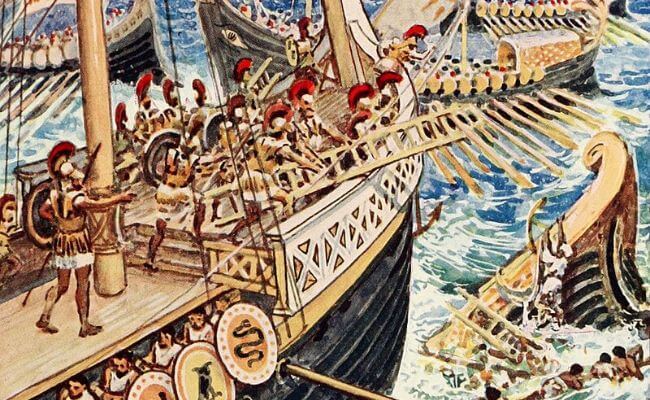
On September 29, 480 BCE, the Battle of Salamis became a decisive moment in the Greco-Persian Wars. The Persian Empire, led by King Xerxes I, had launched a massive invasion of Greece. Facing overwhelming numbers, the Greek city-states united under the strategic leadership of Themistocles.
By luring the larger Persian fleet into the narrow straits of Salamis, the Greeks neutralized the Persians’ numerical advantage. The smaller, more maneuverable Greek triremes rammed and sank a significant portion of the Persian navy, inflicting a humiliating defeat on Xerxes.
The victory at Salamis forced Xerxes to retreat and marked the beginning of the end of Persian ambitions in Greece. It preserved Greek independence and allowed the flourishing of Classical Greek culture, which went on to influence Western civilization profoundly.
Conclusion
The Battle of Salamis stands as one of history’s most influential naval engagements. A brilliant combination of strategy, courage, and unity enabled the Greeks to triumph against overwhelming odds.
Beyond the battlefield, the outcome shaped the trajectory of Western history by safeguarding the development of democratic ideals, philosophy, and art in ancient Greece. Without Salamis, the legacy of Greece, and perhaps the course of civilization itself, may have looked very different.