How did the 1903 World Series structure and venue conditions shape the outcome?
This edition examines the specific logistical and competitive factors that allowed Boston to overcome a 3-1 deficit in the inaugural modern World Series.

Cite this page
“How did the 1903 World Series structure and venue conditions shape the outcome?” thisDay, thisday.info/history/1903-world-series-1903/. Accessed 23 Nov. 2026.
How did the 1903 World Series structure and venue conditions shape the outcome? (n.d.). thisDay. Retrieved November 23, 2026, from https://thisday.info/history/1903-world-series-1903/
“How did the 1903 World Series structure and venue conditions shape the outcome?” thisDay. Accessed November 23, 2026. https://thisday.info/history/1903-world-series-1903/.
Expectations vs. Reality in the 1903 Series
The series began with Pittsburgh holding a commanding lead, but venue conditions and Boston's pitching altered the trajectory.
| The plan needed | What happened | Why it mattered |
|---|---|---|
| Pittsburgh maintains 3-1 lead to win series | Boston won the final four games to take the title | First American League championship secured |
| Standard outfield play at Exposition Park | 17 ground-rule triples due to overflow crowds | Altered scoring dynamics in four games |
| Sam Leever pitches for Pittsburgh | Deacon Phillippe pitched five complete games | Phillippe's endurance was insufficient to stop Boston |
A New League Meets the Old Guard
The 1903 World Series marked the first modern championship in Major League Baseball, pitting the American League champion Boston Americans against the National League champion Pittsburgh Pirates. This contest arose from the formation of the American League in 1901 by Ban Johnson, who capitalized on the National League's contraction from twelve teams to eight. The series was structured as a best-of-nine affair, a format that allowed for a longer, more grueling competition than the modern best-of-seven. The initial three games were scheduled in Boston, followed by four in Allegheny, with the potential for a final game back in Boston.
The stakes extended beyond a single trophy; the outcome would determine the prestige of the newly formed American League. Proving that the AL's best could defeat the NL's best was essential for establishing the league's legitimacy and strengthening demand for future World Series competitions. Boston's victory in this inaugural modern series not only claimed the first major professional sports championship for a Boston-based team but also solidified the American League's place in professional baseball. The series thus served as a critical validation for the new league's competitive standing against the established National League.


Pitching Duels and Player Struggles
The pitching performances defined the early stages of the series, with Boston's Bill Dinneen and Cy Young leading the charge. In Game 1, Pittsburgh's Deacon Phillippe struck out ten Boston batters, setting a high standard. The following day, Dinneen surpassed that mark by striking out eleven Pittsburgh batters in Game 2. This exchange highlighted the competitive intensity of the matchups. On the Pittsburgh side, Phillippe had to pitch five complete games after teammate Sam Leever injured his shoulder while trap shooting. Despite winning three of those starts, Phillippe's efforts were not enough to overcome the Boston pitching staff.
Honus Wagner, the Pittsburgh shortstop, faced significant challenges during the series. Bothered by injuries, he batted only 6-for-27 for a .222 average and committed six errors. His personal reaction underscored the high stakes and emotional weight of the championship games, reflecting the intense pressure placed on individual players in such a high-profile contest.

Venue Conditions and Crowd Influence
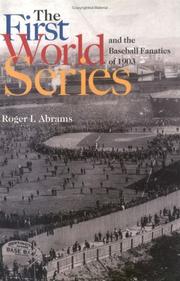
Exposition Park in Allegheny presented unique logistical challenges for the 1903 World Series. A rope barrier separated the massive overflow spectators from the outfield, creating a specific ground rule: any batted ball rolling beneath this line was scored as a triple. This provision resulted in seventeen such hits across the four games played at the venue. The sheer volume of fans beyond the field also shaped the game's atmosphere. Boston's Royal Rooters traveled to the park, singing their theme song, Tessie, to distract the opposing players, particularly Wagner. These combined factors helped Boston win three of the four games in Allegheny City, shifting the series momentum.
The psychological impact of the Royal Rooters was significant, adding a layer of distraction to the already challenging venue conditions. The combination of the ground-rule triples and the crowd noise created an environment that favored Boston's offensive efforts. The Pirates, despite their strong start, struggled to maintain their lead against the Boston pitching staff in these conditions. The series structure, with the decisive eighth game returning to Boston, allowed the Americans to capitalize on their home advantage in the final stretch. This sequence of events highlighted the importance of venue and crowd dynamics in shaping the outcome of the championship.
The Comeback and Financial Aftermath
Boston erased a three-games-to-one deficit to win the final four games and capture the title. No other team had accomplished such a reversal in the sport's history prior to this event. The next instance of a team overcoming a 3-1 hole did not occur until the Pittsburgh Pirates beat the Washington Senators in the 1925 World Series. Across baseball history, this specific feat has been achieved only eleven times. The Pirates themselves repeated this comeback in 1979 against the Baltimore Orioles.
The financial outcome of the series was unusual. Pirates owner Barney Dreyfuss added his share of the gate receipts to the players' share, resulting in the losing team's players finishing with a larger individual share than the winning team's. This decision highlighted the complex financial arrangements of the era. The series brought the new American League prestige and proved its best could beat the best of the National League, thus strengthening the demand for future World Series competitions. The documented outcomes of the series, including the comeback and the financial distribution, remain a distinct record in the history of professional baseball championships.
Timeline: Boston Americans defeat Pittsburgh Pirates
- 1901 Ban Johnson forms the American League
- October 1, 1903 Game 1: Pittsburgh wins 7-3
- October 13, 1903 Boston wins the series 5-3
- 1925 Pirates repeat 3-1 comeback vs. Senators
- 1979 Pirates repeat 3-1 comeback vs. Orioles
Related on thisDay
Cite this page
“How did the 1903 World Series structure and venue conditions shape the outcome?” thisDay, thisday.info/history/1903-world-series-1903/. Accessed 23 Nov. 2026.
How did the 1903 World Series structure and venue conditions shape the outcome? (n.d.). thisDay. Retrieved November 23, 2026, from https://thisday.info/history/1903-world-series-1903/
“How did the 1903 World Series structure and venue conditions shape the outcome?” thisDay. Accessed November 23, 2026. https://thisday.info/history/1903-world-series-1903/.