Why did the U.S. Weather Bureau miss the 1938 hurricane for seven days?
The 1938 New England Hurricane struck Long Island as a Category 3 storm, killing 682 people. The U.S. Weather Bureau remained unaware of the cyclone's existence until September 16, when ships reported strong winds 350…

Expectation vs. Reality: Storm Tracking
The gap between when the storm formed and when it was detected created a critical window where the public and officials had no knowledge of the approaching danger.
| The plan needed | What happened | Why it mattered |
|---|---|---|
| Storm detected within 24-48 hours of formation | Storm detected 7 days after formation on September 16 | No time for evacuation or preparation in the path |
| Continuous ship reports along the track | Sparse ship reports in the central Atlantic | Weather Bureau unaware of cyclone existence until late |
| Public warning issued before landfall | Warning issued only after detection on September 16 | Residents caught unprepared for Category 3 winds |
The Invisible Storm
The 1938 New England Hurricane formed as a tropical depression on September 9 off the coast of West Africa. For the first week, the storm strengthened in the open Atlantic, reaching hurricane strength on September 15. The U.S. Weather Bureau had no knowledge of the cyclone's existence during this period. Ship observations became increasingly sparse as the cyclone tracked farther away from land, creating a data gap that obscured the storm's development. This lack of data meant the agency could not track the system's evolution or predict its path with any accuracy.
The first definitive indication of a tropical cyclone at sea came from the Brazilian ship SS Alegrete on September 17. The vessel documented a barometric pressure of 958 mbar within hurricane-force winds. By then, the storm was already a well-developed hurricane. The Weather Bureau only learned of the cyclone on September 16 after ships reported strong winds and rough seas 350 miles northeast of San Juan. This delay meant the agency had only five days to track the storm's rapid northward movement. The sudden appearance of the storm in the data stream forced a rapid reassessment of the threat level.

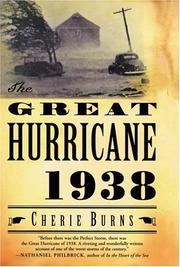 The Great Hurricane
Cherie Burns · 2005
The Great Hurricane
Cherie Burns · 2005
 1938 Hurricane Along New England's Coast
Joseph P. Soares · 2008
1938 Hurricane Along New England's Coast
Joseph P. Soares · 2008
 The Great Hurricane 1938
Cherie Burns · 2005
The Great Hurricane 1938
Cherie Burns · 2005
 The hurricane and flood of September, 1938
New Haven Southern New England telephone company · 1939
The hurricane and flood of September, 1938
New Haven Southern New England telephone company · 1939
 The Hurricane Of 1938 (New England Remembers)
Aram Goudsouzian · 2004
The Hurricane Of 1938 (New England Remembers)
Aram Goudsouzian · 2004
Rapid Northward Push
Once detected, the storm was propelled northward, rapidly paralleling the East Coast. It reached a peak intensity of 160 mph near the southeastern Bahamas on September 19, making it a Category 5-equivalent hurricane. The storm then made landfalls on Long Island and Connecticut as a Category 3 hurricane on September 21. Estimated sustained winds at landfall were 115 to 120 mph. The rapid progression left little time for the Weather Bureau to issue detailed warnings to coastal communities. The speed of the system's movement compressed the timeline for public notification and emergency response.
The storm's path took it directly over Long Island, where it caused widespread devastation. The hurricane killed 682 people and damaged or destroyed more than 57,000 homes. Property losses totaled $306 million in 1938 dollars, a figure that translates to $4.7 billion in 2024 currency. The storm's intensity and speed meant that even with the late detection, the damage was catastrophic. The Weather Bureau's later analyses confirmed the hurricane's swift approach, but the warning arrived too late for many residents to take adequate protective measures.

The Decisive 48 Hours
The critical period for the 1938 hurricane was the 48 hours before landfall. The storm moved from the Bahamas to Long Island in a matter of days. The Weather Bureau's detection on September 16 meant that the agency had only five days to track the storm's movement. The storm's rapid northward push meant that the window for issuing warnings was narrow. The Weather Bureau's reports documented the hurricane's rapid progression, but the public had little time to prepare. The compressed timeline limited the effectiveness of any emergency actions taken by local authorities.
The storm made landfall on Wednesday, September 21, 1938. The hurricane struck Long Island as a Category 3 storm, with sustained winds of 115 to 120 mph. The peak gust at the Blue Hill Observatory was 186 mph. The storm's intensity and speed meant that the damage was severe. The Weather Bureau's late detection meant that the public was caught off guard. The hurricane's path took it directly over populated areas, resulting in significant loss of life and property damage. The suddenness of the impact was a direct consequence of the initial tracking delay.
Aftermath and Record
The storm's impact was felt for years after landfall. Damaged trees and buildings were still seen in the affected areas as late as 1951. The hurricane's death toll is estimated at 682 people, with some sources citing a range of 500 to 700 fatalities. The property losses were estimated at $306 million in 1938 dollars, with some estimates placing the real damage between $347 million and almost $410 million. The long-term economic and social effects of the disaster extended well beyond the immediate aftermath, reshaping local infrastructure and emergency planning.
The storm's legacy is documented in the records of the U.S. Weather Bureau and the Atlantic hurricane reanalysis project. The reanalysis project analyzed the 1938 Atlantic hurricane season in 2012, providing a detailed account of the storm's formation and track. The Weather Bureau's delayed detection is a key part of the storm's history, highlighting the challenges of tracking tropical cyclones in the open Atlantic. This case study remains a critical reference for understanding the limitations of early 20th-century meteorological observation networks.
Timeline: The Great Hurricane of 1938 makes landfall on Long Island in New York
- September 9, 1938 Storm forms as tropical depression off West Africa
- September 15, 1938 Storm reaches hurricane strength over central Atlantic
- September 16, 1938 Weather Bureau detects storm via ship reports
- September 17, 1938 SS Alegrete reports hurricane-force winds
- September 21, 1938 Storm makes landfall on Long Island as Category 3
- September 23, 1938 Storm dissipates over Ontario