B52
American strategic bomber aircraft

What was B52?
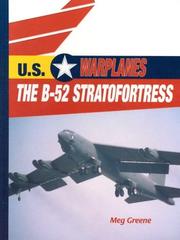
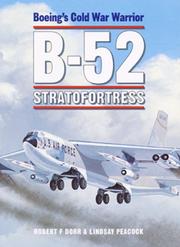
The Boeing B-52 Stratofortress is an American nuclear-capable subsonic jet-powered strategic bomber. The B-52 was designed and built by Boeing, which has continued to provide support and upgrades. It has been operated by the United States Air Force (USAF) since 1955 and was flown by NASA from 1959 to 2007. The bomber can carry up to 70,000 pounds (32,000 kg) of weapons and has a typical combat range of around 8,800 miles (14,200 km) without aerial refueling. After Boeing won the initial contract in June 1946, the aircraft's design evolved from a straight-wing aircraft powered by six turboprop engines to the final prototype YB-52 with eight turbojet engines and swept wings. The B-52 took its maiden flight in April 1952.



Background and consequences
Built to carry nuclear weapons for Cold War deterrence missions, the B-52 Stratofortress replaced the Convair B-36 Peacemaker. The bombers flew under the Strategic Air Command (SAC) until it was disestablished in 1992 and its aircraft absorbed into the Air Combat Command (ACC); in 2010, all B-52s were transferred to the new Air Force Global Strike Command (AFGSC). The B-52's official name Stratofortress is rarely used; informally, the aircraft is commonly referred to as the BUFF (Big Ugly Fat Fucker/Fella). Superior performance at high subsonic speeds and relatively low operating costs have kept them in service despite the introduction of more advanced strategic bombers, such as the Mach-2+ Convair B-58 Hustler, the variable-geometry Rockwell B-1 Lancer, and the stealth plane Northrop Grumman B-2 Spirit.

Why it matters
The B-52 has used conventional munitions in the Vietnam War, Gulf War, NATO bombing of Yugoslavia, Iraq War, war against the Islamic State, war in Afghanistan, and 2026 Iran war. In its nuclear role, the B-52H is assigned only the AGM-86B cruise missile. Conventionally, it can employ the AGM-142, AGM-154, AGM-158 air-to-ground weapons, and a variety of Joint Direct Attack Munitions, and in maritime roles can employ Harpoon anti-ship missiles and Quickstrike naval mines. As a mother ship, it has deployed the D-21 reconnaissance drone, and test-launched the X-15, X-24, X-38, and X-43 experimental aircraft and various hypersonic missiles.