Chechen War
Topics referred to by the same term
Cite this page
“Chechen War.” thisDay, thisday.info/history/chechen-war/. Accessed 19 Oct. 2026.
Chechen War. (n.d.). thisDay. Retrieved October 19, 2026, from https://thisday.info/history/chechen-war/
“Chechen War.” thisDay. Accessed October 19, 2026. https://thisday.info/history/chechen-war/.
Early Conflicts and Background
The Chechen War has its roots in a long-standing conflict between Chechnya and Russia, dating back to the Chechen–Russian conflict of 1785–2017. This protracted struggle has seen various periods of insurgency and warfare, including the Caucasian War of 1817–1864 and the Murid War of 1829–1859, also known as the Russian Conquest of Chechnya and Dagestan. These early conflicts set the stage for the complex and often violent relationship between Chechnya and Russia.
The 1940–44 insurgency in Chechnya marked another significant episode in this ongoing conflict, highlighting the deep-seated tensions and resistance to Russian rule. This historical context is essential to understanding the subsequent wars and insurgencies that have shaped the region. The Chechen people's desire for independence and self-governance has been a recurring theme throughout these conflicts.
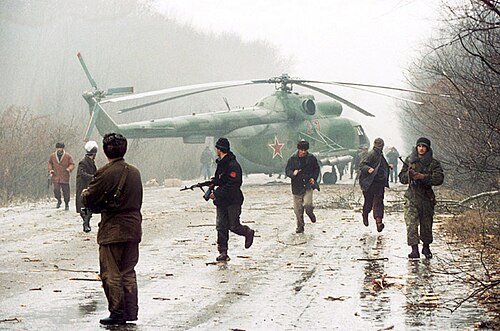
The First Chechen War, which began in December 1994 and lasted until August 1996, was a pivotal moment in this ongoing struggle. This conflict saw intense fighting between Russian forces and Chechen separatists, resulting in significant human suffering and displacement. The war was marked by brutal tactics and human rights abuses, drawing international attention and condemnation.

Key Events and Diplomatic Efforts
On May 27, 1996, Russian President Boris Yeltsin met with Chechen rebel leaders in a historic first talk, marking a significant attempt at diplomacy and peace. This meeting, facilitated by General Alexander Lebed, was seen as a crucial moment in the conflict, offering a glimmer of hope for a peaceful resolution. However, despite this effort, the conflict ultimately continued, with the First Chechen War ending in August 1996.
The meeting between Yeltsin and the Chechen rebels was a rare instance of direct dialogue between the two sides, and it highlighted the complexities and challenges of finding a peaceful solution. The talks were seen as a significant step towards addressing the underlying issues driving the conflict, including Chechnya's desire for independence and Russia's concerns about territorial integrity.
The failure of these diplomatic efforts to yield a lasting peace led to the resumption of hostilities in 1999, marking the beginning of the Second Chechen War. This conflict would last for nearly a decade, resulting in further human suffering and destabilization in the region. The legacy of the 1996 talks serves as a reminder of the difficulties and complexities involved in resolving deep-seated conflicts.
Historical Significance and Consequences
The Chechen Wars have had a profound impact on the region, resulting in significant human suffering, displacement, and economic devastation. The conflicts have also had far-reaching consequences for Russia, influencing its domestic and foreign policies. The wars have been marked by human rights abuses, terrorism, and insurgency, making the region a focal point for international concern and attention.
The First and Second Chechen Wars have been the subject of extensive analysis and debate, with experts and historians seeking to understand the underlying causes and consequences of the conflicts. The wars have been seen as a manifestation of deeper issues, including ethnic and nationalist tensions, economic inequality, and political repression. The legacy of the Chechen Wars continues to shape the region, with ongoing insurgency and instability in the North Caucasus.
The Chechen Wars have also had significant implications for international relations, particularly in the context of Russia's relationships with the West and its neighbors. The conflicts have been seen as a test of Russia's commitment to human rights and the rule of law, with the international community calling for greater accountability and transparency in the region.
Legacy and Ongoing Impact
The Chechen Wars have left a lasting legacy, with the region continuing to experience instability and insurgency. The conflicts have resulted in a profound impact on the social, economic, and political fabric of Chechnya and the wider North Caucasus region. The legacy of the wars serves as a reminder of the importance of addressing the underlying causes of conflict and promoting sustainable peace and development.
In the years since the Second Chechen War, there have been ongoing efforts to rebuild and stabilize the region. However, the legacy of the conflicts continues to be felt, with many Chechens still seeking greater autonomy and self-governance. The international community has called for greater attention to be paid to the human rights and humanitarian needs of the affected populations, highlighting the need for a comprehensive and sustainable approach to peace-building in the region.
The Chechen Wars serve as a reminder of the complexities and challenges involved in resolving deep-seated conflicts. The legacy of the wars highlights the importance of promoting dialogue, understanding, and reconciliation, as well as addressing the underlying causes of conflict and promoting sustainable peace and development. As the region continues to navigate the aftermath of the conflicts, it is essential to prioritize the needs and rights of the affected populations, working towards a more stable and prosperous future.
Related on thisDay
Cite this page
“Chechen War.” thisDay, thisday.info/history/chechen-war/. Accessed 19 Oct. 2026.
Chechen War. (n.d.). thisDay. Retrieved October 19, 2026, from https://thisday.info/history/chechen-war/
“Chechen War.” thisDay. Accessed October 19, 2026. https://thisday.info/history/chechen-war/.