Civil disobedience
Nonviolent disobedience of the law

Cite this page
“Civil disobedience.” thisDay, thisday.info/history/civil-disobedience/. Accessed 19 Oct. 2026.
Civil disobedience. (n.d.). thisDay. Retrieved October 19, 2026, from https://thisday.info/history/civil-disobedience/
“Civil disobedience.” thisDay. Accessed October 19, 2026. https://thisday.info/history/civil-disobedience/.
What was Civil disobedience?
Civil disobedience is the active and professed refusal of a citizen to obey certain laws, demands, orders, or commands of a government (or any other authority). By some definitions, civil disobedience has to be nonviolent to be called "civil". Hence, civil disobedience is sometimes equated with peaceful protests or nonviolent resistance. Henry David Thoreau's essay Resistance to Civil Government, first published in 1849 and then published posthumously in 1866 as Civil Disobedience, popularized the term in the US, although the concept itself was practiced long before this work.

 Civil Disobedience
Henry David Thoreau · 1800
 Walden, or, Life in the Woods / On the Duty of Civil Disobedience
Henry David Thoreau · 1849
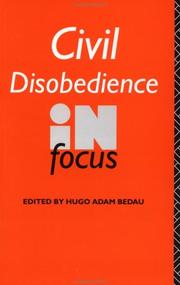 Civil disobedience in focus
Hugo Adam Bedau · 1991
 Crises of the Republic
Hannah Arendt · 1972
 Tolstoy's writings on civil disobedience and non-violence
Лев Толстой · 1967
Background and consequences
Various forms of civil disobedience have been used by prominent activists, such as American women's suffrage leader Susan B. Anthony in the late 19th century, Egyptian nationalist Saad Zaghloul during the 1910s, and Indian nationalist Mahatma Gandhi in 1920s British India as part of his leadership of the Indian independence movement. Martin Luther King Jr.'s and James Bevel's peaceful nonviolent protests during the civil rights movement in the 1960s United States sometimes contained important aspects of civil disobedience.

Related on thisDay
Cite this page
“Civil disobedience.” thisDay, thisday.info/history/civil-disobedience/. Accessed 19 Oct. 2026.
Civil disobedience. (n.d.). thisDay. Retrieved October 19, 2026, from https://thisday.info/history/civil-disobedience/
“Civil disobedience.” thisDay. Accessed October 19, 2026. https://thisday.info/history/civil-disobedience/.