Coronation
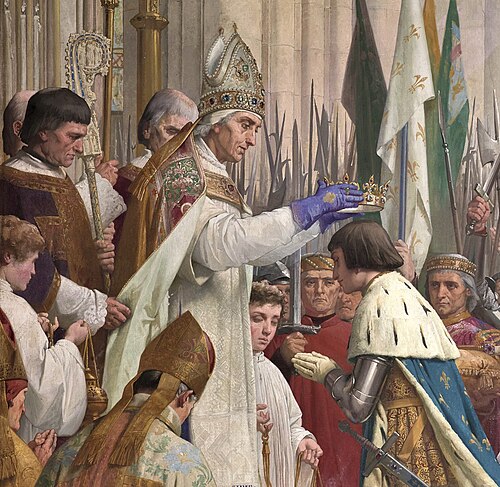
Ceremony marking the investiture of a monarch
Cite this page
“Coronation.” thisDay, thisday.info/history/coronation/. Accessed 19 Oct. 2026.
Coronation. (n.d.). thisDay. Retrieved October 19, 2026, from https://thisday.info/history/coronation/
“Coronation.” thisDay. Accessed October 19, 2026. https://thisday.info/history/coronation/.
Early History and Development of Coronations
Coronations have a long history, with the ceremony marking the formal investiture of a monarch with regal power using a crown. In addition to the crowning, this ceremony may include the presentation of other items of regalia, and other rituals such as the taking of special vows by the new monarch, the investing and presentation of regalia to them, and acts of homage by the new monarch's subjects. The monarch's consort may also be crowned, either simultaneously with the monarch or as a separate event.
Coronations are still observed in several countries, including the United Kingdom, Tonga, Thailand, Malaysia, and Eswatini. The ceremony has changed over time for a variety of socio-political and religious reasons, with most modern monarchies dispensing with them altogether in favor of simpler ceremonies to mark a monarch's accession.
The concept of coronation has its roots in Christian denominations, such as Lutheranism and Anglicanism, where it is considered a religious rite. As such, Western-style coronations have often included anointing the monarch with holy oil, or chrism, which has religious significance following examples found in the Bible.



Modern Coronation Ceremonies
The most recent coronation in the world was that of King Charles III and Queen Camilla in London in 2023. This ceremony, like others before it, marked the formal investiture of the monarch with regal power and included various rituals and presentations of regalia. The coronation ceremony is often preceded by the monarch's accession, which may be marked by a simple oath in the presence of the country's legislature.
Coronations may also be referred to as investitures, inaugurations, or enthronements, depending on the context and the specific rituals involved. The ceremony serves as a symbol of the granting of divine favor to the monarch within the relevant spiritual-religious paradigm of the country. In some cultures, coronations are accompanied by bathing or cleansing rites, the drinking of a sacred beverage, or other religious practices to achieve a comparable effect.
Today, the term 'coronation' may refer to any formal ceremony in relation to the accession of a monarch, whether or not an actual crown is bestowed. This broader definition reflects the evolving nature of coronation ceremonies and their adaptation to changing socio-political and religious contexts.

Historical Significance of Coronations
Coronations have played a significant role in shaping the relationship between monarchs and their subjects throughout history. The ceremony serves as a public declaration of the monarch's authority and a symbol of their divine right to rule. The coronation of Queen Elizabeth II in 1953, for example, was a historic event that drew 150 million viewers and marked a significant turning point in the monarchy's relationship with the emerging television audience.
The coronation ceremony has also been influenced by the post-war context, with the choice of music, the design of the Imperial State Crown, and the diplomatic guest list reflecting a deliberate effort to project a modern yet traditional image. The ceremony has been the subject of strategic decisions by the royal household, the government, and the Church, and has been shaped by contemporary commentary and archival material.
The historical significance of coronations extends beyond the ceremony itself, with the event often serving as a catalyst for subsequent Commonwealth tours and other diplomatic engagements. The coronation of Queen Elizabeth II, for example, was followed by a series of tours and engagements that helped to establish the monarch as a symbol of British identity and culture.
Legacy of Coronations
The legacy of coronations can be seen in the continued observance of the ceremony in several countries around the world. The ceremony remains an important symbol of the monarch's authority and a declaration of their divine right to rule. The coronation of King Charles III and Queen Camilla in 2023, for example, marked a significant milestone in the history of the British monarchy and served as a reminder of the enduring importance of the ceremony.
The legacy of coronations can also be seen in the impact of the ceremony on the relationship between monarchs and their subjects. The coronation of Queen Elizabeth II in 1953, for example, helped to establish the monarch as a symbol of British identity and culture, and marked a significant turning point in the monarchy's relationship with the emerging television audience.
The continued observance of coronations serves as a reminder of the importance of tradition and ceremony in the modern world. The ceremony remains an important part of the cultural and historical heritage of many countries, and continues to play a significant role in shaping the relationship between monarchs and their subjects.
Related on thisDay
Cite this page
“Coronation.” thisDay, thisday.info/history/coronation/. Accessed 19 Oct. 2026.
Coronation. (n.d.). thisDay. Retrieved October 19, 2026, from https://thisday.info/history/coronation/
“Coronation.” thisDay. Accessed October 19, 2026. https://thisday.info/history/coronation/.