Why did the Greensboro trials end in acquittal?
The legal aftermath of the 1979 Greensboro massacre reveals how specific jury selection criteria and evidentiary conflicts resulted in criminal acquittals despite documented intent to harm.

Cite this page
“Why did the Greensboro trials end in acquittal?” thisDay, thisday.info/history/greensboro-massacre-1979/. Accessed 4 Nov. 2026.
Why did the Greensboro trials end in acquittal? (n.d.). thisDay. Retrieved November 4, 2026, from https://thisday.info/history/greensboro-massacre-1979/
“Why did the Greensboro trials end in acquittal?” thisDay. Accessed November 4, 2026. https://thisday.info/history/greensboro-massacre-1979/.
Criminal Claims vs. Documented Evidence
The defense strategy in the federal trial relied on a specific narrative that conflicted with visual records from the scene.
| The plan needed | What happened | Why it mattered |
|---|---|---|
| Defendants claimed they acted in self-defense during the confrontation. | Newsreel film provided vivid evidence contradicting the self-defense claim. | Despite the contradictory footage, the jury acquitted the defendants in the 1984 federal trial. |
| Juries were expected to weigh the severity of killing five people against the context of a march. | Juries were selected partly on the strength of their anti-communist views. | This selection process resulted in all-white juries that acquitted the KKK and NSPA defendants. |
| Criminal liability was anticipated for those who shot and killed demonstrators. | A subsequent civil lawsuit found eight defendants liable for the wrongful death of one non-CWP protester. | The civil finding of liability contrasted with the criminal acquittals, highlighting different legal standards and outcomes. |
The Political Context of the March
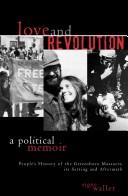
The Communist Workers' Party organized the "Death to the Klan" march in Greensboro, North Carolina, in 1979. The CWP had recruited local Black and White activists in Greensboro and Durham starting in 1976. These activists were engaged in healthcare and textile organizing. The party aimed to unionize poor, black mill workers in the area. The Ku Klux Klan sought to disrupt these unionization efforts. This created a volatile environment in the region prior to the specific date of the confrontation.
The CWP originated in 1973 in New York as the Workers Viewpoint Organization. It was a Marxist formation that rejected the pro-Soviet Communist Party USA. The group studied leaders in the developing world, including communist China. They opposed racism and sexism, viewing multi-racial union organizing as a strategy. In 1979, the group formally became the Communist Workers' Party. The founding congress was held in the backroom of a discothèque in New York City. This organizational shift coincided with the escalating tensions in North Carolina.
Infiltration and Planning Dynamics
Undercover law enforcement agents infiltrated both the KKK and the neo-Nazi movements. These agents participated in planning the actions that occurred on November 3, 1979. These groups had previously operated separately. The presence of agents in both organizations added a layer of complexity to the events. It was later revealed that these infiltrations influenced the coordination of the violence.
The victims of the shooting were activists involved in racial justice efforts. They were also involved in unionizing textile industry and hospital workers. Four of the five killed were CWP members. One victim was married to a CWP member. In addition to the deaths, nine other anti-Klan demonstrators were wounded. Two journalists and a Klansman were also injured. The specific roles of the undercover agents in the immediate planning of the shooting are part of the broader investigation into the event. Their participation in the planning is a key fact in understanding the dynamics of that day.
The Federal Trial and Jury Selection
The federal criminal civil rights trial took place in 1984. The defendants in this trial claimed they had acted in self-defense. Reports indicated that vivid newsreel film contradicted this claim. Despite the existence of this contradictory evidence, the defendants were acquitted. The jury in this trial was all-white. The selection of this jury was partly based on the anti-communist views of the potential jurors. This selection process is a critical factor in understanding the outcome of the criminal proceedings.
The criminal trials for the KKK and NSPA defendants resulted in acquittals. The juries in these trials were all-white. Their selection was influenced by anti-communist sentiments. This bias in jury selection is a specific detail recorded in the historical account of the trials. The defendants' claim of self-defense was central to their defense strategy. The newsreel film provided visual evidence that challenged this narrative. The combination of jury composition and evidentiary conflicts shaped the final verdicts in the criminal courts. The acquittals were a direct consequence of these legal and procedural factors.
Civil Liability and Later Investigations
A subsequent civil lawsuit resulted in eight defendants being found liable. This liability was specifically for the wrongful death of the one non-CWP protester. The civil proceedings differed from the criminal trials in their outcomes. The Greensboro Justice Fund was formed in the months after November 1979. It was established by partners of those killed, wounded demonstrators, and concerned citizens. In 1981, the GJF and the Christic Institute recruited members for the Greensboro Civil Rights Fund. This organization aimed to integrate existing efforts and bring media attention to the case. The GCRF was dissolved in 1986 after the federal civil trial was completed.
In 2004, the Greensboro Truth and Reconciliation Commission was formed. It was a private organization with the goal of investigating the events of November 1979. The Commission had limited investigatory authority. It concluded that both sides contributed to the tragedy. However, the Commission determined that Klansmen and NSPA participants acted with the specific purpose of harming the demonstrators. The body also stated that police bore significant responsibility for allowing the violence to take place. In 2015, Greensboro unveiled a marker to memorialize the massacre. The Greensboro City Council also formally apologized for the deaths decades later.
Timeline: Klansmen and neo-Nazis kill five demonstrators in Greensboro
- 1973 Communist Workers' Party origin as Workers Viewpoint Organization
- 1976 WVO members recruit activists in Greensboro and Durham
- 1979 CWP formally established; Greensboro massacre occurs
- 1981 Greensboro Civil Rights Fund board recruited
- 1984 Federal criminal civil rights trial concludes with acquittal
- 1986 Greensboro Civil Rights Fund dissolved
- 2004 Greensboro Truth and Reconciliation Commission formed
- 2015 Memorial marker unveiled in Greensboro
Related on thisDay
Cite this page
“Why did the Greensboro trials end in acquittal?” thisDay, thisday.info/history/greensboro-massacre-1979/. Accessed 4 Nov. 2026.
Why did the Greensboro trials end in acquittal? (n.d.). thisDay. Retrieved November 4, 2026, from https://thisday.info/history/greensboro-massacre-1979/
“Why did the Greensboro trials end in acquittal?” thisDay. Accessed November 4, 2026. https://thisday.info/history/greensboro-massacre-1979/.