Harry Potter and the Philosopher's Stone
1997 fantasy novel by J. K. Rowling

What was Harry Potter and the Philosopher's Stone?
Harry Potter and the Philosopher's Stone is a fantasy novel by British author J. K. Rowling. It is the first novel in the Harry Potter series and was Rowling's debut novel. It follows Harry Potter, a young wizard who discovers his magical heritage on his eleventh birthday when he receives a letter of acceptance from Hogwarts School of Witchcraft and Wizardry. With the help of his friends, Ron Weasley and Hermione Granger, Harry unravels a mystery involving the dark wizard Lord Voldemort. The book was first published in the United Kingdom on 26 June 1997 by Bloomsbury. It was published in the United States the following year by Scholastic Corporation under the title Harry Potter and the Sorcerer's Stone.

 Harry Potter and the Philosopher's Stone
J. K. Rowling · 1997
Harry Potter and the Philosopher's Stone
J. K. Rowling · 1997
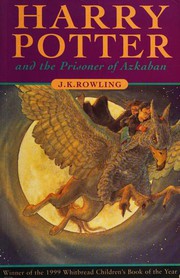 Harry Potter and the Prisoner of Azkaban
J. K. Rowling · 1999
Harry Potter and the Prisoner of Azkaban
J. K. Rowling · 1999
![Harry Potter and the Philosopher's Stone [1/2] cover](https://covers.openlibrary.org/b/id/7278006-M.jpg) Harry Potter and the Philosopher's Stone [1/2]
J. K. Rowling · 1999
Harry Potter and the Philosopher's Stone [1/2]
J. K. Rowling · 1999
 Harry Potter and the Philosopher stone
JK Rolling · 1997
Harry Potter and the Philosopher stone
JK Rolling · 1997
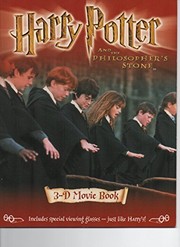 Harry Potter and the Philosopher's Stone 3-D Movie Book
J. K. Rowling · 2001
Harry Potter and the Philosopher's Stone 3-D Movie Book
J. K. Rowling · 2001
Background and consequences
It won most of the British book awards that were judged by children and other awards in the US. The book reached the top of the New York Times list of best-selling fiction in August 1999, and stayed near the top of that list for much of 1999 and 2000. It has been translated into 85 other languages and made into a feature-length film of the same name, as have all six of its sequels. The novel has sold in excess of 120 million copies, making it the fourth best-selling book of all time. Most reviews were very favourable, commenting on Rowling's imagination, humour, simple, direct style and clever plot construction, although a few complained that the final chapters seemed rushed.
Why it matters
The writing has been compared to that of Jane Austen, one of Rowling's favourite authors; Roald Dahl, whose works dominated children's stories before the appearance of Harry Potter; and the ancient Greek story-teller Homer. While some commentators thought the book looked backward to Victorian and Edwardian boarding school stories, others thought it placed the genre firmly in the modern world by featuring contemporary ethical and social issues, as well as showing overcoming obstacles like bullying. The Harry Potter series has been used as a source of object lessons in educational techniques, sociological analysis, and marketing.