Napoleonic Wars
1803–1815 series of wars led by Napoleon
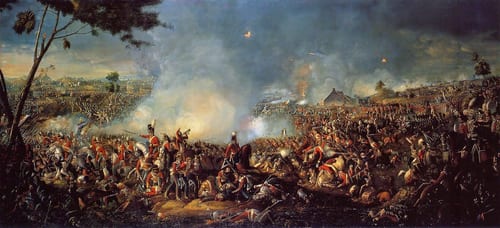
What was Napoleonic Wars?
The Napoleonic Wars (1803–1815) were a global series of conflicts fought by a fluctuating array of European coalitions against the French First Republic (1803–1804) under the First Consul followed by the First French Empire (1804–1815) under the Emperor of the French, Napoleon I. The wars originated in political forces arising from the French Revolution (1789–1799) and from the French Revolutionary Wars (1792–1802) and produced a period of French domination over Continental Europe. The wars are categorised as seven conflicts, five named after the coalitions that fought Napoleon, plus two named for their respective theatres: the War of the Third Coalition, War of the Fourth Coalition, War of the Fifth Coalition, War of the Sixth Coalition, War of the Seventh Coalition, the Peninsular War, and the French invasion of Russia.






Background and consequences
The first stage of the war broke out when Britain declared war on France on 18 May 1803. After some minor campaigns, Britain allied with Austria, Russia, and several minor powers to form the Third Coalition in April 1805. Napoleon defeated the allied Russo-Austrian armies in the subsequent war which climaxed in French victories at Ulm and at Austerlitz, leading to the dissolution of the Holy Roman Empire and Austria being forced to make peace by the end of the year. Britain and Russia remained at war with France. Concerned about increasing French power, Prussia joined Britain and Russia in the Fourth Coalition, which resumed war in October 1806.
Why it matters
Napoleon defeated the Prussians at Jena-Auerstedt and the Russians at Friedland, bringing an uneasy peace to the continent by July 1807, and again leaving Britain as France's sole major enemy. Britain was unable to dispute French dominance on the continent but obtained hegemony over the seas after a string of victories including Trafalgar. Russia used the interim peace to resolve wars with the Ottomans, Swedes, and Iranians. Hoping to isolate and weaken Britain economically through his Continental System, Napoleon launched an invasion of Portugal, the only remaining British ally in continental Europe.