World Health Organization
Specialized agency of the United Nations

Cite this page
“World Health Organization.” thisDay, thisday.info/history/world-health-organization/. Accessed 19 Oct. 2026.
World Health Organization. (n.d.). thisDay. Retrieved October 19, 2026, from https://thisday.info/history/world-health-organization/
“World Health Organization.” thisDay. Accessed October 19, 2026. https://thisday.info/history/world-health-organization/.
Early Life and Background
The World Health Organization (WHO) is a specialized agency of the United Nations (UN) which coordinates responses to international public health issues and emergencies. It is headquartered in Geneva, Switzerland, and has six regional offices and 150 field offices worldwide. Only sovereign states are eligible to join, and it is the largest intergovernmental health organization at the international level.
The WHO's stated purpose is to achieve the highest possible level of health for all the world's people, defining health as "a state of complete physical, mental and social well-being and not merely the absence of disease or infirmity." This definition guides the organization's work and priorities, from promoting the control of epidemic and endemic diseases to providing and improving the teaching and training in public health.
The WHO was established on 7 April 1948, and formally began its work on 1 September 1948, incorporating the assets, personnel, and duties of the League of Nations' Health Organization and the Paris-based Office International d'Hygiène Publique, including the International Classification of Diseases (ICD).

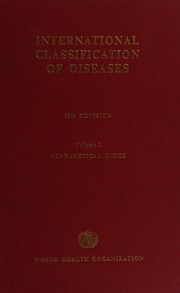 Manual of the international statistical classification of diseases, injuries, and causes of death
World Health Organization (WHO) · 1948
Community Health Nursing
World Health Organization (WHO) · 1974
Manual of the international statistical classification of diseases, injuries, and causes of death
World Health Organization (WHO) · 1948
Community Health Nursing
World Health Organization (WHO) · 1974
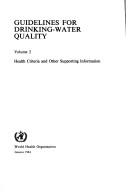 Guidelines for drinking-water quality
World Health Organization (WHO) · 1984
Basic documents
World Health Organization (WHO) · 1970
World Health Organization
Marcos Cueto · 2019
Guidelines for drinking-water quality
World Health Organization (WHO) · 1984
Basic documents
World Health Organization (WHO) · 1970
World Health Organization
Marcos Cueto · 2019
Main Career and Achievements
The WHO's main functions include promoting the control of epidemic and endemic diseases; providing and improving the teaching and training in public health, the medical treatment of disease, and related matters; and promoting the establishment of international standards for biological products. The agency's work began in earnest in 1951 after a significant infusion of financial and technical resources.
The WHO has played a leading role in several public health achievements, most notably the eradication of smallpox, the near-eradication of polio, and the development of an Ebola vaccine. Its current priorities include communicable diseases, such as HIV/AIDS, Ebola, malaria and tuberculosis; non-communicable diseases such as heart disease and cancer; healthy diet, nutrition, and food security; occupational health; and substance abuse.
The WHO advocates for universal health care coverage, engagement with the monitoring of public health risks, coordinating responses to health emergencies, and promoting health and well-being generally. Its official publication, the World Health Report, provides assessments of worldwide health topics, and the organization is governed by the World Health Assembly (WHA), which is composed of its 192 member states.

Historical Significance and Legacy
The WHO was founded on May 5, 1948, in Geneva, Switzerland, with 61 countries signing its constitution, which aimed to promote global health and coordinate international health efforts. The organization's founding was a significant milestone in the history of public health, and it has since become a leading global health authority.
The WHO's legacy can be seen in its many achievements, from the eradication of smallpox to the development of life-saving vaccines and treatments. The organization has also played a critical role in promoting global health security, responding to health emergencies, and advocating for universal health care coverage. According to Brock Chisholm, one of the key people involved in the WHO's founding, the organization's work has had a profound impact on global health.
The WHO's work continues to be guided by its founding principles, and the organization remains committed to promoting health and well-being for all people, regardless of their background or circumstances. As the global health landscape continues to evolve, the WHO remains a vital partner in the pursuit of better health for all.
Later Life and Current Work
Today, the WHO is funded primarily by contributions from member states (both assessed and voluntary), followed by private donors. The organization is led by Director-General Tedros Adhanom Ghebreyesus of Ethiopia, who was elected by the World Health Assembly (WHA) in 2017. The WHO's executive board is composed of 34 health specialists, who are elected by the WHA to advise the director-general and oversee the organization's work.
The WHO continues to play a leading role in global health, responding to health emergencies, promoting health and well-being, and advocating for universal health care coverage. The organization's current priorities include addressing the COVID-19 pandemic, promoting healthy diets and nutrition, and reducing the burden of non-communicable diseases. The WHO's work is guided by its constitution, which sets out the organization's purpose and principles.
The WHO's work is supported by its six regional offices and 150 field offices worldwide, which work closely with member states to promote health and well-being. The organization's official publication, the World Health Report, provides assessments of worldwide health topics, and the WHO's website offers a wealth of information on global health issues and the organization's work.
Related on thisDay
Cite this page
“World Health Organization.” thisDay, thisday.info/history/world-health-organization/. Accessed 19 Oct. 2026.
World Health Organization. (n.d.). thisDay. Retrieved October 19, 2026, from https://thisday.info/history/world-health-organization/
“World Health Organization.” thisDay. Accessed October 19, 2026. https://thisday.info/history/world-health-organization/.