Carl Sandburg
American writer and editor
Cite this page
“Carl Sandburg.” thisDay, thisday.info/people/carl-sandburg/. Accessed 19 Oct. 2026.
Carl Sandburg. (n.d.). thisDay. Retrieved October 19, 2026, from https://thisday.info/people/carl-sandburg/
“Carl Sandburg.” thisDay. Accessed October 19, 2026. https://thisday.info/people/carl-sandburg/.
Who was Carl Sandburg?
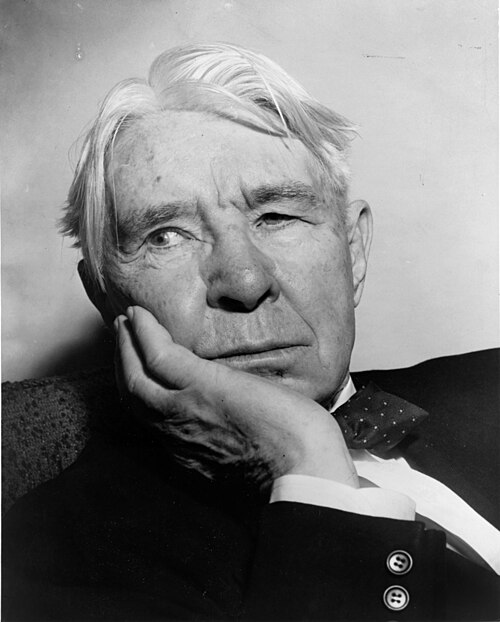
Carl August Sandburg (January 6, 1878 – July 22, 1967) was an American poet, biographer, journalist, and editor. He was America." Carl Sandburg was born in a three-room cottage at 313 East Third Street in Galesburg, Illinois, to Clara Mathilda (née Anderson) and August Sandberg, both of Swedish ancestry. He adopted the nickname "Charles" or “Charlie” in elementary school and, along with his two oldest siblings, changed the spelling of the family name to "Sandburg". At the age of thirteen, Sandburg left school and began driving a milk wagon. He enjoyed "unrivaled appeal as a poet in his day, perhaps because the breadth of his experiences connected him with so many strands of American life". When he died in 1967, President Lyndon B. Johnson observed that "Carl Sandburg was more than the voice of America, more than the poet of its strength and genius.

Historical significance
He won three Pulitzer Prizes: two for his poetry and one for his biography of Abraham Lincoln. During his lifetime, Sandburg was widely regarded as "a major figure in contemporary literature", especially for volumes of his collected verse, including Chicago Poems (1916), Cornhuskers (1918), and Smoke and Steel (1920).

Cite this page
“Carl Sandburg.” thisDay, thisday.info/people/carl-sandburg/. Accessed 19 Oct. 2026.
Carl Sandburg. (n.d.). thisDay. Retrieved October 19, 2026, from https://thisday.info/people/carl-sandburg/
“Carl Sandburg.” thisDay. Accessed October 19, 2026. https://thisday.info/people/carl-sandburg/.