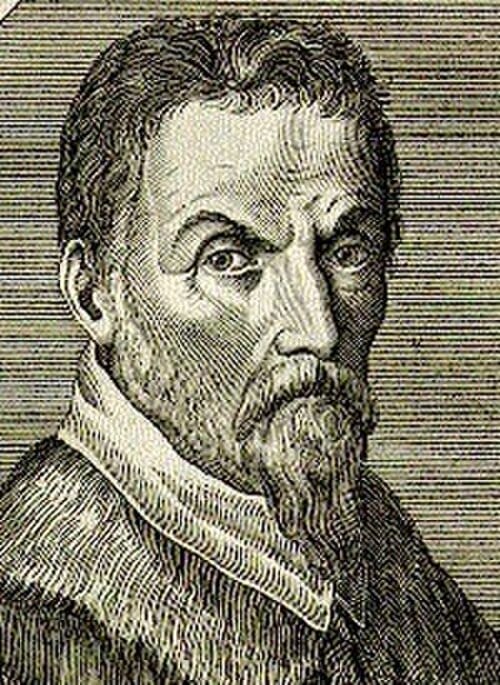
Cesare Cremonini
Italian academic and philosopher
Cite this page
“Cesare Cremonini.” thisDay, thisday.info/people/cesare-cremonini-philosopher/. Accessed 19 Oct. 2026.
Cesare Cremonini. (n.d.). thisDay. Retrieved October 19, 2026, from https://thisday.info/people/cesare-cremonini-philosopher/
“Cesare Cremonini.” thisDay. Accessed October 19, 2026. https://thisday.info/people/cesare-cremonini-philosopher/.
Who was Cesare Cremonini?
Cesare Cremonini (Italian: [ˈtʃeːzare kremoˈniːni, ˈtʃɛː-]; 22 December 1550 – 19 July 1631), sometimes Cesare Cremonino, was an Italian academic and professor of natural philosophy. Cesare Cremonini was born in Cento in the then Papal States. He was a professor of natural philosophy for about 60 years: From 1573 to 1590, at the University of Ferrara. His Latinized name was Cæsar Cremoninus or Cæsar Cremonius. The jealousies caused by this protection helped him to eventually accept a position outside his native province. Cesare Cremonini, sometimes Cesare Cremonino, was an Italian academic and professor of natural philosophy.

Historical significance
Considered one of the greatest philosophers in his time, patronized by Alfonso II d'Este, Duke of Ferrara, corresponding with kings and princes who had his portrait, paid twice the salary of Galileo Galilei, he is now more remembered as an infamous side actor of the Galileo affair, being one of the two scholars who refused to look through Galileo's telescope. Starting at a very young age and considered a great talent, he obtained the patronage of Alfonso II d'Este, Duke of Ferrara (to whom he would dedicate his first major book in 1596).
Cite this page
“Cesare Cremonini.” thisDay, thisday.info/people/cesare-cremonini-philosopher/. Accessed 19 Oct. 2026.
Cesare Cremonini. (n.d.). thisDay. Retrieved October 19, 2026, from https://thisday.info/people/cesare-cremonini-philosopher/
“Cesare Cremonini.” thisDay. Accessed October 19, 2026. https://thisday.info/people/cesare-cremonini-philosopher/.