Kim Koo
Korean independence activist
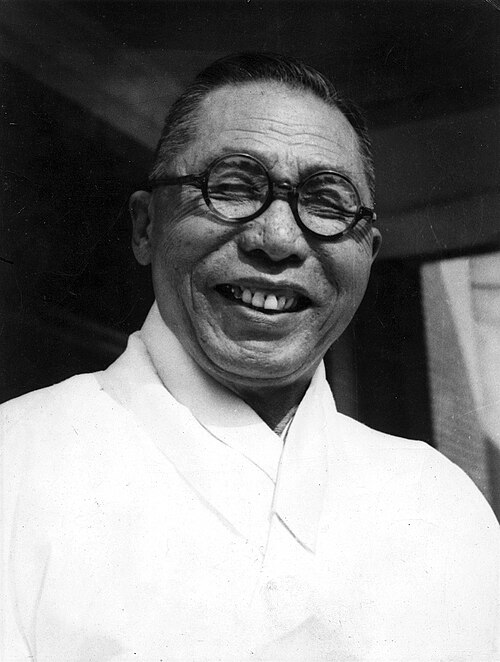
Who was Kim Koo?
Kim Ku (Korean: 김구; Hanja: 金九; August 29, 1876 – June 26, 1949), also known by his art name Paekpŏm, was a Korean independence activist and statesman. Born in Haeju, Hwanghae Province, Joseon, to a poor farming family, Kim was involved in the Donghak Peasant Revolution in 1894. He was a leader of the Korean independence movement against the Empire of Japan, head of the Korean Provisional Government from 1926 to 1927 and from 1940 to 1945, and a Korean reunification activist after 1945. In 1896, he murdered a Japanese man whom he believed was connected to the assassination of Empress Myeongseong (though he is now generally agreed to be a civilian merchant), for which he was imprisoned until escaping in 1898. Kim was briefly a Buddhist monk before becoming a Christian and teacher in 1903.
In 1911, he was arrested in connection with the 105-Man Incident and was again imprisoned until 1914. Kim Ku, also known by his art name Paekpŏm, was a Korean independence activist and statesman.

Historical significance
Kim is revered in South Korea, where he is considered one of the greatest figures in Korean history; his legacy is also somewhat less enthusiastically celebrated in North Korea, due to his anti-communist views. In 1919, he participated in the March First Movement against the Japanese.
