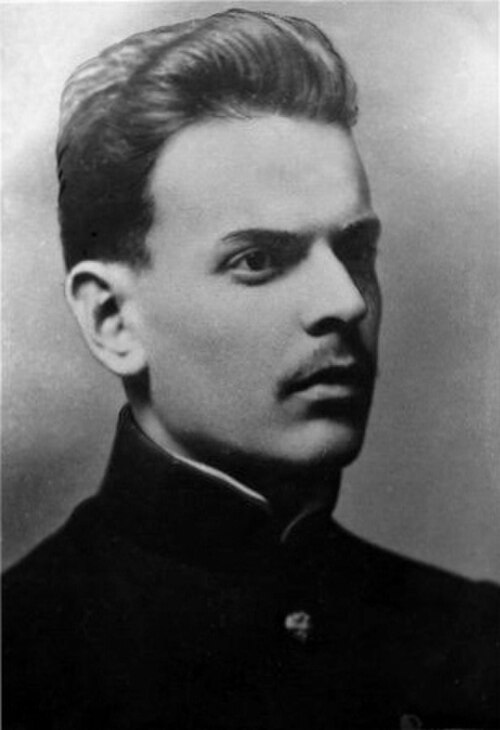
Konstantin Paustovsky
Russian writer
Cite this page
“Konstantin Paustovsky.” thisDay, thisday.info/people/konstantin-paustovsky/. Accessed 12 Oct. 2026.
Konstantin Paustovsky. (n.d.). thisDay. Retrieved October 12, 2026, from https://thisday.info/people/konstantin-paustovsky/
“Konstantin Paustovsky.” thisDay. Accessed October 12, 2026. https://thisday.info/people/konstantin-paustovsky/.
Who was Konstantin Paustovsky?
Konstantin Georgiyevich Paustovsky (Russian: Константи́н Гео́ргиевич Паусто́вский, pronounced [pəʊˈstofskʲɪj]; 31 May [O.S. 19 May] 1892 – 14 July 1968) was a Soviet writer nominated for the Nobel Prize in Literature in 1965, 1966, 1967, and 1968. Konstantin Paustovsky was born in Moscow. His father was a railroad statistician, and was “an incurable romantic and Protestant”. His mother came from the family of Polish intelligentsia. Paustovsky's family were of Zaporozhian Cossack, Turkish and Polish origin. During his captivity there, Maxim met a local Turkish young woman who eventually married him, accompanied him to the Russian Empire and became the mother of his children and Konstantin Paustovsky's grandmother.

Historical significance
As Paustovsky noted in his autobiography, his grandfather Maxim had in his youth served in the army of Czar Nicholas I, was captured during a war with the Ottoman Empire and held as a prisoner of war in the town of Kazanlak (now in Bulgaria). According to Paustovsky, his grandmother's original name was Fatma, but when she converted to Christianity she took the name Honorata.
Cite this page
“Konstantin Paustovsky.” thisDay, thisday.info/people/konstantin-paustovsky/. Accessed 12 Oct. 2026.
Konstantin Paustovsky. (n.d.). thisDay. Retrieved October 12, 2026, from https://thisday.info/people/konstantin-paustovsky/
“Konstantin Paustovsky.” thisDay. Accessed October 12, 2026. https://thisday.info/people/konstantin-paustovsky/.