Liu Bowen
Chinese philosopher and politician
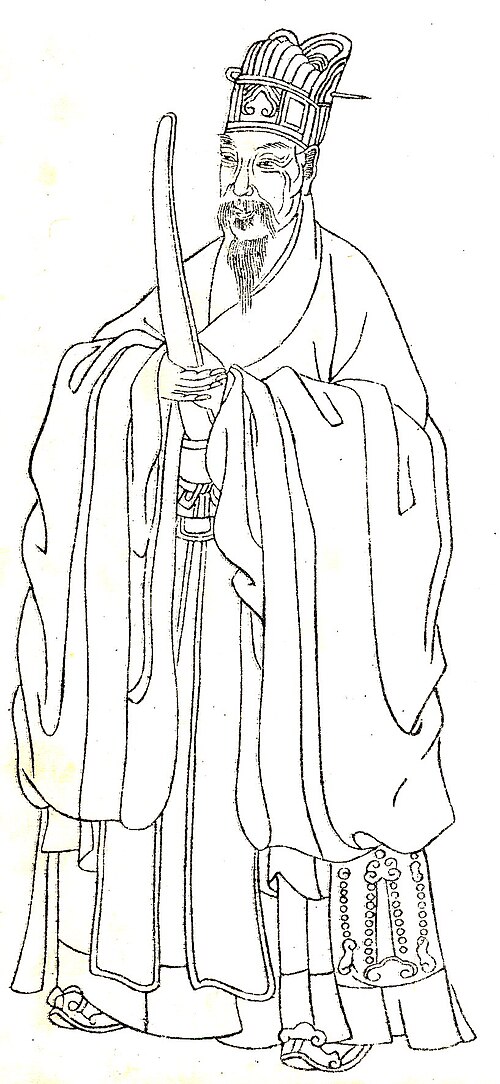
Who was Liu Bowen?
Liu Ji (1 July 1311 – 16 May 1375), courtesy name Bowen, better known as Liu Bowen, was a Chinese military strategist, philosopher, and politician who lived in the late Yuan and early Ming dynasties. He was born in Qingtian County (present-day Wencheng County, Lishui, Zhejiang). He served as a key advisor to Zhu Yuanzhang, the Hongwu Emperor, the founder of the Ming dynasty, in the latter's struggle to overthrow the Yuan dynasty and unify China proper under his rule. He and Jiao Yu co-edited the military treatise known as the Huolongjing (Fire Dragon Manual). Liu Bowen initially aided Zhu Yuanzhang in his ascent to power, but later Li Shanchang and Hu Weiyong quarrelled with Liu, forcing Liu to resign. Liu Bowen warned the Hongwu Emperor that Hu was not suitable for the position of prime minister.
Liu Ji, courtesy name Bowen, better known as Liu Bowen, was a Chinese military strategist, philosopher, and politician who lived in the late Yuan and early Ming dynasties. He and Jiao Yu co-edited the military treatise known as the Huolongjing.
Historical significance
Liu is also known for his prophecies and has been described as the "Divine Chinese Nostradamus". Liu died soon after, possibly having been poisoned by the emperor and Hu Weiyong, in a political affair that became the first of the Four Major Cases of the early Ming dynasty.