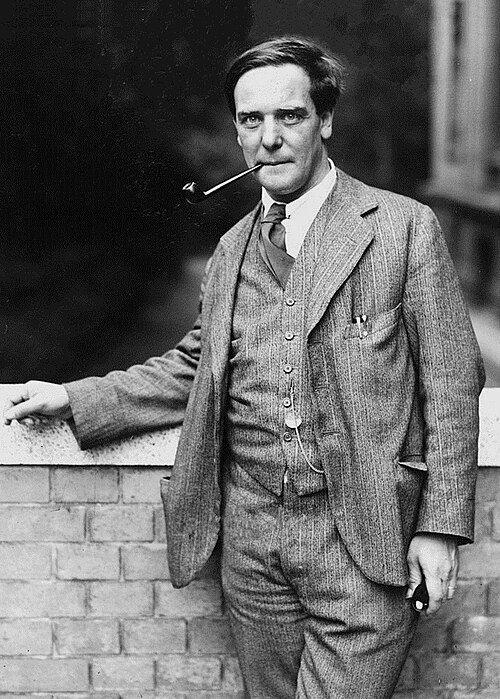
Pyotr Kapitsa
Russian and Soviet physicist
Cite this page
“Pyotr Kapitsa.” thisDay, thisday.info/people/pyotr-kapitsa/. Accessed 5 Oct. 2026.
Pyotr Kapitsa. (n.d.). thisDay. Retrieved October 5, 2026, from https://thisday.info/people/pyotr-kapitsa/
“Pyotr Kapitsa.” thisDay. Accessed October 5, 2026. https://thisday.info/people/pyotr-kapitsa/.
Who was Pyotr Kapitsa?
Pyotr Leonidovich Kapitsa (Russian: Пётр Леонидович Капица; Romanian: Petre Capița; 9 July [O.S. 26 June] 1894 – 8 April 1984), also known as Peter Kapitza, was a Russian and Soviet physicist, whose research focused on low-temperature physics. Kapitsa was born on 9 July [O.S. 26 June] 1894, in Kronstadt, Russia, to the Bessarabian Leonid Petrovich Kapitsa (Romanian: Leonid Petrovici Capița), a military engineer who constructed fortifications, and to the Volhynian Olga Ieronimovna Kapitsa, from the Polish noble (szlachta) Stebnicki family. Besides Russian, the Kapitsa family also spoke Romanian. He subsequently studied in Britain, working for over ten years with Ernest Rutherford in the Cavendish Laboratory at the University of Cambridge, and founding the influential Kapitza club. He graduated from the Petrograd Polytechnical Institute in 1918. His wife and two children died in the flu epidemic of 1918–1919.
Pyotr Leonidovich Kapitsa, also known as Peter Kapitza, was a Russian and Soviet physicist, whose research focused on low-temperature physics.

Historical significance
He was awarded the Nobel Prize in Physics in 1978. Kapitsa's studies were interrupted by the First World War, in which he served as an ambulance driver for two years on the Polish Front. He was the first director (1930–1934) of the Mond Laboratory in Cambridge.
Cite this page
“Pyotr Kapitsa.” thisDay, thisday.info/people/pyotr-kapitsa/. Accessed 5 Oct. 2026.
Pyotr Kapitsa. (n.d.). thisDay. Retrieved October 5, 2026, from https://thisday.info/people/pyotr-kapitsa/
“Pyotr Kapitsa.” thisDay. Accessed October 5, 2026. https://thisday.info/people/pyotr-kapitsa/.