Victor Francis Hess
Austrian–American physicist
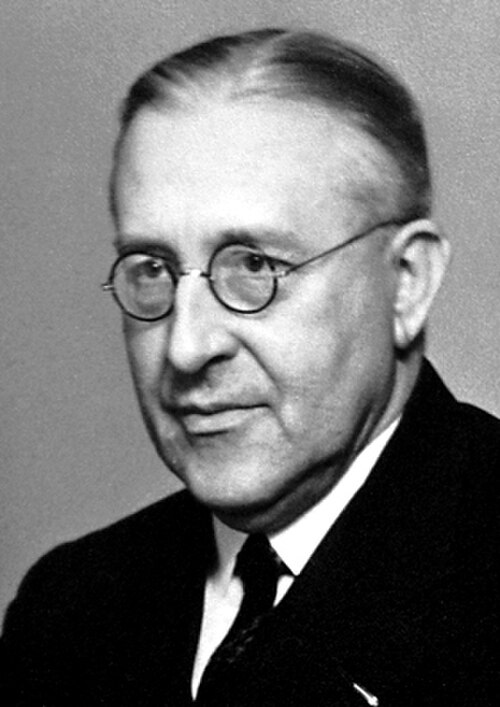
Who was Victor Francis Hess?
Victor Franz Hess (German: [ˈvɪktɔʁ ˈfʁants ˈhɛs]; 24 June 1883 – 17 December 1964) was an Austrian–American experimental physicist who shared the 1936 Nobel Prize in Physics with Carl David Anderson for his discovery of cosmic rays. Victor Franz Hess was born at Waldstein Castle in Deutschfeistritz, Styria, the son of Vinzens Hess and Serafine Edle von Grossbauer-Waldstätt. His father was a royal forester in Prince Louis of Oettingen-Wallerstein's service. He then studied at the University of Graz from 1901 to 1905, and received his Ph.D. in 1906 from the University of Vienna, where he stayed to do postdoctoral research until 1910. In 1920, he was appointed Extraordinary Professor of Experimental Physics at the University of Graz. Hess attended Graz-Gymnasium from 1893 to 1901.

Historical significance
In 1910, Hess became an assistant to Stefan Meyer at the Institute for Radium Research in Vienna. In 1921, he took a leave of absence to become Director of the Research Laboratory at the United States Radium Corporation in New Jersey, as well as Consulting Physicist for the United States Bureau of Mines in Washington, D.C.