EventA man sets fire to an anime studio in Fushimi-ku
DateJuly 18, 2019
LocationKyoto Animation Studio 1, Fushimi ward, Kyoto
People Inside70 people were inside Studio 1
Casualties36 people killed and 34 injured, including the suspect
Confirmed OutcomeShinji Aoba was sentenced to death on January 25, 2024
Did You Know?
Did you know
The attacker bought about 40 litres of gasoline 10 kilometres from Kyoto Animation Studio 1 and is believed to have moved it on a platform trolley. Police later found several unused knives near the scene.
Did you know
Not every piece of Kyoto Animation artwork was lost. A small group of keyframes was on exhibition in Tokushima when the fire occurred. On July 29, the company reported recovering digitized original drawings from a surviving server.
Did you know
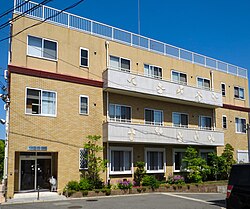
Kyoto Animation's Studio 1 was built in 2007 mainly for animation production staff. The company also operated Studios 2 and 5, while its merchandise development division was based in Uji, one train station away before the 2019 attack.
Did you know
Kyoto Animation had received more than 200 death threats in the year before the attack. President Hideaki Hatta said the anonymous threats had been reported to police and lawyers, and officers briefly patrolled the head office after October 2018.
Did you know
Autopsy results released on July 22, 2019 found that most victims died from burns rather than carbon monoxide poisoning. Kyoto police used DNA testing during an identification process that continued for up to a week.
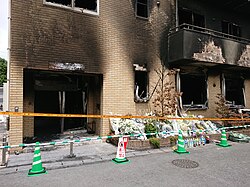
Thirty six people died after an attacker entered Kyoto Animation's Studio 1 in Fushimi ward on the morning of July 18, 2019, carrying about 40 litres of gasoline. The supplied Wikipedia event record places 70 people inside the three storey building when the fuel was ignited at about 10:31 a.m. Another 34 people were injured, a figure that includes the suspect. The fire destroyed most of the materials and computers used by production staff at a company known for The Melancholy of Haruhi Suzumiya, K On!, Clannad, and Nichijou. Those numbers show the scale. At the entrance, fire spread while workers on the upper floors sought another route out of the building.
Studio 1 had been built in 2007 and was classified as a small office building, so it had neither indoor fire hydrants nor sprinklers. The event record also says the building had shown no deficiencies during its October 17, 2018 fire safety inspection. Early reports claimed employees normally used pass cards and that the door happened to be open for visitors, but the later account corrects that detail. No such security system operated there, and the entrance was routinely unlocked during business hours. The correction distinguishes ordinary workplace access from the failure of a security device. Compliance at the last inspection and the absence of particular equipment remain separate documented facts.
Evidence Map: How We Checked the Central Claim
This comparison separates the event page selected for the account from the independently verified page used to corroborate it.
Central claim checked: A man sets fire to an anime studio in Fushimi-ku, Kyoto, Japan, killing 36 people and injuring dozens of others.
The supplied record reconstructs the attack from police findings and witness reports without providing a single complete eyewitness narrative. It says the assailant poured gasoline near the entrance and over several employees before lighting the fuel, burning himself in the process. Workers who escaped chased him after he fled, and he collapsed in the street before police apprehended him roughly 100 metres from Studio 1. Witnesses reported hearing an accusation of plagiarism. That report was an accusation rather than a finding about motive. The strongest account therefore separates observable actions from interpretation: gasoline was bought, transported, poured, and ignited, while later criminal proceedings determined legal responsibility and the chronology of the case.
What happened upstairs is recorded through physical evidence and an expert estimate. Twenty bodies were found on the stairway leading from the third floor toward the roof, indicating that victims had tried to escape in that direction. Tomoaki Nishino, an associate professor at Kyoto University's Disaster Prevention Research Institute, estimated that smoke almost filled the second and third floors within 30 seconds of the explosion. Firefighters brought the blaze under control at 3:19 p.m., nearly five hours after it began, and extinguished it at 6:20 a.m. the next day. These points explain the compressed escape window without inventing individual final moments. The account gives the victims' locations and the estimated spread of smoke, but offers no complete sequence for every person inside.
Watch on YouTube
Find documentaries and videos about: A man sets fire to an anime studio in Fushimi-ku
The physical loss extended beyond the ruined Studio 1 building. Most animation materials and computers there were destroyed, yet two documented exceptions preserved part of the company's work. A small number of keyframes happened to be on exhibition in Tokushima and escaped the fire. On July 29, Kyoto Animation announced that technicians had recovered digitized original drawings from a server that survived. Production did not simply continue unchanged. The source records delays to some works and collaborations, while several events were suspended or cancelled. Identification of the dead also took time. Kyoto police used DNA testing, and on July 25 said all 34 people then counted among the dead had been identified and bodies were being returned to relatives.
Shinji Aoba suffered life threatening burns in the fire, and police waited more than ten months for his recovery. They arrested the 42 year old on May 27, 2020 on suspicion of murder and other offenses. Prosecutors formally indicted him on December 16 of that year. The later court record is unusually clear: Aoba pleaded guilty on September 5, 2023, and a court sentenced him to death on January 25, 2024. The casualty record had also changed after the day of the attack. Two hospitalized victims raised the initial death count from 34 to 35, and a woman who died from septic shock on October 4, 2019 became the thirty sixth victim. By September, the 34 injured people were no longer in life threatening condition.
The Questions the Disaster Left Behind
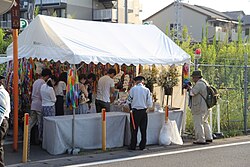
Public support became measurable rather than merely symbolic. Fans and businesses contributed more than ¥3.3 billion in Japan and more than US$2.3 million internationally to help the studio and its employees recover. Japan's National Diet then approved a special measure allowing donations to Kyoto Animation to be exempt from tax. That response sat beside a difficult debate over identifying victims. Company president Hideaki Hatta asked the media not to publish names without regard for families, while relatives and police released information over several weeks. Among those confirmed dead were color designer Naomi Ishida and directors Yasuhiro Takemoto, Yoshiji Kigami, and Futoshi Nishiya. The public record therefore grew through both official disclosure and choices made by grieving families.
The event is often reduced to its death toll, but the supplied sources preserve several different kinds of loss and survival. Thirty six people were killed, colleagues carried severe injuries, and most of Studio 1's production materials vanished. At the same time, keyframes in Tokushima and drawings on a surviving server kept fragments of unfinished work from disappearing. The Express report independently corroborates the central account of the Fushimi attack and the resulting deaths, while the detailed event record supplies the later chronology. A careful account should hold those facts together without claiming that recovered art offsets human loss. The building was destroyed. Some work survived. The people could not be replaced.
Analysis: Kyoto Animation arson attack
What the evidence supports and leaves unresolved
The overview above gives the factual narrative. This optional section separates interpretation from the documented record.
What the record supports
Rapid Police Apprehension: Two Kyoto Animation employees chased the burned attacker after he fled Studio 1, and police apprehended him after he collapsed about 100 metres away. The supplied event record also notes unused knives at the scene. These documented actions preserved an immediate link between the crime scene and the suspect. The evidence supports a narrow conclusion about the arrest itself: its speed and proximity to Studio 1 are clear.
Digital Work Recovered: Kyoto Animation reported on July 29 that digitized original drawings had been recovered from a server that survived the blaze. A separate group of keyframes was already at an exhibition in Tokushima before the attack and remained safe. Together, these records identify specific material that escaped the destruction of most computers and production assets in Studio 1, without understating the much larger human and creative loss.
Support Became Concrete: Fans and businesses raised more than ¥3.3 billion inside Japan and more than US$2.3 million internationally for the company and its employees. The National Diet also passed a special tax measure for donations to Kyoto Animation. These were documented financial and legislative actions, not vague expressions of sympathy. The source does not quantify every use or result of the funds, so the firm conclusion is that support became unusually large, organized, and measurable.
Limits and unresolved questions
Escape Route Overwhelmed: Twenty victims were found on the stairs between the third floor and the roof. Tomoaki Nishino estimated that smoke almost filled the second and third floors within 30 seconds of the initial explosion. Those facts expose how little time remained for people above the entrance to escape. No single decision accounts for every death in the supplied material. The stairway locations and the smoke estimate document a severe upper floor hazard.
Ordinary Access Exploited: Studio 1 had no employee pass card system, despite early reports suggesting that one had been disabled for visitors. Its door was normally unlocked during business hours. The building had passed an October 2018 inspection and, because it was classified as a small office, was not equipped with sprinklers or indoor fire hydrants. These facts describe the conditions the attacker entered, while stopping short of inventing a security failure that the record does not show.
Creative Loss Persisted: Most materials and computers in Studio 1 were destroyed, and some Kyoto Animation works and collaborations were delayed. Several events were suspended or cancelled. The surviving server and offsite keyframes preserved only part of the production record. The source does not assign a complete monetary value to what disappeared, yet the operational damage is documented through lost assets and altered schedules as well as the deaths and injuries.
What strikes us about Kyoto Animation in 2019 is the collision between exact records and an injury that numbers cannot contain. The account gives 10:31 a.m., 40 litres of gasoline, 70 people inside, and 30 seconds for smoke to fill upper floors. Those details make the attack legible, but they do not make it proportionate or comprehensible. We keep coming back to the drawings recovered from one server and the keyframes that happened to be in Tokushima. Human work carries memory, and the contrast is brutal. Files could be recovered. Thirty six colleagues could not.
The lead-up included Studio 1 passes its last recorded fire safety inspection before the attack..
Key figures included Shinji Aoba, Hideaki Hatta, Tomoaki Nishino.
In the aftermath: Kyoto Animation reports recovering digitized drawings from a surviving server.; Prosecutors formally indict Shinji Aoba.; A court sentences Shinji Aoba to death..
Public support became measurable rather than merely symbolic.
About this article
AI assisted with source research and drafting. Before publication, automated safeguards checked direct citations, independent corroboration of the central claim, factual consistency, and required article structure. A human editor does not necessarily review every article before publication, so errors may remain. Read our editorial process.
The direct historical sources used for the central event are listed above.
Images via Wikimedia Commons.
Found an error? Let us know.
Advertisement
Advertisement
Test Your Knowledge
Based on the article you just read — 5 questions, under a minute.
0 of 5 answered
History runs on facts, and this project runs on coffee!
Your support is incredibly helpful and genuinely appreciated.