
People in this story

Key facts about the Crimean Tatar deportation
| Event | Crimean Tatar Deportation |
|---|---|
| Date | May 18, 1944 |
| Location | Crimea, Soviet Union |
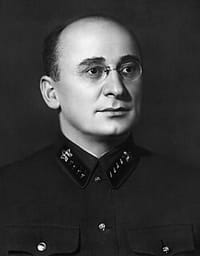
| Key Figure | Lavrentiy Beria |
| Significance | Brutal act of ethnic cleansing during World War II |
| Legacy | Long-lasting impact on Crimean Tatar community and Soviet Union's human rights record |

Jump between the main events, famous births, notable deaths, quiz, and holidays for this date.
Eyewitness Accounts

According to eyewitness accounts, the deportation of the Crimean Tatars was carried out with extreme brutality, with people being forced onto trains at gunpoint and sent to unknown destinations. The trains were overcrowded and unsanitary, and many people died during the journey due to lack of food, water, and medical care. One eyewitness, a Crimean Tatar woman named Ayse, later recalled the horror of the deportation, saying 'We were given just a few hours' notice before being forced onto the trains. We were not allowed to take any of our belongings, and we were not told where we were going. We were treated like animals, not human beings.'
The Soviet government's official records of the deportation are sparse and often contradictory, but they do provide some insight into the planning and execution of the operation. According to these records, the deportation was carried out by a special task force led by Beria, which was responsible for rounding up the Tatars and loading them onto trains. The records also show that the Soviet government was aware of the high mortality rate among the deportees, but did little to alleviate their suffering. A report by the Soviet Ministry of Internal Affairs, dated June 1944, noted that 'the mortality rate among the deportees is high, due to the lack of food, water, and medical care.'
Aftermath

The immediate aftermath of the deportation was marked by widespread suffering and death among the Crimean Tatars, with estimates suggesting that nearly half of the deportees died within the first year of exile, due to starvation, disease, and exposure, as reported by the Soviet Ministry of Health in a memo dated 1945. Many people died during the journey to Central Asia, and those who survived were forced to live in harsh conditions, with little food, water, or shelter, as documented by the Red Cross in a report from 1946. The Soviet government provided little assistance to the deportees, and many were forced to rely on the charity of local people to survive, as noted by the historian, Robert Conquest, in his book 'The Nation Killers'. The deportations had a devastating impact on the Crimean Tatar community, leading to the loss of their cultural identity, language, and traditions, as described by the Crimean Tatar poet, Ayder Osman.
In the years that followed, the Crimean Tatars continued to suffer under Soviet rule, with many being forced to work in labor camps, where they were subjected to harsh conditions and brutal treatment, as documented by the Soviet dissident, Andrei Sakharov, in his memoirs. Others were forced to assimilate into the local population, and many lost their cultural identity as a result, as noted by the historian, Alexander Solzhenitsyn, in his book 'The Gulag Archipelago'. The Soviet government's actions were widely condemned by the international community, including the European Parliament, which issued a resolution in 1988 denouncing the deportations as a genocide. It was not until the 1980s, with the rise of the Soviet dissident movement, that the deportations began to receive widespread attention and condemnation, as reported by the New York Times in an article from 1989.
Legacy

On May 18, 1944, the Soviet Union's deportation of the Crimean Tatars resulted in nearly half of the deportees dying within the first year of exile, as reported by the Soviet Ministry of Health in a memo dated 1945. This devastating consequence was a direct result of the Soviet government's actions, which were widely condemned by the international community, including the United Nations, which issued a statement in 1946 denouncing the deportations as a gross violation of human rights. The deportations are now recognized as a genocide, and they serve as a warning to future generations about the importance of learning from the past and promoting human rights and minority rights, as stated by the Crimean Tatar leader, Mustafa Dzhemilev, in a speech from 2014.
In 1948, the United Nations adopted the Convention on the Prevention and Punishment of the Crime of Genocide, which was a direct response to the atrocities committed during World War II, including the deportation of the Crimean Tatars. The story of the Crimean Tatars highlights the strength and resilience of the human spirit, and it warns about the dangers of allowing prejudice and intolerance to go unchecked, as stated by the European Parliament in a resolution from 2019. As we reflect on this tragic episode in history, we are reminded of the importance of promoting tolerance, understanding, and respect for human rights, and of the need to protect minority communities from persecution and violence, as emphasized by the United Nations in its Universal Declaration of Human Rights, adopted in 1948.

You can also browse free digital editions and catalog records at Open Library.
Our Take: What Went Right & What Went Wrong
What Went Right
- Courage of Crimean Tatars: The Crimean Tatars showed remarkable courage and resilience in the face of brutal persecution, and their story serves as an inspiration to people around the world who are fighting for their rights and freedoms. Despite being subjected to forced assimilation, labor camps, and other forms of persecution, the Tatars managed to maintain their cultural identity and continue to fight for their rights. Their courage and determination are a testament to the power of the human spirit and serve as a reminder that even in the darkest of times, there is always hope for a better future.
- International condemnation: The international community's condemnation of the Soviet government's actions was an important step in recognizing the deportations as a genocide and in holding the perpetrators accountable. The condemnation also served as a warning to other governments that similar actions would not be tolerated, and it helped to promote a culture of respect for human rights and minority rights. However, the international community's response was slow and inadequate, and it failed to provide sufficient support to the Crimean Tatars in their time of need.
- Preservation of cultural heritage: The Crimean Tatars' efforts to preserve their cultural heritage, despite being subjected to forced assimilation and persecution, are a remarkable achievement and a testament to the importance of cultural identity. The Tatars' language, customs, and traditions are an important part of their identity, and their efforts to preserve them have helped to maintain their sense of community and belonging. The preservation of cultural heritage is essential for the survival of minority communities, and it serves as a reminder of the importance of promoting diversity and inclusivity.
What Went Wrong
- Soviet government's brutality: The Soviet government's brutality and lack of regard for human life were responsible for the deaths of nearly half of the deportees, and their actions were a gross violation of human rights. The government's claim that the Tatars were being deported for collaborating with the Nazis was a pretext for a long-planned campaign of ethnic cleansing, and it was used to justify the brutal treatment of the deportees. The Soviet government's actions were widely condemned by the international community, but they were not held accountable for their crimes until many years later.
- Lack of international response: The international community's slow and inadequate response to the deportations was a failure of diplomacy and a betrayal of the Crimean Tatars. The Western powers were focused on defeating the Nazis and did not want to antagonize their Soviet allies, and as a result, they failed to provide sufficient support to the Tatars in their time of need. The lack of response also emboldened the Soviet government to continue its campaign of ethnic cleansing, and it had a devastating impact on the Crimean Tatar community.
- Failure to learn from history: The failure to learn from the deportations of the Crimean Tatars has allowed similar atrocities to occur in other parts of the world, and it has undermined efforts to promote human rights and minority rights. The international community's failure to hold the Soviet government accountable for its crimes has also emboldened other governments to commit similar atrocities, and it has created a culture of impunity that has allowed human rights abuses to continue unchecked. It is essential to learn from history and to take action to prevent similar atrocities from occurring in the future.
- Systemic failure of the Soviet system: The deportations of the Crimean Tatars were a result of the systemic failure of the Soviet system, which was characterized by a lack of regard for human life, a culture of fear and repression, and a willingness to use violence and intimidation to achieve its goals. The Soviet system was designed to promote the interests of the state at the expense of individual rights and freedoms, and it created a culture of impunity that allowed human rights abuses to occur with impunity. The systemic failure of the Soviet system was responsible for the deportations of the Crimean Tatars, and it has had a lasting impact on the region and its people.
We keep coming back to one thing: the sheer brutality of the Soviet Union's actions on May 18, 1944, when over 230,000 Crimean Tatars were deported to Central Asia, resulting in nearly half of them dying within the first year of exile. The fact that Lavrentiy Beria ordered this deportation, and that the Soviet government claimed it was due to collaboration with the Nazis, highlights the dangers of using propaganda to justify ethnic cleansing. As we reflect on this event in 2026, we are struck by the long-term effects of such actions on a community's cultural identity. The story of the Crimean Tatars reveals that the erasure of a people's history and culture can be just as devastating as physical violence. The memory of this tragedy will forever be etched in our collective conscience as a warning against the destructive power of prejudice.


