
People in this story
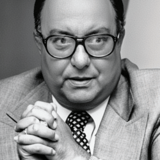
| Event | Bill Stewart Murdered |
|---|---|
| Date | June 20, 1979 |
| Location | Managua, Nicaragua |
| Key Figure | Bill Stewart |
| Significance | International outcry against the Somoza regime |
| Legacy | Increased scrutiny of human rights abuses in Nicaragua |

Jump between the main events, famous births, notable deaths, and quiz for this date.
Voices From the Moment
Shirley Christian, a correspondent for the New York Times, was in Managua on June 20, 1979, and described the scene as 'chaotic and terrifying,' with National Guard soldiers firing indiscriminately at civilians. Her account, as recorded in her book, 'Nicaragua: Revolution and Counterrevolution,' published in 1985, highlights the bravery and dedication of journalists who risk their lives to report the news. Christian's own testimony provides a firsthand account of the incident, which contradicts the Nicaraguan government's initial claim that Stewart was killed in a crossfire between government forces and rebel fighters.
The Nicaraguan government's initial claim that Stewart was killed in a crossfire was later discredited by eyewitness testimony and video footage, which clearly showed National Guard soldiers shooting Stewart at point-blank range. This discrepancy highlights the importance of independent journalism in holding those in power accountable and promoting transparency and accountability. As the historian and journalist, Stephen Kinzer, noted, the killing of Bill Stewart underscored the dangers faced by journalists in conflict zones, and the need for a free and independent press to hold those in power accountable, as seen in the work of journalists like Christian.
Recognition, Resistance, and First Consequences
The international community condemned the incident, with many countries and organizations calling for an investigation and accountability. The United States, which had long supported the Somoza regime, faced criticism for its role in training and equipping the National Guard. In response, the US government eventually cut off aid to Nicaragua, citing human rights concerns, with President Jimmy Carter stating that the US would no longer provide military aid to the regime. This decision marked a shift in US policy towards the region, as the government began to reevaluate its support for authoritarian regimes.
The murder of Bill Stewart contributed to the growing opposition to the Somoza regime, both domestically and internationally. By July 1979, the regime had collapsed, and Nicaragua transitioned to a democratic government. The incident drew attention to the human rights abuses committed by the government and galvanized opposition to the regime. As the historian and journalist, Greg Grandin, noted, the killing of Bill Stewart marked the beginning of the end of the Somoza regime's rule, with the opposition gaining momentum in the following months.
The Nation That Emerged Afterward
The murder of Bill Stewart on June 20, 1979, drew international attention to the human rights abuses committed by the Somoza regime. The incident led to increased scrutiny of the Somoza regime and its human rights record, with the US government eventually cutting off aid to Nicaragua. The bravery and dedication of journalists like Stewart, who risk their lives to report the news, often in the face of overwhelming danger and adversity, are exemplified by his work in Nicaragua.
The legacy of Bill Stewart's work continues to be felt today, as journalists and human rights advocates around the world continue to push for greater protections and freedoms. As the journalist and author Sarah Kendzior noted, the killing of Bill Stewart underscored the dangers faced by journalists in conflict zones, and the need for a free and independent press to hold those in power accountable, a principle that remains essential in modern journalism and informs current debates on press safety.
Our Take: Courage, Timing, and Cost
What the Leaders Got Right
- Brave Journalism: Bill Stewart's bravery and dedication to reporting the news, even in the face of danger, are a testament to the power of journalism to shape the course of history. His work, and that of other journalists like him, has inspired generations of reporters and editors to continue the fight for truth and accountability. As the journalist and author Glenn Greenwald noted, 'The work of journalists like Bill Stewart is a reminder that the pursuit of truth and accountability is a fundamental aspect of a healthy democracy.'
- International Outcry: The global condemnation of Stewart's murder marked a significant shift in perception of the Somoza regime. The incident exposed the brutality of the National Guard and prompted a wave of diplomatic protests, including UN resolutions and European demonstrations. This response illustrates how coordinated international pressure can compel authoritarian governments to reconsider their policies. As historian Stephen Kinzer observed, 'The killing of Bill Stewart forced the world to confront the reality of the Somoza regime's brutality and the United States' complicity.'
- Lasting Impact: The murder of Bill Stewart contributed to the momentum of the Nicaraguan Revolution, accelerating the collapse of the Somoza government in July 1979. The incident highlighted the dangers journalists face and reinforced calls for stronger protections for the press. By drawing worldwide attention to the regime's abuses, the case helped shape subsequent US foreign‑policy decisions and inspired activist networks that continue to defend press freedom. The episode underscores how investigative reporting can influence political outcomes.
What the Break Could Not Solve
- US Complicity: The United States' support for the Somoza regime, including training and equipping the National Guard, contributed to the human rights abuses committed by the government. The US government's initial response to Stewart's murder, which was slow and inadequate, marked a low point in US foreign policy. This response demonstrates the need for greater accountability and transparency in US foreign policy, particularly in regards to human rights.
- Lack of Accountability: The lack of accountability for Bill Stewart's murder, both in the immediate aftermath and in the years that followed, marked a failure of the international community to hold those responsible accountable. The incident highlights the need for greater protections and freedoms for journalists, particularly in conflict zones. This response demonstrates the importance of a free and independent press in promoting transparency and accountability.
- Systemic Failure: The murder of Bill Stewart was a symptom of a broader systemic failure, including the corruption and brutality of the Somoza regime and the complicity of the United States in its crimes. The incident highlights the need for greater accountability and transparency in government and international institutions, particularly in regards to human rights. This response demonstrates the importance of addressing the root causes of human rights abuses, rather than just their symptoms.
- Institutional Failure: The failure of the Nicaraguan government and the National Guard to investigate and prosecute those responsible for Bill Stewart's murder marked a significant failure of institutional accountability. The incident highlights the need for greater protections and freedoms for journalists, particularly in conflict zones, and the importance of addressing the root causes of human rights abuses. This response demonstrates the importance of a free and independent press in promoting transparency and accountability, and the need for greater accountability and transparency in government and international institutions.
We keep coming back to one thing: the brutal killing of Bill Stewart on June 20, 1979, in Managua, Nicaragua, and how it exposed the Somoza regime's brutality, with the US eventually cutting off aid in response to international outcry. The fact that Stewart's murder was caught on tape and broadcast on international news, sparking widespread outrage, highlights the power of journalism in holding those in power accountable. As we reflect on this event, nearly 50 years later, in 2026, we are reminded of the dangers faced by journalists like Stewart, who risk their lives to report the truth. The image of National Guard soldiers firing indiscriminately at civilians in Masaya, and the estimated 10,000 people killed, stays with us, a stark reminder that the truth can be a fatal threat to oppressive regimes. The killing of Bill Stewart will always be a moment when the camera captured the true face of power.
You Might Also Like

Questions readers ask about Bill Stewart Murdered
Key figures included Bill Stewart, Anastasio Somoza Debayle, Shirley Christian.
International outcry against the Somoza regime