People in this story

| Event | Federal Grand Jury Indicts 14 for Khobar Towers Bombing |
|---|---|
| Date | June 21, 2001 |
| Location | Dhahran, Saudi Arabia |
| Key Figure | FBI Director Louis Freeh |
| Significance | First major terrorist attack on US targets in Saudi Arabia |
| Legacy | Led to increased security measures for US personnel in Saudi Arabia |

Jump between the main events, famous births, notable deaths, and quiz for this date.

First Reports From the Scene
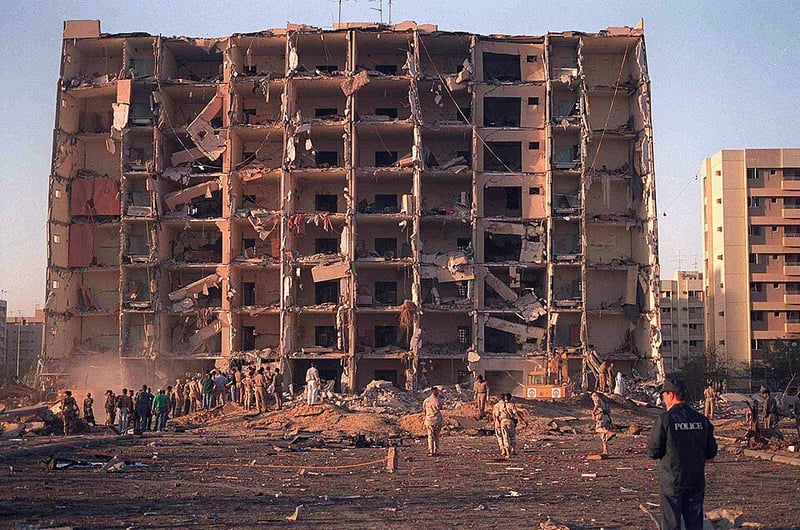
As FBI Director Louis Freeh noted in his testimony before the US Senate, the Khobar Towers bombing was a 'devastating attack' that struck our military presence in Saudi Arabia's Dhahran neighborhood, and the investigation that followed was 'one of the most complex and challenging' in the agency's history, involving a thorough review of the evidence and a painstaking effort to identify those responsible.
The correspondent for the New York Times reported that the bombing marked a major shift in the way the US approached security in the region, and highlighted the need for greater cooperation and intelligence sharing between the US and Saudi Arabia to prevent future attacks like the 1998 United States embassy bombings.
Rescue, Response, and Fallout
In the immediate aftermath of the bombing, the US government launched a major investigation, led by the FBI, which involved a thorough review of the evidence and a painstaking effort to identify those responsible, and the US military took steps to increase security at its facilities in Saudi Arabia, including the deployment of additional troops and the implementation of new security protocols.
In the years that followed, the US and Saudi governments worked to strengthen their cooperation on counter-terrorism, including the sharing of intelligence and the coordination of law enforcement efforts, and the US military continued to maintain a significant presence in the kingdom, with a focus on training and advising Saudi security forces.
The Questions the Disaster Left Behind
The lasting importance of Khobar Towers Bombing lies in what changed after June 21, 2001. The Khobar Towers bombing led to a re-evaluation of US security policies in the kingdom, and the indictment of 14 individuals in connection with the bombing was a major breakthrough in the case, but also highlighted the challenges of bringing terrorists to justice.
The legacy of the Khobar Towers bombing continues to be felt today, with the US and Saudi governments remaining vigilant in their efforts to prevent future attacks and protect the security of US personnel in the kingdom.
Our Take: Risk, Response, and Accountability
What Worked Under Pressure
- FBI Investigation: The FBI investigation into the Khobar Towers bombing was a major success, involving a thorough review of the evidence and a painstaking effort to identify those responsible, and the indictment of 14 individuals in connection with the bombing was a significant breakthrough in the case.
- US-Saudi Cooperation: The US and Saudi governments have made significant progress in their cooperation on counter-terrorism, including the sharing of intelligence and the coordination of law enforcement efforts, which has helped to prevent future attacks and protect the security of US personnel in the kingdom.
- Security Measures: The US military has implemented significant security measures to protect its personnel in Saudi Arabia, including the deployment of additional troops and the implementation of new security protocols, which has helped to reduce the risk of future attacks.
What Failed Before Impact
- Intelligence Failures: The US intelligence community failed to provide adequate warning of the Khobar Towers bombing, despite having indications of a potential threat, which highlighted the need for improved intelligence sharing and analysis.
- Lack of Cooperation: The US and Saudi governments did not always cooperate effectively in the aftermath of the bombing, with some Saudi officials reportedly hesitant to share information or cooperate with the US investigation, which hindered the effort to bring those responsible to justice.
- Inadequate Security: The security measures in place at the Khobar Towers at the time of the bombing were inadequate, with some vulnerabilities that were exploited by the terrorists, which highlighted the need for improved security protocols and procedures.
- Systemic Failures: The Khobar Towers bombing highlighted systemic failures in the US approach to security in Saudi Arabia, including a lack of coordination between different agencies and a failure to prioritize counter-terrorism efforts, which contributed to the success of the attack.
What strikes us about the Khobar Towers bombing is the way it highlights the complexities and challenges of international counter-terrorism efforts, and the need for cooperation and intelligence sharing between different countries to prevent future attacks, and we keep coming back to the fact that the legacy of this event continues to be felt today, with the US and Saudi governments remaining vigilant in their efforts to protect the security of US personnel in the kingdom.
You Might Also Like

Questions readers ask about Khobar Towers Bombing
Key figures included Louis Freeh.
First major terrorist attack on US targets in Saudi Arabia