
Cite this page
“The Great Fire of London: A Devastating Conflagration.” thisDay, thisday.info/blog/27-february-2026/. Accessed 13 Oct. 2026.
The Great Fire of London: A Devastating Conflagration. (n.d.). thisDay. Retrieved October 13, 2026, from https://thisday.info/blog/27-february-2026/
“The Great Fire of London: A Devastating Conflagration.” thisDay. Accessed October 13, 2026. https://thisday.info/blog/27-february-2026/.
What was The Great Fire of London: A Devastating Conflagration?
The Great Fire of London: A Devastating Conflagration took place on September 2, 1666 in London, England.
Key facts about The Great Fire of London: A Devastating Conflagration
| Event | The Great Fire of London |
|---|---|
| Date | September 2, 1666 |
| Location | London, England |
| Key Figure | King Charles II |
| Significance | A major conflagration that destroyed a significant portion of the city of London |
| Legacy | The Great Fire of London led to significant changes in building codes and firefighting practices in London |
Quick Facts
| Event | The Great Fire of London |
|---|---|
| Date | September 2, 1666 |
| Location | London, England |
| Key Figure | King Charles II |
| Significance | A major conflagration that destroyed a significant portion of the city of London |
| Legacy | The Great Fire of London led to significant changes in building codes and firefighting practices in London |
Overview

The Great Fire of London began on September 2, 1666, at a bakery on Pudding Lane, near the River Thames. The fire quickly spread due to strong winds and the largely wooden construction of the city. The fire raged for four days, destroying a significant portion of the city.
The fire was eventually brought under control on September 5, 1666, when a firebreak was created by demolishing buildings in the path of the fire. The fire destroyed an estimated 13,200 houses, 87 churches, and 44 guild halls.
The immediate consequences of the fire were devastating, with thousands of people left homeless and without access to basic necessities like food and water. However, the fire also led to significant changes in building codes and firefighting practices in London.
The Great Fire of London was a major turning point in the history of the city, leading to the rebuilding of London with many of the new buildings designed with fire safety in mind. The fire also led to the creation of the London Building Act, which regulated the construction of buildings in the city.

See all events, births, and deaths recorded on this date.
View February 27
Eyewitness & Chronicle Accounts
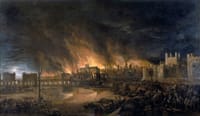
The diary of Samuel Pepys, a contemporary witness to the fire, provides a detailed account of the events leading up to and during the fire. Pepys wrote that the fire began at a bakery on Pudding Lane and quickly spread due to strong winds and the largely wooden construction of the city.
Pepys also described the chaos and destruction caused by the fire, writing that 'the whole city was in a flame, and the people were running about like madmen, not knowing which way to go.'
Historians have long debated the reliability of Pepys' account, with some arguing that he may have exaggerated or distorted the events for dramatic effect. However, most historians accept Pepys' account as a generally accurate description of the fire.
"The whole city was in a flame, and the people were running about like madmen, not knowing which way to go."
Aftermath & What Changed
The immediate aftermath of the fire was marked by chaos and destruction, with thousands of people left homeless and without access to basic necessities like food and water. However, the fire also led to significant changes in building codes and firefighting practices in London.
The London Building Act, passed in 1667, regulated the construction of buildings in the city, requiring that buildings be made of fire-resistant materials and that firebreaks be created in the event of a fire.
The fire also led to the creation of the London Fire Brigade, which was established in 1667 to provide firefighting services to the city. The brigade was responsible for responding to fires and preventing them from spreading.
Conclusion
The Great Fire of London was a devastating conflagration that destroyed a significant portion of the city of London in 1666. However, the fire also led to significant changes in building codes and firefighting practices in London, making the city a safer place for its residents.
The fire also had a lasting impact on the city's architecture, with many of the new buildings designed with fire safety in mind. The fire also led to the creation of the London Building Act, which regulated the construction of buildings in the city.
The Great Fire of London was a major turning point in the history of the city, leading to the rebuilding of London with many of the new buildings designed with fire safety in mind. The fire also led to the creation of the London Fire Brigade, which was established in 1667 to provide firefighting services to the city.
Our Take: What Went Right & What Went Wrong
What Went Right
- Effective Firefighting Practices: The Great Fire of London led to the creation of the London Fire Brigade, which was established in 1667 to provide firefighting services to the city. The brigade was responsible for responding to fires and preventing them from spreading.
- Improved Building Codes: The London Building Act, passed in 1667, regulated the construction of buildings in the city, requiring that buildings be made of fire-resistant materials and that firebreaks be created in the event of a fire.
- Increased Fire Safety Awareness: The Great Fire of London led to a greater awareness of the importance of fire safety, with many of the new buildings designed with fire safety in mind.
What Went Wrong
- Inadequate Firefighting Equipment: The Great Fire of London highlighted the need for better firefighting equipment, including more effective hoses and pumps.
- Poor Building Construction: The largely wooden construction of the city made it vulnerable to fires, and the Great Fire of London highlighted the need for more fire-resistant materials.
- Lack of Emergency Planning: The Great Fire of London highlighted the need for better emergency planning, including evacuation procedures and emergency services.
The Great Fire of London was a devastating conflagration that destroyed a significant portion of the city of London in 1666. However, the fire also led to significant changes in building codes and firefighting practices in London, making the city a safer place for its residents. The fire also had a lasting impact on the city's architecture, with many of the new buildings designed with fire safety in mind.