
Short answer
What was The Boston Port Act - March 3, 1774?
The Boston Port Act - March 3, 1774 took place on March 3, 1774 in London, England.
EventBoston Port Act
DateMarch 3, 1774
LocationLondon, England
Key FigureLord North
SignificanceLed to the American Revolution
LegacySymbol of British tyranny
Did You Know?
Overview
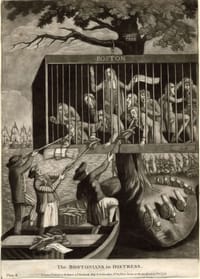
In the early 1770s, tensions between the American colonies and Great Britain were running high, with the colonies protesting British taxation policies and the British responding with increasingly harsh measures.
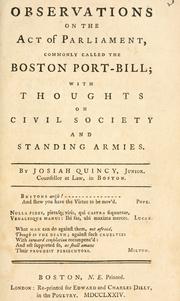
The Boston Port Act was passed by the British Parliament on March 3, 1774, in response to the Boston Tea Party, which had taken place just a few months earlier.
The act closed the port of Boston until the colonies paid for the tea they had destroyed, and it also provided for the trial of colonial officials in Britain, rather than in the colonies.



Eyewitness Accounts
According to the diary of John Adams, a leader of the American Revolution, the Boston Port Act was seen as a direct attack on the rights and freedoms of the American colonies.
The act was widely condemned by the colonists, who saw it as an attempt to strangle their economy and undermine their autonomy.
"The die is cast"
Aftermath
The immediate aftermath of the Boston Port Act was one of widespread protest and resistance, with the colonies coming together to support Boston and condemn the British.
The act ultimately contributed to the outbreak of the American Revolution, as the colonies began to take up arms against the British in response to the Intolerable Acts.
Legacy
The Boston Port Act was a pivotal moment in American history, marking the beginning of the end of British rule in the colonies and the start of a long and bloody revolution.
Today, the act is remembered as a symbol of British tyranny and a testament to the power of American resistance and determination.
Our Take: What Went Right & What Went Wrong
What Went Right
- United the colonies: The Boston Port Act helped to unite the colonies against a common enemy, ultimately contributing to the success of the American Revolution. The act also highlighted the importance of economic freedom and the need for the colonies to be able to govern themselves.
- Galvanized opposition: The act galvanized opposition to British rule, with many colonists who had previously been loyal to the British beginning to question their allegiance. This opposition ultimately led to the outbreak of the American Revolution.
- Exposed British tyranny: The Boston Port Act exposed the tyranny of the British government, revealing the extent to which they were willing to go to maintain their control over the colonies. This exposure helped to build support for the American Revolution among the colonists and internationally.
What Went Wrong
- Harm to Boston's economy: The Boston Port Act had a devastating impact on Boston's economy, leading to widespread unemployment and poverty among its citizens. This harm was felt for many years after the act was passed.
- Escalated tensions: The act escalated tensions between the colonies and Great Britain, ultimately contributing to the outbreak of the American Revolution. This escalation led to the loss of many lives and the destruction of many communities.
- Undermined colonial autonomy: The Boston Port Act undermined the autonomy of the American colonies, providing for the trial of colonial officials in Britain rather than in the colonies. This undermining of autonomy helped to build support for the American Revolution among the colonists.
We think the Boston Port Act was a pivotal moment in American history, marking the beginning of the end of British rule in the colonies. What strikes us is the way in which the act helped to unite the colonies against a common enemy, ultimately contributing to the success of the American Revolution.
Want to learn more? Read the full article on
Wikipedia.
Historical data sourced under CC BY-SA 4.0.
You Might Also Like
Related questions
Questions readers ask about The Boston Port Act
Explore connected topic hubs
About this article