EventUnited States and Soviet Union sign the START I treaty
DateJuly 31, 1991
LocationMoscow, Soviet Union
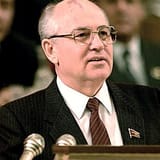
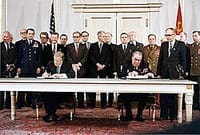
Signed ByPresident George H. W. Bush and President Mikhail Gorbachev
Key Limits6,000 warheads and 1,600 missiles and bombers per side
Entered Into ForceDecember 5, 1994, after the Lisbon Protocol
Did You Know?
Did you know
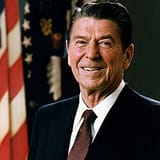
Ronald Reagan first proposed the idea behind START in a commencement address at Eureka College in May 1982, deliberately choosing the word reduction over the limitation language that had defined the earlier SALT talks of the 1970s.
Did you know
The treaty's verification regime, negotiated between the United States and the Soviet Union, included twelve distinct types of on-site inspection, a level of intrusiveness into each other's military facilities that neither government had ever agreed to before 1991.
Did you know
START I did not actually enter into force until December 1994, more than three years after the Moscow signing, because the Soviet Union collapsed in the meantime and the Lisbon Protocol had to bring in four separate successor states.
Did you know
Belarus, Kazakhstan, and Ukraine each inherited Soviet nuclear weapons on their own territory in 1991, but all three gave them up and joined the Nuclear Non-Proliferation Treaty as non-nuclear states rather than keeping them.
Did you know
By the time full implementation finished in 2001, roughly eighty percent of the strategic nuclear weapons that had existed back in 1991, when Presidents Bush and Gorbachev signed the treaty, had already been eliminated under its terms.
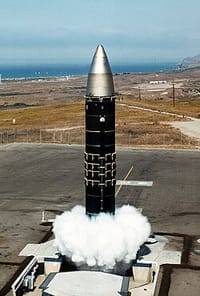
By the time President George H. W. Bush and Soviet President Mikhail Gorbachev sat down in Moscow on July 31, 1991, the two men were putting their names to something that had taken nearly a decade to reach, a treaty that for once did not just freeze the size of the American and Soviet nuclear arsenals but actually forced both sides to shrink them. The Strategic Arms Reduction Treaty, shortened almost immediately to START and later to START I once a follow-on round of talks began, set a shared ceiling of 6,000 warheads and 1,600 intercontinental ballistic missiles and bombers for each country, numbers that sound abstract until you remember that both nations were sitting on stockpiles built up over four decades of Cold War rivalry.
What made START I different from the arms control agreements that came before it, and there had been a few going back to the 1970s, was that it did not just cap future growth, it demanded real cuts, and it backed those cuts with an inspection regime that the United States and the Soviet Union actually had to live with. Negotiators eventually built in twelve separate kinds of on site inspection, along with routine data exchanges on missile locations and technical specifications, which meant neither government could quietly cheat on the numbers without a fairly good chance of getting caught. That verification framework, more than the specific 1991 warhead count, is probably what historians tend to point to when they talk about why this treaty mattered.
Explore July 31 in History
Jump between the main events, famous births, notable deaths, and quiz for this date.
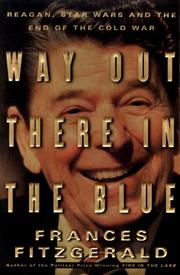
The road to that Moscow signing ceremony really started back in May 1982, when Ronald Reagan first floated the idea in a commencement speech at his old college in Illinois, then laid it out more formally to Soviet negotiators in Geneva a few weeks later. Progress stalled for years afterward, and the Soviets walked away from the table for a stretch in the mid 1980s. Things only really started moving once Mikhail Gorbachev took charge in Moscow and began pushing his own reform agenda, and the 1986 Reykjavik summit between Reagan and Gorbachev, tense and inconclusive as it was at the time, came before the Intermediate Range Nuclear Forces Treaty a year later, with negotiations over strategic weapons continuing on from there toward START itself.
By the time Bush and Gorbachev actually put pen to paper in the summer of 1991, the Soviet Union Gorbachev represented was already coming apart at the seams, though almost nobody in that Moscow signing room could have guessed just how soon. Diplomats and journalists who covered the event tended to describe an atmosphere that was cordial but noticeably subdued compared with earlier superpower summits, as if both delegations sensed that the ground beneath the Soviet side of the table was shifting even as the ink dried. Just five months later, in December 1991, the country Gorbachev had signed the treaty on behalf of no longer existed.
Watch on YouTube
Find documentaries and videos about: United States and Soviet Union sign the START I treaty
The Soviet Union collapsed in December 1991, just five months after that Moscow signing, and the country that had put its name to the treaty split into fifteen separate states. The following May, the Lisbon Protocol bound Russia, Belarus, Kazakhstan, and Ukraine, the four former Soviet republics that had inherited Soviet nuclear weapons on their soil, to honor the treaty's terms. Only Russia kept nuclear weapon status going forward, while Belarus, Kazakhstan, and Ukraine each agreed to give up the warheads stationed on their territory and to join the Nuclear Non Proliferation Treaty as non nuclear states, a process that dragged on for years and, in Ukraine's case, involved considerable domestic political wrangling before its parliament finally ratified the arrangement.
All told, START I did not formally enter into force until December 5, 1994, more than three years after that Moscow ceremony, once the Lisbon Protocol arrangements were finally settled. From there, though, the reductions moved forward more or less as planned, and by the time full implementation wrapped up in late 2001, something like eighty percent of the strategic nuclear weapons that had existed back in 1991 were gone. The Congressional Budget Office had estimated the reductions would save the United States somewhere around 130 billion dollars through 2010 compared with the cost of maintaining the eliminated forces, savings that came on top of whatever security benefit anyone assigned to simply having fewer nuclear weapons in the world.
START I ran for its full fifteen year term and then some, formally expiring on December 5, 2009, by which point Washington and Moscow were already negotiating its successor rather than bothering to extend it. That successor, the New START treaty, was signed in Prague in April 2010 by Presidents Obama and Medvedev and entered into force the following year, carrying forward the same basic logic of deep cuts paired with real verification that START I had pioneered two decades earlier.
Looking back at it now, what tends to stand out about that July 1991 afternoon in Moscow is less the specific warhead ceilings, which have been superseded more than once since, and more the fact that the United States and the Soviet Union, after generations of building ever larger nuclear arsenals, finally sat down and agreed, with inspectors watching, to make them smaller instead. That is a harder habit to start than most people probably appreciate, and it is worth remembering on days when arms control agreements feel like they are eroding rather than expanding.
Analysis: START I
What the evidence supports and leaves unresolved
What the record supports
Real cuts, not just a freeze: Earlier Cold War arms agreements between the United States and the Soviet Union had mostly capped how fast the two superpowers could keep building. START I set a shared ceiling of 6,000 warheads and 1,600 intercontinental ballistic missiles and bombers for each side, which is a meaningfully different and considerably harder thing to negotiate than a simple freeze on future growth.
Verification that both sides had to live with: The twelve categories of on-site inspection that the United States and the Soviet Union agreed to gave each government a genuine way to check the other was not quietly cheating, which is arguably what let both sides trust the 1991 numbers enough to sign in the first place and to keep trusting them afterward.
A framework that outlived the Soviet Union itself: Even though the country that signed the treaty in Moscow dissolved five months later in December 1991, the Lisbon Protocol managed to carry its obligations forward onto four separate successor states without the whole arrangement falling apart, which is not something the original American and Soviet negotiators could have counted on in advance when they wrote its terms.
Limits and unresolved questions
A three-year gap before it even took effect: Because the Soviet collapse happened right after the Moscow signing, START I sat in a kind of legal limbo until the Lisbon Protocol was finally settled among four separate governments and the treaty entered into force in December 1994, which is a genuinely long time for a landmark arms agreement between two major nuclear powers to remain formally unimplemented on paper.
Expensive and cumbersome machinery: The elaborate inspection and data-exchange system that made verification credible between the United States and the Soviet Union also made the treaty costly and complicated to administer year after year for both governments, contributing to the eventual 2010 decision to replace it with New START rather than simply extend it past its 2009 expiration date.
Source Documented Limitation: The New START treaty that followed it in 2010 saw Russia formally suspend its participation in February 2023, a sobering reminder that the kind of trust the United States and the Soviet Union first built with START I back in 1991 does not necessarily stay intact for good once the original signatory country is no longer around.
We keep coming back to how unlikely this treaty actually was. The United States and the Soviet Union, after spending generations racing each other toward ever larger arsenals, sat down in Moscow in 1991 and let inspectors into facilities they would once have guarded jealously, then agreed to make their stockpiles smaller instead of bigger. It took a decade of stalled talks, a change of Soviet leadership, and a country that would not survive the year to get there, and even then the Lisbon Protocol meant it took three more years before the treaty actually took effect. We think that slow, halting, almost accidental path to an agreement is a big part of why it is worth remembering, not just the warhead numbers themselves.
This comparison separates the event page selected for the account from the independently verified page used to corroborate it.
Central claim checked: The United States and Soviet Union both sign the START I Strategic Arms Reduction Treaty, the first to reduce (with verification) both countries' stockpiles.
The lead-up included Ronald Reagan announces START proposal in a commencement address at Eureka College; Reagan presents START proposal to Soviet negotiators in Geneva; Lisbon Protocol signed, binding Russia, Belarus, Kazakhstan, and Ukraine to START I terms.
Key figures included George H. W. Bush, Mikhail Gorbachev, Ronald Reagan.
In the aftermath: Soviet Union collapses, ending the state that signed START I; START I enters into force after Lisbon Protocol arrangements settled.
START I ran for its full fifteen year term and then some, formally expiring on December 5, 2009, by which point Washington and Moscow were already negotiating its successor rather than bothering to extend it.
About this article
AI assisted with source research and drafting. Before publication, automated safeguards checked direct citations, independent corroboration of the central claim, factual consistency, and required article structure. A human editor does not necessarily review every article before publication, so errors may remain. Read our editorial process.
The direct historical sources used for the central event are listed above.
Images via Wikimedia Commons.
Found an error? Let us know.
Advertisement
Advertisement
Test Your Knowledge
Based on the article you just read — 5 questions, under a minute.
0 of 5 answered
History runs on facts, and this project runs on coffee!
Your support is incredibly helpful and genuinely appreciated.