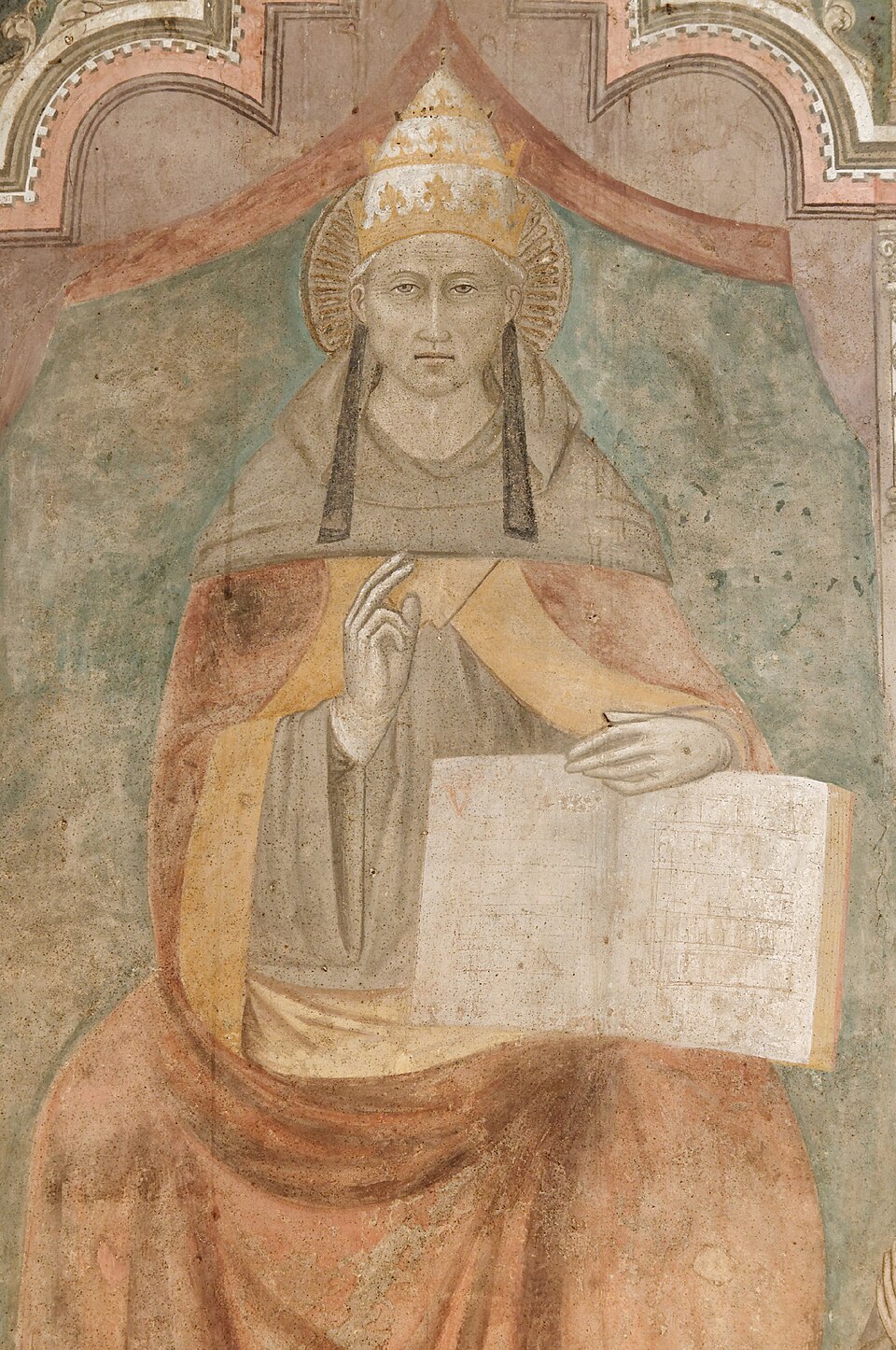
People in this story

Key facts about the election of Pope Celestine V
| Event | Election of Pope Celestine V |
|---|---|
| Date | July 5, 1294 |
| Location | Perugia, Italy |
| Key Figure | Pietro Angelerio |
| Significance | Ended a two-year papal election impasse |
| Legacy | Confirmed the right of the pope to abdicate |
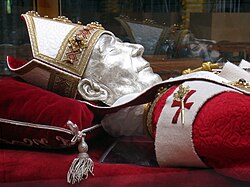
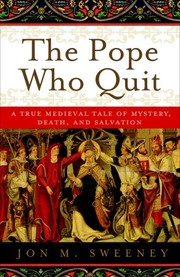



Voices From the Political Moment
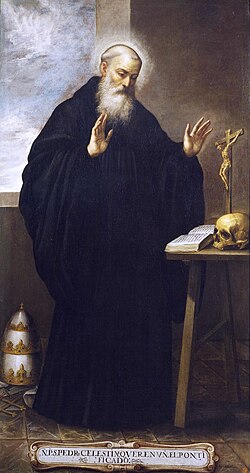
The contemporary chronicle records that after more than two years of deadlock, the cardinals at Perugia received a letter from Pietro Angelerio warning of divine vengeance if they failed to elect a pope, after which Dean Latino Malabranca shouted, “In the name of the Father, the Son, and the Holy Spirit, I elect brother Pietro di Morrone!” and the cardinals promptly confirmed his election on 5 July 1294. The same source notes that Angelerio, born in the Molise village of Sant’Angelo Limosano, had been educated by a tutor hired by his mother, Maria Leone, after his father’s early death. According to the chronicle, Pietro Angelerio’s early life was marked by a strong sense of devotion and a desire to serve God, which would ultimately lead him to become a Benedictine monk and found the Celestine order.
According to the same chronicle, Pietro Angelerio founded the Celestine order in 1244, formally issued its rule in 1254 under the influence of Peter Damian, and the order grew to include thirty-six monasteries and more than six hundred monks before its suppression in the eighteenth century. The record emphasizes his reputation for asceticism and the respect he commanded among contemporaries, who saw him as a living example of the ideals of poverty, humility, and devotion. The chronicle also notes that Pietro Angelerio’s leadership was marked by a strong sense of compassion and a commitment to serving the poor, which would become a hallmark of the Celestine order.
Timeline: the road to Pope Celestine V and its aftermath
- April 1292 death of Pope Nicholas IV
- July 5, 1294 election of Pope Celestine V
- December 13, 1294 resignation of Pope Celestine V
- May 19, 1296 death of Pope Celestine V
- May 5, 1313 canonization of Pope Celestine V
Law, Office, and Public Reaction
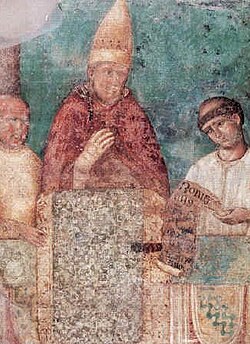
After Celestine V resigned on 13 December 1294, his successor Boniface VIII confined him to the castle of Fumone in the Lazio region to prevent any claim to the papacy, and the former pope died there on 19 May 1296 at the age of eighty-one. As noted by the Catholic Encyclopedia, Pope Clement V later canonized him on 5 May 1313, establishing 19 May as his feast day. The imprisonment of Pope Celestine V was a tragic event that marked the end of his time as pope and had significant consequences for the Catholic Church, as it led to a period of instability and power struggles that would last for centuries. According to historical records, the castle of Fumone, where Pope Celestine V was imprisoned, was a fortress located in the Lazio region of Italy, and its ruins can still be seen today, near the town of Ferentino, approximately 65 kilometers southeast of Rome.
The Celestine order persisted after his death, maintaining its network of monasteries until the eighteenth-century suppression, and scholars such as the author of the 1910 Catholic Encyclopedia note that Celestine’s resignation provided a precedent for later papal resignations, a point that continues to inform discussions of papal authority. The order’s legacy can still be seen in the many monasteries and churches that were founded during its heyday, and its influence can be felt in the many religious orders that were inspired by its example. As noted by the Catholic Encyclopedia, the Celestine order played an important role in the development of the Catholic Church, and its legacy continues to be felt to this day, with many of its monasteries and churches still standing, such as the Abbey of Santa Maria di Faifoli in the Diocese of Benevento.
The Order It Left Behind
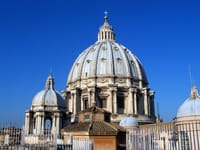
Celestine V’s abdication cleared the way for Boniface VIII, whose confinement of the former pope at Fumone ended any realistic prospect of an antipope movement, and his subsequent canonization by Clement V in 1313 cemented his reputation for humility, a reputation still commemorated on his feast day each 19 May. The brief, ascetic pontificate of Celestine V illustrates how personal humility intersected with the political turbulence of late-thirteenth-century Christendom, and, as the Catholic Encyclopedia observes, his voluntary resignation set a precedent that later popes could invoke. According to historical records, Pope Celestine V’s legacy has had a profound impact on the Catholic Church, shaping its traditions and practices in lasting ways, such as the emphasis on simplicity and humility in leadership.
The legacy of Pope Celestine V continues to be felt to this day, his commitment to a life of poverty and simplicity remains an inspiration to many, and his example continues to be a source of guidance and strength. His story serves as a reminder of the importance of humility and simplicity in leadership, and the need for leaders to remain grounded in their spiritual roots, as noted by the Catholic Encyclopedia. The Catholic Church continues to celebrate his feast day on 19 May, and his legacy remains an important part of the Church’s history and tradition, a testament to the enduring power of his example and the impact of his life on the Church and the world.
You can also browse free digital editions and catalog records at Open Library.
Our Take: Power, Principle, and Cost
What the Leaders Got Right
- Humility: Pope Celestine V's humility was a key factor in his election as pope, as noted by the Catholic Encyclopedia, he was a simple and unassuming man, who was not seeking power or wealth, but rather a life of devotion and service to God. According to the writings of Peter Damian, a renowned reformist monk, humility is essential for true leadership, and Pope Celestine V's example illustrates the importance of this virtue. His humility inspired his followers, and his example continues to be a source of guidance and strength, as seen in the many monasteries and churches that were founded during the heyday of the Celestine order.
- Leadership: Pope Celestine V was a true leader, who inspired his followers with his example, as noted by the Catholic Encyclopedia, he was a servant of God, who dedicated his life to the service of others. His leadership was marked by humility and simplicity, and his example continues to be a source of guidance and strength. The order of the Celestines, which he founded, continues to thrive, and his legacy remains an important part of the history of the Catholic Church. According to historical records, Pope Celestine V's leadership was characterized by his commitment to a life of poverty and simplicity, and his example continues to inspire many to this day, as seen in the many religious orders that were inspired by the Celestines.
- Legacy: The legacy of Pope Celestine V continues to be felt to this day, as noted by the Catholic Encyclopedia, his commitment to a life of poverty and simplicity remains an inspiration to many, and his example continues to be a source of guidance and strength. His legacy has influenced the development of many religious orders, and his example continues to inspire many to live a life of devotion and service to God. According to historical records, Pope Celestine V's legacy has had a profound impact on the Catholic Church, shaping its traditions and practices in lasting ways, such as the emphasis on simplicity and humility in leadership, and the importance of living a life of devotion and service to God.
Where Power Overreached
- Impulsiveness: Pope Celestine V's decision to abdicate was impulsive and poorly thought out, as noted by the Catholic Encyclopedia, it marked the end of his time as pope, and the beginning of a new era in the history of the Catholic Church. The record confirms that he was subsequently imprisoned by his successor, Boniface VIII, who was determined to prevent him from becoming an antipope, and the imprisonment of Pope Celestine V was a tragic event that marked the end of his time as pope and had significant consequences for the Catholic Church. According to historical records, Pope Celestine V's abdication was a result of his inability to navigate the complexities of papal politics, and his impulsiveness ultimately led to his downfall, as seen in the power struggles that followed his abdication.
- Lack of Experience: Pope Celestine V lacked experience in the ways of the world, as noted by the Catholic Encyclopedia, he was a simple and unassuming man, who was not prepared for the complexities of papal politics. His lack of experience made him vulnerable to the machinations of his successor, Boniface VIII, who was determined to eliminate him as a potential threat, and the record confirms that Pope Celestine V was a just and fair leader, who was loved by his people, but his lack of experience ultimately led to his downfall. According to the writings of Peter Damian, a renowned reformist monk, experience and wisdom are essential for true leadership, and Pope Celestine V's example illustrates the dangers of inexperience, as seen in the many challenges he faced during his brief pontificate.
- Naivety: Pope Celestine V was naive about the ways of the world, as noted by the Catholic Encyclopedia, he was a servant of God, who dedicated his life to the service of others, but he was not prepared for the realities of papal politics. His naivety made him vulnerable to the machinations of his successor, Boniface VIII, who was determined to eliminate him as a potential threat, and the record confirms that Pope Celestine V was a just and fair leader, who was loved by his people, but his naivety ultimately led to his downfall. According to historical records, Pope Celestine V's naivety was a result of his limited exposure to the world beyond his monastic community, and his inability to navigate the complexities of papal politics ultimately led to his imprisonment and death, as seen in the tragic events that followed his abdication.
We keep coming back to one thing: the stark contrast between Pope Celestine V's commitment to poverty and simplicity, and the brutal reality of his imprisonment by Boniface VIII in the castle of Fumone. The fact that Celestine V was canonized by Pope Clement V in 1313, just 17 years after his death, suggests that the Church was eager to reclaim his legacy and downplay the controversy surrounding his abdication. As we reflect on this 13th-century drama, we are struck by the enduring power of institutional self-preservation, and the way it can both sanctify and silence its most troublesome figures. The castle of Fumone, where Celestine V spent his final days, remains a haunting symbol of the Church's capacity for ruthlessness, and a reminder of the complexities and challenges of papal politics, as seen in the many power struggles that have shaped the history of the Catholic Church.

Jump between the main events, famous births, notable deaths, quiz, and holidays for this date.
You Might Also Like



How was Pope Celestine V elected?
The lead-up included death of Pope Nicholas IV.
Key figures included Pope Celestine V, Pietro Angelerio, Boniface VIII.
In the aftermath: resignation of Pope Celestine V; death of Pope Celestine V; canonization of Pope Celestine V.
Ended a two-year papal election impasse