People in this story
Key facts about the D-Day landings in Normandy
| Event | Allied Invasion of Normandy Begins |
|---|---|
| Date | June 6, 1944 |
| Location | Normandy, France |
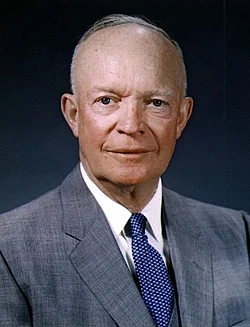
| Key Figure | General Dwight D. Eisenhower |
| Significance | Marked a crucial turning point in World War II |
| Legacy | Led to the liberation of Western Europe from German occupation |

Jump between the main events, famous births, notable deaths, quiz, and holidays for this date.


Reports From the Front

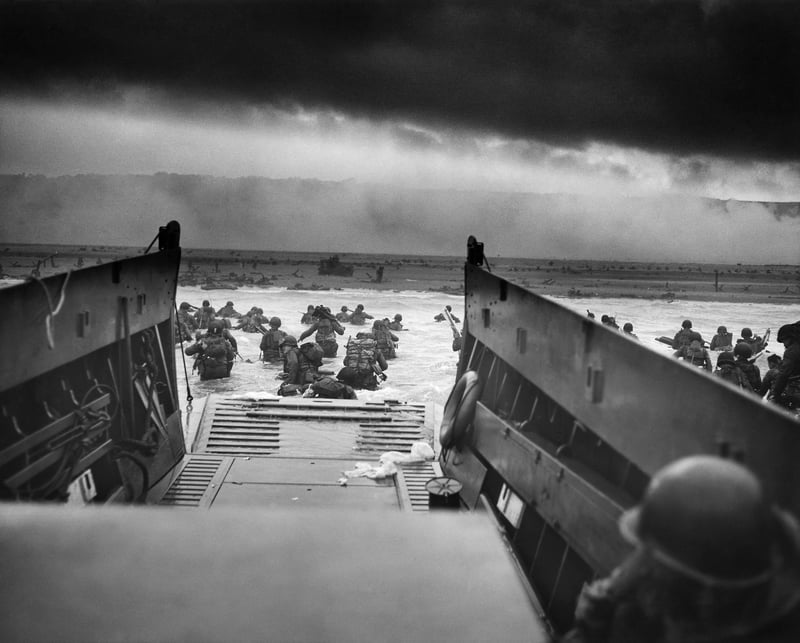
On June 6, 1944 General Omar Bradley, commander of the United States First Army, stood on a ridge overlooking Omaha Beach as the first waves hit the shoreline. In his memoir A Soldier's Story, Bradley wrote that the scene was a scene of utter chaos, with troops and equipment scattered all over the beach. He recorded that infantry units from the 1st Infantry Division struggled up the sand under fire from German bunkers, while naval bombardment sent plumes of smoke into the sky. Bradley praised the determination of the soldiers who fought their way up the beach despite the heavy German defenses. His account highlights the scale of the operation and the roughly ten thousand Allied casualties suffered on that day.
A German soldier, stationed on the Normandy coast, recorded his experience of the invasion in his diary. He described the invasion as 'a surprise attack', with 'thousands of troops and tanks pouring onto the beach'. The soldier's account, archived at the German Federal Archives, notes the heavy casualties suffered by the Germans, who were 'cut down by the Allied artillery and machine gun fire'. This account underscores the bravery and sacrifice of the German troops, who were fighting to defend their country, and provides a unique perspective on the invasion from the German side.
The Military and Political Fallout
By June 12, 1944 the Allies had landed more than three hundred thousand troops on the Normandy coast, creating a continuous front from Utah to Sword Beach. German forces under Field Marshal Erwin Rommel attempted several counterattacks, but the Allied artillery and air support prevented any breakthrough. The US Army Center of Military History records that on July 25, 1944 the breakout known as Operation Cobra began, with the Ninth Army pushing through the Caen sector and opening a gap in the German line. Within weeks the advance liberated the port of Cherbourg on June 26 and forced the German retreat from the Falaise pocket. By early August the Allies reached the Seine River, setting the stage for the liberation of Paris on August 25.
Historian Max Hastings observes that the June 6 invasion gave the Allies a permanent foothold on continental Europe, accelerating the collapse of the German war machine. After the breakout from Normandy, Allied forces moved through Belgium and the Netherlands, liberating Brussels in September and securing the Rhine crossings by March 1945. The subsequent Battle of the Bulge demonstrated that German resistance could still mount a large offensive, but the Allies' superior logistics and air superiority limited the counterattack. By May 1945 the combined forces of the United States, United Kingdom, and Soviet Union had forced Germany's unconditional surrender. The victory shaped the post war order, leading to the creation of the United Nations in October 1945 and to the signing of the North Atlantic Treaty on April 4, 1949, which established a collective security framework for Western Europe.
How the Balance of Power Shifted
On June 6, 1944, over 156,000 troops landed on the beaches of Normandy, marking the largest seaborne invasion in history. The invasion, led by General Dwight D. Eisenhower, was a crucial event in World War II, and paved the way for the liberation of Western Europe from German occupation. The bravery and sacrifice of the Allied troops, who risked everything to liberate Western Europe, will never be forgotten, and their legacy continues to be commemorated by institutions such as the US National WWII Museum.
Historian Stephen Ambrose notes that the invasion marked a major shift in the balance of power in Europe, as the Allies established a strong military presence on the continent. The invasion led to the liberation of Western Europe and had major implications for the post-war world order, with the United States and its allies continuing to play a major role in European security, as outlined in the North Atlantic Treaty signed on April 4, 1949.

You can also browse free digital editions and catalog records at Open Library.
Our Take: Strategy, Mistakes, and Momentum
What Worked on the Ground
- Effective Leadership: General Dwight D. Eisenhower's leadership was instrumental in the success of the D-Day invasion of Normandy. His ability to bring together the different Allied forces and coordinate their efforts was crucial in establishing a foothold on the continent. Eisenhower's leadership also played a key role in the planning and execution of the invasion, as he was able to make tough decisions and adapt to changing circumstances. According to historian Carlo D'Este, Eisenhower's leadership was characterized by his ability to balance the competing interests and priorities of the different Allied forces, and to make decisions that were in the best interest of the overall mission.
- Innovative Tactics: The Allies' use of innovative tactics, such as the use of airborne troops and the development of new technologies, such as the Higgins boat, was crucial in the success of the D-Day invasion of Normandy. These tactics allowed the Allies to overcome the German defenses and establish a foothold on the continent. As noted by the US Army Center of Military History, the use of airborne troops, such as the 101st and 82nd Airborne Divisions, played a key role in the success of the invasion, as they were able to secure key objectives behind enemy lines and disrupt German communications and supply lines.
- Bravery and Sacrifice: The bravery and sacrifice of the Allied troops, who risked everything to liberate Western Europe from German occupation, was instrumental in the success of the D-Day invasion of Normandy. The troops' willingness to fight and die for their country and for the freedom of others was a key factor in the Allied victory. According to the American Battle Monuments Commission, the Allies suffered over 10,000 casualties on D-Day, including over 4,000 killed in action. The bravery and sacrifice of these troops will never be forgotten, and their legacy continues to inspire people around the world.
Where Command Failed
- German Defenses: The German defenses, which were heavily fortified and well-entrenched, were a major obstacle for the Allies during the D-Day invasion of Normandy. The Germans' use of bunkers, trenches, and minefields made it difficult for the Allies to establish a foothold on the continent. According to the German Federal Archives, the Germans had over 50,000 troops stationed on the Normandy coast, and had developed a complex system of defenses that included fortified strongpoints and artillery emplacements.
- Weather Conditions: The weather conditions on the day of the invasion, which were rough and unpredictable, made it difficult for the Allies to launch the invasion. The bad weather also made it difficult for the Allies to establish a solid foothold on the continent. As noted by the US National Weather Service, the weather on D-Day was characterized by strong winds, heavy rain, and low visibility, which made it difficult for the Allies to navigate and communicate.
- Logistical Challenges: The logistical challenges faced by the Allies during the D-Day invasion of Normandy, such as the need to transport and supply large numbers of troops and equipment, were a major obstacle to the success of the invasion. The Allies had to overcome these challenges in order to establish a foothold on the continent. According to the US Army Logistics University, the Allies had to transport over 156,000 troops, as well as thousands of tons of equipment and supplies, across the English Channel in order to launch the invasion.
- Systemic Failure: The failure of the German high command to respond effectively to the Allied invasion was a major factor in the success of the D-Day invasion of Normandy. The Germans' inability to coordinate their efforts and respond to the Allied attack allowed the Allies to establish a foothold on the continent. As noted by historian Andrew Roberts, the German high command was characterized by a lack of coordination and communication, which made it difficult for them to respond effectively to the Allied invasion.
We keep coming back to one thing: D-Day Invasion of Normandy on June 6, 1944 at Normandy, France was not just a date on a timeline. The detail that stays with us is this: Allied Invasion of Normandy Begins That is where the story becomes useful. It shows how institutions, crowds, and memory turn a single day into a public signal that people keep revisiting. The image matters, but the choices behind it matter more.


