Northern Expedition — April 7, 1926
If you want to explore this topic further, we recommend searching for books on eBay or browsing free digital editions at Open Library.




Eyewitness Accounts
According to the account of General Zhang Fakui, a key commander in the Nationalist army, the Northern Expedition was a brutal and bloody campaign, with both sides committing atrocities against civilians and prisoners of war. Zhang Fakui's account, which was written in the 1930s, provides a unique insight into the military strategy and tactics employed by the Nationalist army during the expedition, as well as the challenges and controversies that arose during the campaign. However, Zhang Fakui's account must be read with caution, as it was written with the benefit of hindsight and may reflect the biases and prejudices of the time.
In contrast, the account of the American journalist, Edgar Snow, who was present in China during the Northern Expedition, provides a more nuanced and balanced view of the campaign. Snow's account, which was published in his book 'Red Star Over China', highlights the complexities and challenges of the expedition, as well as the bravery and sacrifice of the soldiers who fought on both sides. Snow's account also provides a unique insight into the role of the Communist Party of China during the expedition, and the eventual split between the Nationalists and the Communists that would lead to a prolonged and bloody civil war.
Aftermath
via Wikimedia
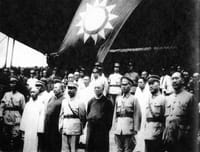
By 1928, the Nationalist government had established a new capital in Nanjing and launched a series of reforms aimed at modernizing China's economy and society, including the creation of a new national currency and the establishment of a centralized banking system. The government faced numerous challenges, including the need to reunify the country, rebuild the economy, and establish a stable and effective administration, but it made significant progress, with industrial production increasing by 10% between 1928 and 1931. As the Nationalist government consolidated its power, it also began to suppress opposition, with Chiang Kai-shek's forces cracking down on Communist and leftist groups.
The Northern Expedition's long-term consequences became apparent on July 7, 1937, when the Second Sino-Japanese War broke out, drawing in foreign powers, including the United States and the Soviet Union. The civil war between the Nationalists and the Communists, which had begun in 1927, continued to simmer, causing widespread destruction, displacement, and loss of life, with estimates suggesting that over 1 million people died between 1927 and 1949. The conflict would ultimately contribute to the Communist Party's victory in 1949, with Mao Zedong declaring the establishment of the People's Republic of China on October 1, 1949.
Legacy
On April 7, 1926, Chiang Kai-shek launched the Northern Expedition, a military campaign that would capture key cities, including Shanghai and Nanjing, and defeat the Beiyang government, which had ruled China since the fall of the Qing dynasty in 1912. The expedition led to the establishment of the Nationalist government in Nanjing, with Chiang Kai-shek as its leader, and marked the beginning of his rise to power. The Nationalist government would go on to rule China for over two decades, until the Communist Party's victory in 1949. Chiang Kai-shek's leadership during the Northern Expedition cemented his position as the dominant figure in Chinese politics, with his government implementing a range of policies, including land reform and economic development programs.
As the US and China engage in heightened diplomatic tensions in 2026, the 100th anniversary of the Northern Expedition serves as a reminder of the complex history between the two nations, with the US having provided significant economic and military aid to the Nationalist government during the Chinese Civil War. The Northern Expedition marked a significant shift in the global balance of power, with the Nationalist government playing a key role in regional and international affairs, including the Second Sino-Japanese War and World War II. Today, understanding the complexities of Chinese history and politics is crucial for navigating the intricacies of the US-China relationship, with the US seeking to balance its economic and strategic interests with its concerns about China's human rights record and regional security.
Our Take: What Went Right & What Went Wrong
What Went Right
- Leadership: Chiang Kai-shek's leadership during the Northern Expedition was a significant factor in the campaign's success. He was able to balance the interests of various factions within the Nationalist Party, as well as the Communist Party of China, and he made key strategic decisions that ultimately led to the defeat of the Beiyang government. Chiang Kai-shek's leadership also marked a significant turning point in Chinese history, as it led to the establishment of the Nationalist government in Nanjing and the beginning of a new era in Chinese politics.
- Military Strategy: The Northern Expedition was a significant military campaign that required careful planning and execution. The Nationalist army, led by Chiang Kai-shek, employed a range of tactics, including siege warfare, guerrilla warfare, and conventional battles, to defeat the Beiyang government. The campaign also marked a significant turning point in the development of the Nationalist army, as it led to the establishment of a modern and effective military force that would go on to play a key role in Chinese history.
- Diplomacy: The Northern Expedition had significant international implications, as it led to the recognition of the Nationalist government by the United States and other Western powers. This recognition marked a significant shift in the global balance of power, as the Nationalist government would go on to play a key role in regional and international affairs, including the Second Sino-Japanese War and World War II. The expedition also marked a significant turning point in the development of Sino-American relations, as it led to the establishment of formal diplomatic relations between the two nations.
What Went Wrong
- Purges: The Northern Expedition was marked by a series of purges, as Chiang Kai-shek sought to consolidate his power and eliminate his opponents. The purges, which were carried out against the Communist Party of China and other left-wing groups, were brutal and bloody, and they marked a significant turning point in the development of the Nationalist Party. The purges also had significant long-term consequences, as they led to the establishment of a one-party state and the suppression of dissent and opposition.
- Corruption: The Northern Expedition was also marked by corruption and cronyism, as Chiang Kai-shek and his allies sought to enrich themselves and their supporters. The corruption, which was widespread and endemic, marked a significant turning point in the development of the Nationalist Party, as it led to the establishment of a corrupt and authoritarian regime. The corruption also had significant long-term consequences, as it contributed to the decline of the Nationalist Party and the eventual rise of the Communist Party of China.
- Authoritarianism: The Northern Expedition marked a significant turning point in the development of authoritarianism in China, as Chiang Kai-shek established a one-party state and suppressed dissent and opposition. The authoritarianism, which was characterized by a lack of democracy and human rights, marked a significant turning point in Chinese history, as it led to the establishment of a regime that would go on to rule China for over two decades. The authoritarianism also had significant long-term consequences, as it contributed to the decline of the Nationalist Party and the eventual rise of the Communist Party of China.
- Systemic Failure: The Northern Expedition also marked a significant systemic failure, as the Nationalist Party and the Chinese government failed to address the underlying social and economic problems that had contributed to the expedition. The failure, which was characterized by a lack of reform and a reliance on authoritarianism, marked a significant turning point in Chinese history, as it led to the establishment of a regime that would go on to rule China for over two decades. The failure also had significant long-term consequences, as it contributed to the decline of the Nationalist Party and the eventual rise of the Communist Party of China.
We keep coming back to one thing: the eerie parallels between the Northern Expedition's complex web of alliances and rivalries and the current diplomatic tensions between the US and China in 2026, particularly in the context of the escalating Taiwan Strait conflict. As we mark the 100th anniversary of this pivotal event, it's striking how the same themes of power, loyalty, and deception continue to shape international relations. The Northern Expedition reveals a profound truth about human nature: that the pursuit of power often involves a willingness to rewrite history, to erase or distort the complexities of the past in order to justify the present. The ghosts of 1926 still haunt the corridors of power in 2026, and the truth is that history is always written by the victors, but it's the losers who remember it most vividly.


