
Short answer
What was Battle of the Ironclads - March 9, 1862?
Battle of the Ironclads - March 9, 1862 took place on March 9, 1862 in Hampton Roads, Virginia.
EventBattle of the Ironclads
DateMarch 9, 1862
LocationHampton Roads, Virginia
Key FigureLieutenant John L. Worden, Commander Franklin Buchanan
SignificanceFirst battle between ironclad warships
LegacyMarked the beginning of a new era in naval warfare
Did You Know?
Overview
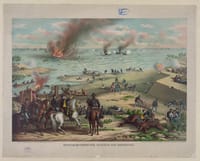
The American Civil War was a conflict between the Union, comprising the northern states, and the Confederacy, comprising the southern states. The war was fought over issues of slavery, states' rights, and economic and cultural differences between the North and South. In 1862, the Union Navy was attempting to blockade Southern ports to prevent the Confederacy from importing goods and supplies.
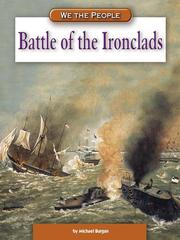
On March 8, 1862, the CSS Virginia, an ironclad warship built by the Confederacy, attacked and sank two Union warships, the USS Cumberland and the USS Congress, in Hampton Roads, Virginia. The next day, the USS Monitor, an ironclad warship built by the Union, arrived on the scene and engaged the CSS Virginia in battle.
The Battle of Hampton Roads was a fierce and intense engagement, with both ships exchanging cannon fire and attempting to outmaneuver each other. The battle lasted for several hours, with neither ship able to gain a decisive advantage. Eventually, the CSS Virginia withdrew from the battle, and the USS Monitor remained in control of the area.
The Battle of Hampton Roads was a significant turning point in the war, as it marked the beginning of a new era in naval warfare. The use of ironclad warships made traditional wooden ships obsolete, and the Union's control of the seas was no longer unchallenged. The battle also had significant implications for the war on land, as the Union's ability to blockade Southern ports was crucial to its strategy.


Eyewitness Accounts
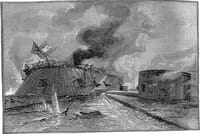
The Battle of Hampton Roads was witnessed by many people, including soldiers, sailors, and civilians. One eyewitness account was provided by Lieutenant John L. Worden, the commander of the USS Monitor. In his report, Worden described the battle as a fierce and intense engagement, with both ships exchanging cannon fire and attempting to outmaneuver each other.
Another account was provided by Commander Franklin Buchanan, the commander of the CSS Virginia. In his report, Buchanan described the battle as a tactical victory for the Confederacy, but acknowledged that the USS Monitor had prevented the CSS Virginia from achieving its strategic objectives.
The reliability of these sources is generally accepted by historians, as they are based on firsthand accounts and official reports. However, some historians have questioned the accuracy of certain details, such as the number of casualties and the extent of the damage to the ships.
"The enemy's fire was very heavy, but our shots told with great effect."
Aftermath
The immediate aftermath of the Battle of Hampton Roads was a period of uncertainty and reassessment for both the Union and the Confederacy. The Union Navy was forced to reevaluate its strategy and tactics, as the use of ironclad warships had made traditional wooden ships obsolete. The Confederacy, on the other hand, was emboldened by its initial success and attempted to build more ironclad warships.
In the medium term, the Battle of Hampton Roads had significant consequences for the war. The Union's control of the seas was no longer unchallenged, and the Confederacy was able to import goods and supplies more easily. The Union Navy responded by building more ironclad warships and developing new tactics and strategies to counter the Confederate threat.
In the long term, the Battle of Hampton Roads marked the beginning of a new era in naval warfare. The use of ironclad warships made traditional wooden ships obsolete, and the development of new technologies and tactics continued to shape the course of naval warfare. Today, the Battle of Hampton Roads is remembered as a significant turning point in the American Civil War and a pivotal moment in the history of naval warfare.
Legacy
The Battle of Hampton Roads was a significant event in the American Civil War, marking the beginning of a new era in naval warfare. The use of ironclad warships made traditional wooden ships obsolete, and the Union's control of the seas was no longer unchallenged. The battle had significant implications for the war on land, as the Union's ability to blockade Southern ports was crucial to its strategy.
The Battle of Hampton Roads is still relevant today, as it marked the beginning of a new era in naval warfare. The development of new technologies and tactics continues to shape the course of naval warfare, and the battle remains an important part of American history and naval heritage.
As we reflect on the Battle of Hampton Roads, we are reminded of the importance of innovation and adaptation in warfare. The use of ironclad warships was a significant innovation that changed the course of the war, and the battle remains an important lesson in the importance of staying ahead of the curve in terms of technology and tactics.
Our Take: What Went Right & What Went Wrong
What Went Right
- Innovation and Adaptation: The Union Navy's decision to build the USS Monitor was a significant innovation that changed the course of the war. The ship's design and construction were a major factor in the Union's ability to counter the Confederate threat. The Union Navy's willingness to adapt and innovate was a key factor in its ultimate victory.
- Strategic Thinking: The Union Navy's strategy of blockading Southern ports was a key factor in its ultimate victory. The Navy's ability to control the seas and prevent the Confederacy from importing goods and supplies was crucial to the Union's war effort. The Navy's strategic thinking and planning were a major factor in the Union's success.
- Bravery and Sacrifice: The sailors and soldiers who fought in the Battle of Hampton Roads showed great bravery and sacrifice. The battle was a fierce and intense engagement, and many lives were lost on both sides. The bravery and sacrifice of the sailors and soldiers who fought in the battle will always be remembered.
What Went Wrong
- Lack of Preparation: The Union Navy was not fully prepared for the Battle of Hampton Roads. The Navy had not anticipated the Confederacy's use of ironclad warships, and it was caught off guard by the CSS Virginia's attack. The lack of preparation was a significant factor in the Union's initial defeat.
- Inadequate Intelligence: The Union Navy had inadequate intelligence on the CSS Virginia's capabilities and intentions. The Navy did not have accurate information on the ship's design, construction, or armament, which made it difficult to develop an effective strategy to counter the threat.
- Ineffective Tactics: The Union Navy's tactics during the Battle of Hampton Roads were not effective. The Navy's ships were not well-coordinated, and they did not work together to counter the CSS Virginia's attack. The ineffective tactics were a significant factor in the Union's initial defeat.
- Systemic Failures: The Battle of Hampton Roads highlighted systemic failures in the Union Navy's organization and command structure. The Navy's bureaucracy and chain of command were slow to respond to the Confederate threat, which contributed to the Union's initial defeat. The systemic failures were a significant factor in the Union's ultimate victory, as they led to major reforms and changes in the Navy's organization and command structure.
We think that the Battle of Hampton Roads is a significant reminder of the importance of innovation and adaptation in warfare. The use of ironclad warships was a major factor in the Union's ultimate victory, and it marked the beginning of a new era in naval warfare. As we reflect on this event, we are reminded of the importance of staying ahead of the curve in terms of technology and tactics, and of the need for effective strategic thinking and planning. What strikes us is the bravery and sacrifice of the sailors and soldiers who fought in the battle, and the significance of the battle in American history and naval heritage.
Want to learn more? Read the full article on
Wikipedia.
Historical data sourced under CC BY-SA 4.0.
You Might Also Like
Related questions
Questions readers ask about Battle of the Ironclads
Explore connected topic hubs
About this article