September 2, 1945: The End of World War II
Quick Facts
| Event | Formal Surrender of Japan – End of World War II |
|---|---|
| Date | September 2, 1945 |
| Location | USS Missouri, anchored in Tokyo Bay |
| Key Figures | General Douglas MacArthur, Japanese Foreign Minister Mamoru Shigemitsu, Allied representatives |
| Significance | Official end of World War II after six years of global conflict |
Overview
On September 2, 1945, the world witnessed the formal conclusion of the deadliest conflict in human history. Aboard the USS Missouri in Tokyo Bay, representatives of the Empire of Japan signed the Instrument of Surrender, officially bringing World War II to an end.
The ceremony was presided over by U.S. General Douglas MacArthur, with Allied representatives from nations including China, the United Kingdom, the Soviet Union, Australia, Canada, France, and the Netherlands. For Japan, Foreign Minister Mamoru Shigemitsu signed the document on behalf of Emperor Hirohito’s government.
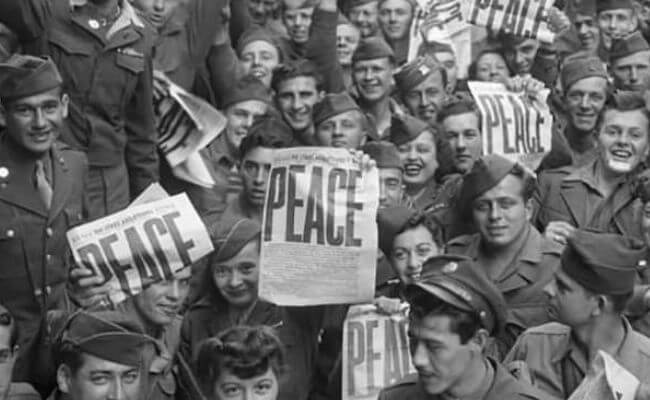
After years of devastating warfare, the event symbolized both relief and a new beginning. Across the globe, spontaneous celebrations erupted, with millions rejoicing at the arrival of peace. Yet, the aftermath of the war, marked by atomic bombings, mass casualties, and political upheaval, made the occasion somber as well as joyous.
Read more about the atomic bombings of Hiroshima and Nagasaki.
Conclusion
The surrender of Japan on September 2, 1945, marked the end of World War II, a conflict that claimed more than 70 million lives. While it brought closure to years of unprecedented violence, it also set the stage for a new geopolitical struggle, known as the Cold War.