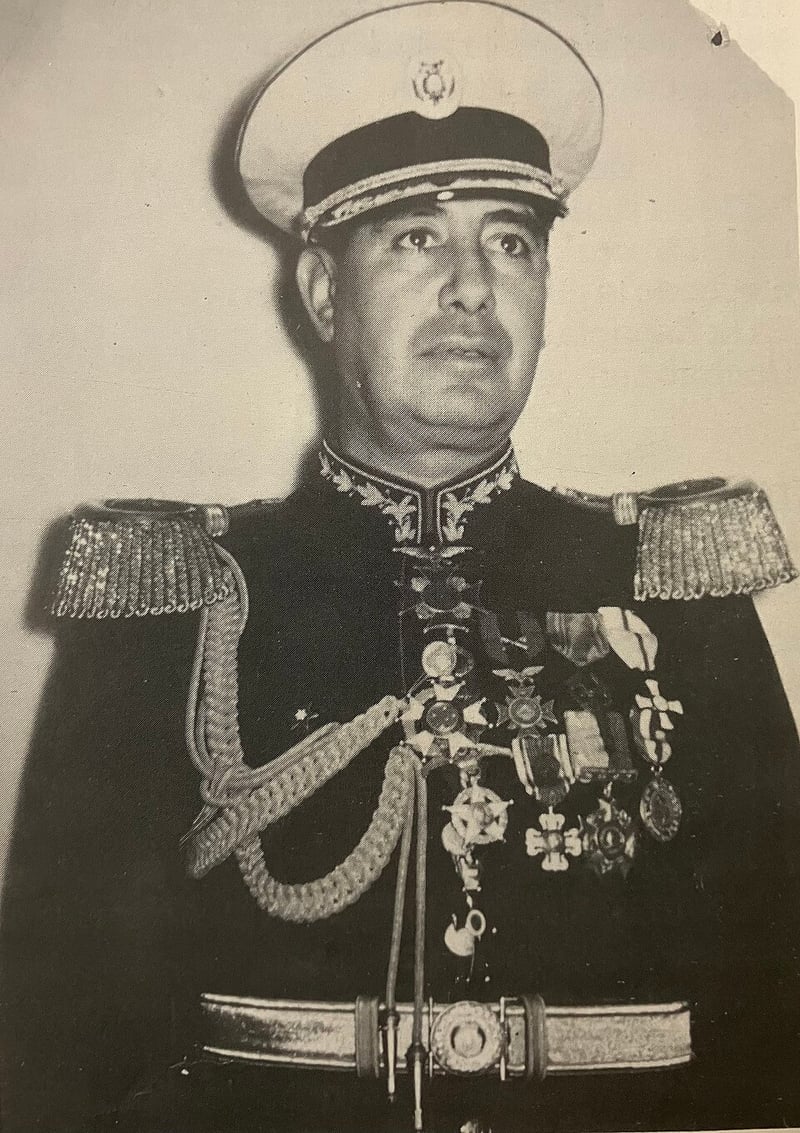
1952 — Hugo Ballivián's government is overthrown by the Bolivian National Revolution, starting a period of agrarian reform, universal suffrage and the nationalization of tin mines
Hugo Ballivián's government is overthrown by the Bolivian National Revolution, starting a period of agrarian reform, universal suffrage and the nationalization of tin mines
April 9 spans 61 recorded events across recorded history, from 193 to 2021. Below is a curated digest of the most significant moments tied to this date.
Historical Events61 events193 – 2021Today in history
More major events on April 9
The featured story and these ranked highlights form a quick summary. Every recorded event remains available in the chronology below.
1947The Journey of Reconciliation, the first interracial Freedom Ride begins through the upper South in violation of Jim Crow laws. The riders wanted enforcement of the United States Supreme Court's 1946 Irene Morgan decision that banned racial segregation in interstate travel.Source
1784The Treaty of Paris, ratified by the United States Congress on January 14, 1784, is ratified by King George III of the Kingdom of Great Britain, ending the American Revolutionary War. Copies of the ratified documents are exchanged on May 12, 1784.Source
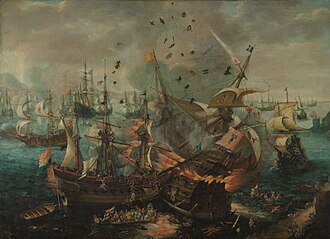
1609Eighty Years' War: Spain and the Dutch Republic sign the Treaty of Antwerp to initiate twelve years of truce.Source
Did you know
In 1952, Hugo Ballivián's government is overthrown by the Bolivian National Revolution, starting a period of agrarian reform, universal suffrage and the nationalization of tin mines. This featured entry focuses on the immediate decision and its direct historical impact.
Did you know
Nationalisation is the process of transforming privately owned assets into public assets by bringing them under the public ownership of a national government or state. This helps explain why the event mattered beyond the initial announcement.
Did you know
Nationalization contrasts with privatization and with demutualization. This clarifies the institutional and public response around the event.
Did you know
When previously nationalized assets are privatized and subsequently returned to public ownership at a later stage, they are said to have undergone renationalization. This shows how the event shaped policy and public communication in the same period.
Did you know
Industries often subject to nationalization include telecommunications, electric power, fossil fuels, iron ore, railways, airlines, media, postal services, banks, and water, and in many jurisdictions such entities have no history of private ownership. This helps explain why the event mattered beyond the initial announcement.
193
The distinguished soldier Septimius Severus is proclaimed emperor by the army in Illyricum.
Siege of Rome: The Byzantine general Belisarius receives his promised reinforcements, 1,600 cavalry, mostly of Hunnic or Slavic origin and expert bowmen.
Despite shortages, he starts raids against the Gothic camps and Vitiges but is forced into a stalemate.
The Council of Ferrara begins with its first session in presence of the Patriarch of Constantinople, representatives of the Patriarchal Sees of Antioch, Alexandria and Jerusalem and Pope Eugene IV presiding.
Ecumenical Council of the Catholic Church (1431–1449)
The Treaty of Paris, ratified by the United States Congress on January 14, 1784, is ratified by King George III of the Kingdom of Great Britain, ending the American Revolutionary War.
Copies of the ratified documents are exchanged on May 12, 1784.
World War I: The Battle of the Lys: The Portuguese Expeditionary Corps is crushed by the German forces during what is called the Spring Offensive on the Belgian region of Flanders.
African-American singer Marian Anderson gives a concert at the Lincoln Memorial after being denied the use of Constitution Hall by the Daughters of the American Revolution.
Hendrik Verwoerd, Prime Minister of South Africa and architect of apartheid, narrowly survives an assassination attempt by a white farmer, David Pratt in Johannesburg.
Navy nuclear submarine USS George Washington accidentally collides with the Nissho Maru, a Japanese cargo ship, sinking it and killing two Japanese sailors.
Tbilisi massacre: An anti-Soviet peaceful demonstration and hunger strike in Tbilisi, demanding restoration of Georgian independence, is dispersed by the Soviet Army, resulting in 20 deaths and hundreds of injuries.
The Sahtu Dene and Metis Comprehensive Land Claim Agreement is signed for 180,000 square kilometres (69,000 mi2) in the Mackenzie Valley of the western Arctic.
1993 indigenous land-claim agreement in Canada's Northwest Territories