December 15 in History

Occupation of Japan/Shinto Directive: General Douglas MacArthur orders that Shin

1945 — Occupation of Japan/Shinto Directive: General Douglas MacArthur orders that Shinto be abolished as the state religion of Japan

December 15 spans 53 recorded events across recorded history, from 533 to 2017. Below is a curated digest of the most significant moments tied to this date.

By · Wikipedia

Historical Events 53 events 533 – 2017

More major events on December 15

The featured story and these ranked highlights form a quick summary. Every recorded event remains available in the chronology below.

  1. 1965 Project Gemini: Gemini 6A, crewed by Wally Schirra and Thomas Stafford, is launched from Cape Kennedy, Florida. Four orbits later, it achieves the first space rendezvous, with Gemini 7. Source
  2. 1869 The short-lived Republic of Ezo is proclaimed in the Ezo area of Japan. It is the first attempt to establish a democracy in Japan. Source
  3. 1960 Richard Pavlick is arrested for plotting to assassinate U.S. President-Elect John F. Kennedy. Source

Did you know

In 1945, Occupation of Japan/Shinto Directive: General Douglas MacArthur orders that Shinto be abolished as the state religion of Japan. This featured entry focuses on the immediate decision and its direct historical impact.

Did you know

Japan was occupied and administered by the Allies of World War II from the surrender of the Empire of Japan on September 2, 1945, at the war's end until the Treaty of San Francisco took effect on April 28, 1952. This helps explain why the event mattered beyond the initial announcement.

Did you know

The occupation, led by the American military with support from the British Commonwealth and under the supervision of the Far Eastern Commission, involved a total of nearly one million Allied soldiers. This clarifies the institutional and public response around the event.

Did you know

The occupation was overseen by the US General Douglas MacArthur, who was appointed Supreme Commander for the Allied Powers by the US president Harry S. This shows how the event shaped policy and public communication in the same period.

Did you know

Truman; MacArthur was succeeded as supreme commander by General Matthew Ridgway in 1951. This helps explain why the event mattered beyond the initial announcement.


Vandalic_War
Vandalic War: Byzantine general Belisarius defeats the Vandals, commanded by King Gelimer, at the Battle of Tricamarum.
Byzantine–Vandal war in North Africa (533–534)
The Vandalic War (533–534) was a conflict fought in North Africa between the forces of the Byzantine Empire and the Germanic Vandal Kingdom. It was the first war of Emperor Justinian I's Renovatio imperii Romanorum, wherein the Byzantines attempted to reassert Roman sovereignty over territory formerly controlled by the Western Roman Empire.
533
Pope_Sergius_I
Pope Sergius I is elected as a compromise between antipopes Paschal and Theodore.
Head of the Catholic Church from 687 to 701
Pope Sergius I was the bishop of Rome from 15 December 687 to his death on 8 September 701, and is revered as a saint by the Roman Catholic Church. He was elected at a time when two rivals, Paschal and Theodore, were locked in a dispute about which of them should become pope. His papacy was dominated by his response to the Quinisext Council, the canons of which he steadfastly refused to accept. Thereupon Emperor Justinian II ordered Sergius' arrest, but the Roman people and the Italian militia of the exarch of Ravenna refused to allow the exarch to bring Sergius to Constantinople.
687
Constantine_VIII
Constantine VIII becomes sole emperor of the Byzantine Empire, 63 years after being crowned co-emperor.
Byzantine emperor from 962 to 1028
Constantine VIII was de jure Byzantine emperor from 962 until his death. He was the younger son of Emperor Romanos II and Empress Theophano. He was nominal co-emperor from 962, successively with his father; his stepfather, Nikephoros II Phokas; his uncle, John I Tzimiskes; and his brother, Basil II. Basil's death in 1025 left Constantine as the sole emperor. He occupied the throne for 66 years in total, making him de jure the longest-reigning amongst all Roman emperors since Augustus.
1025
Jin–Song_wars
Jin–Song wars: Military officers conspire against the emperor Wanyan Liang of the Jin dynasty after a military defeat at the Battle of Caishi, and assassinate the emperor at his camp.
1125–1234 Jurchen campaigns in China
The Jin–Song Wars were a series of conflicts between the Jurchen-led Jin dynasty (1115–1234) and the Han-led Song dynasty (960–1279). In 1115, Jurchen tribes rebelled against their overlords, the Khitan-led Liao dynasty (916–1125), and declared the formation of the Jin. Allying with the Song against their common enemy the Liao dynasty, the Jin promised to cede to the Song the Sixteen Prefectures that had fallen under Liao control since 938. The Song agreed but the Jin's quick defeat of the Liao combined with Song military failures made the Jin reluctant to cede territory. After a series of negotiations that embittered both sides, the Jurchens attacked the Song in 1125, dispatching one army to Taiyuan and the other to Bianjing, the Song capital.
1161
Kingdom_of_Sicily
Sicilian Chancellor Stephen du Perche moves the royal court to Messina to prevent a rebellion.
State in southern Italy (1130–1816)
The Kingdom of Sicily was a state that existed in Sicily and the southern Italian Peninsula as well as, for a time, in Northern Africa, from its founding by Roger II of Sicily in 1130 until 1816. It was a successor state of the County of Sicily, which had been founded in 1071 during the Norman conquest of the southern peninsula. The island was divided into three regions: Val di Mazara, Val Demone and Val di Noto.
1167
Mongols
Mongol forces under Hulagu enter and dismantle the Nizari Ismaili (Assassin) stronghold at Alamut Castle (in present-day Iran) as part of their offensive on Islamic southwest Asia.
East Asian ethnic group
The Mongols are an East Asian ethnic group native to Mongolia and China, as well as the republics of Buryatia and Kalmykia in Russia. The Mongols are the principal member of the large family of Mongolic peoples. The Oirats and the Buryats are classified either as distinct ethno-linguistic groups or as subgroups of Mongols.
1256
Nizari_Ismaili_state
The Nizari Ismaili garrison of Gerdkuh, Persia surrender after 17 years to the Mongols.
1090–1256 Nizari state in northwest Iran and Syria
The Nizari Ismaili state or the Alamut state was a Nizari Isma'ili Shia state founded by Hassan-i Sabbah after he took control of the Alamut Castle in 1090 AD, which marked the beginning of an era of Ismailism known as the "Alamut period". Their people were also known as the Assassins or Hashashins.
1270
Stephen_the_Great
Stephen III of Moldavia defeats Matthias Corvinus of Hungary, with the latter being injured thrice, at the Battle of Baia.
Prince of Moldavia from 1457 to 1504
Stephen III, better known as Stephen the Great, was Voivode of Moldavia from 1457 until his death. He was one of the most prominent rulers of late medieval Eastern Europe, noted for his long reign, military leadership and astute diplomacy. His efforts to preserve Moldavian autonomy from more powerful neighboring states such as the Ottoman Empire, Poland and Hungary, as well as his aptitude for nation-building and repute as a protector of the Christian faith, made him into a national hero in both Romania and Moldova. He is canonised by the Romanian Orthodox Church.
1467
Ekenäs,_Finland
The town of Ekenäs (Finnish: Tammisaari) is founded by King Gustav Vasa of Sweden.
Former municipality in Uusimaa, Finland
Ekenäs is a town and former municipality in Finland that comprised the former municipalities of Snappertuna and Tenala together with the town of Ekenäs. It was merged with Pohja and Karis to form the new municipality of Raseborg on 1 January 2009. Ekenäs is in the province of Southern Finland, and is part of the Uusimaa region. The town had a population of 14,754 and covered a land area of 726.73 square kilometres (280.59 sq mi). The population density was 20.30 inhabitants per square kilometre (52.6/sq mi). The town is bilingual, with the majority being Swedish speakers (81%), and the minority Finnish speakers (17%).
1546
Castle_Cornet
Castle Cornet in Guernsey, the last stronghold which had supported the King in the Third English Civil War, surrenders.
Island castle in Guernsey
Castle Cornet is a large island castle in Guernsey, and former tidal island, also known as Cornet Rock or Castle Rock. Its importance was as a defence not only of the island, but of the roadstead. In 1859, it became part of one of the breakwaters of Guernsey's main harbour, St Peter Port harbour.
1651
American_Revolutionary_War
American Revolutionary War: British and French fleets clash in the Battle of St.
Lucia.
The American Revolutionary War, also known as the Revolutionary War or American War of Independence or simply the American Revolution, was the armed conflict that comprised the final eight years of the broader American Revolution, in which American Patriot forces organized as the Continental Army and commanded by George Washington defeated the British Army. The conflict was fought in North America, the Caribbean, and the Atlantic Ocean. The war's outcome seemed uncertain for most of the war, but Washington and the Continental Army's decisive victory in the Siege of Yorktown in 1781 led King George III and the Kingdom of Great Britain to negotiate an end to the war. In 1783, in the Treaty of Paris, the British monarchy acknowledged the independence of the Thirteen Colonies, leading to the establishment of the United States as an independent and sovereign nation.
1778
United_States_Bill_of_Rights
The United States Bill of Rights becomes law when ratified by the Virginia General Assembly.
First ten amendments to the U.S. Constitution
The United States Bill of Rights comprises the first ten amendments to the United States Constitution. It was proposed following the often bitter 1787–88 debate over the ratification of the Constitution and written to address the objections raised by Anti-Federalists. The amendments of the Bill of Rights add to the Constitution specific guarantees of personal freedoms, such as freedom of speech, the right to publish, practice religion, possess firearms, to assemble, and other natural and legal rights. Its clear limitations on the government's power in judicial and other proceedings include explicit declarations that all powers not specifically granted to the federal government by the Constitution are reserved to the states or the people. The concepts codified in these amendments are built upon those in earlier documents, especially the Virginia Declaration of Rights (1776), as well as the Northwest Ordinance (1787), the English Bill of Rights (1689), and Magna Carta (1215).
1791
The U.S.
Patent Office building in Washington, D.C., nearly burns to the ground, destroying all 9,957 patents issued by the federal government to that date, as well as 7,000 related patent models.
The Old Patent Office Building is a historic building in Washington, D.C. that covers an entire city block between F and G Streets and 7th and 9th Streets NW in the Penn Quarter section of Chinatown. Built 1836–1867 in the Greek Revival style, the building first served as one of the earliest U.S. Patent Office buildings.
1836
American_Civil_War
American Civil War: The Battle of Fredericksburg ends in a Union defeat as General Ambrose Burnside withdraws the Army of the Potomac across the Rappahannock River.
1861–1865 conflict in the United States
The American Civil War was a civil war in the United States between the Union and the Confederacy, which was formed in 1861 by states that had seceded from the Union to preserve slavery in the United States. The South saw slavery as threatened because of the election of Abraham Lincoln and the growing abolitionist movement in the North. The war ended with Union victory, the dissolution of the Confederacy and the abolition of slavery, freeing four million African Americans.
1862
Battle_of_Nashville
American Civil War: The Battle of Nashville begins at Nashville, Tennessee, and ends the following day with the destruction of the Confederate Army of Tennessee under General John Bell Hood as a fighting force by the Union Army of the Cumberland under General George H.
Thomas.
The Battle of Nashville was a two-day battle in the Franklin–Nashville campaign that represented the end of large-scale fighting west of the coastal states in the American Civil War. It was fought at Nashville, Tennessee, on December 15–16, 1864, between the Confederate Army of Tennessee under Lieutenant General John Bell Hood and the Union Army of the Cumberland (AoC) under Major General George H. Thomas. In one of the largest victories achieved by the Union army during the war, Thomas attacked and routed Hood's army, largely destroying it as an effective fighting force.
1864
Republic_of_Ezo
The short-lived Republic of Ezo is proclaimed in the Ezo area of Japan.
It is the first attempt to establish a democracy in Japan.
The Republic of Ezo was a short-lived separatist state established in 1869 on the island of Ezo, now Hokkaido, by a part of the former military of the Tokugawa shogunate at the end of the Bakumatsu period in Japan. It was the first government to attempt to institute democracy in Japan, though voting was allowed only to the samurai caste. The Republic of Ezo existed for five months before being annexed by the newly established Empire of Japan.
1869
Telegraphist
Sixteen-year-old telegraphist Ella Stewart keys and sends the first telegraphed message from Arizona Territory at the Deseret Telegraph Company office in Pipe Spring.
Operator who uses a telegraph key to send and receive the Morse code
A telegraphist, telegrapher, or telegraph operator is a person who uses a telegraph key to send and receive Morse code messages in a telegraphy system. These messages, also called telegrams, can be transmitted electronically by land lines, or wirelessly by radio.
1871
Hunkpapa
Hunkpapa Lakota leader Sitting Bull is killed on Standing Rock Indian Reservation, leading to the Wounded Knee Massacre.
Traditional tribal grouping within the Lakota people
The Hunkpapa are a Native American group, one of the seven council fires of the Lakota tribe. The name Húŋkpapȟa is a Lakota word, meaning 'Head of the Circle'. By tradition, the Húŋkpapȟa set up their lodges at the entryway to the circle of the Great Council when the Sioux met in convocation. They speak Lakȟóta, one of the three dialects of the Sioux language.
1890
Symphony_No._9_(Dvořák)
Symphony No.
9 ("From the New World" a.k.a. the "New World Symphony") by Antonín Dvořák premieres in a public afternoon rehearsal at Carnegie Hall in New York City, followed by a concert premiere on the evening of December 16.
The Symphony No. 9 in E minor, "From the New World", Op. 95, B. 178, also known as the New World Symphony, was composed by Antonín Dvořák in 1893 while he was the director of the National Conservatory of Music of America from 1892 to 1895. It premiered in New York City on 16 December 1893. It is one of the most popular of all symphonies. In older literature and recordings, this symphony was – as for its first publication – numbered as Symphony No. 5.
1893
British_Army
British Army forces are defeated at the Battle of Colenso in Natal, South Africa, the third and final battle fought during the Black Week of the Second Boer War.
Land warfare force of the United Kingdom
The British Army is the land warfare force of the United Kingdom responsible for defending the UK, the British Overseas Territories and Crown Dependencies. The British Army, founded in 1707, has seen involvement in most of the world's major wars throughout history, including both world wars.
1899
Italian_Americans
Italian American food cart vendor Italo Marchiony receives a U.S.
patent for inventing a machine that makes ice cream cones.
Italian Americans are Americans who have full or partial Italian ancestry. The largest concentrations of Italian Americans are in the urban Northeast and industrial Midwestern metropolitan areas, with significant communities also residing in many other major U.S. metropolitan areas.
1903
Pushkin_House
The Pushkin House is established in Saint Petersburg, Russia, to preserve the cultural heritage of Alexander Pushkin.
Russian Academy of Sciences institution in St. Petersburg
The Pushkin House, formally the Institute of Russian Literature, is a research institute in St. Petersburg. It is part of a network of institutions affiliated with the Russian Academy of Sciences.
1905
London_Underground
The London Underground's Great Northern, Piccadilly and Brompton Railway opens.
Rapid transit system in England
The London Underground is a rapid transit system serving Greater London and some parts of the adjacent home counties of Buckinghamshire, Essex, and Hertfordshire in England. It is part of the network of transport services managed by Transport for London.
1906
World_War_I
World War I: The Serbian Army recaptures Belgrade from the invading Austro-Hungarian Army.
Global conflict from 1914 to 1918
World War I, or the First World War, also known as the Great War, was a global conflict between two coalitions: the Allies and the Central Powers. Major theatres of war included Europe and the Middle East, and well as parts of Africa and the Asia-Pacific. One of the deadliest conflicts in history, World War I resulted in an estimated 15 to 22 million deaths, including in mass war crimes against civilians and genocides. The conflict saw important developments in weaponry, including the first large-scale use of machine guns, artillery, aircraft, chemical weapons, and tanks, and was a major factor in the deadly Spanish flu pandemic.
1914
Hōjō_Coal_Mine_Disaster
A gas explosion at Mitsubishi Hōjō coal mine, in Kyushu, Japan, kills 687.
1914 mine explosion in Japan
The Mitsubishi Hōjō mine disaster occurred December 15, 1914, in Kyushu, Japan. A gas explosion at the Hōjō (Hojyo) coal mine killed 687. It is the worst mining accident in Japanese history.
1914
Armistice_between_Russia_and_the_Central_Powers
World War I: An armistice between Russia and the Central Powers is signed.
1917 de facto exit from World War I by Russia
On 15 December [O.S. 2 December] 1917, an armistice was signed between the Russian Republic led by the Bolsheviks on the one side, and the Austro-Hungarian Empire, the Kingdom of Bulgaria, the German Empire and the Ottoman Empire—the Central Powers—on the other. The armistice took effect two days later, on 17 December [O.S. 4 December]. By this agreement, Russia de facto exited World War I, although fighting would briefly resume before the Treaty of Brest-Litovsk was signed on 3 March 1918, and Russia made peace.
1917
Anarchist insurrection suppressed in Zaragoza, Spain.
Attempted Political Revolution
The anarchist insurrection of December 1933 was an attempted revolution by Spanish anarchists, in response to the victory of the right-wing in the 1933 Spanish general election. It was the third of a series of anarchist insurrections in Spain, following those in January 1932 and January 1933.
1933
Gone_with_the_Wind_(film)
Gone with the Wind (highest inflation adjusted grossing film) receives its premiere at Loew's Grand Theatre in Atlanta, Georgia, United States.
1939 film by Victor Fleming
Gone with the Wind is a 1939 American epic historical romance film adapted from the 1936 novel by Margaret Mitchell. It was produced by David O. Selznick of Selznick International Pictures and directed by Victor Fleming. Set in the American South during the Civil War and Reconstruction, the film tells the story of Scarlett O'Hara, the strong-willed daughter of a Georgia plantation owner, following her romantic pursuit of Ashley Wilkes, who is married to his cousin Melanie Hamilton, and her subsequent marriage to Rhett Butler.
1939
The_Holocaust_in_Ukraine
The Holocaust in Ukraine: German troops murder over 15,000 Jews at Drobytsky Yar, a ravine southeast of the city of Kharkiv.
The Holocaust saw the systematic mass murder of Jews in the Reichskommissariat Ukraine, the General Government, the Crimean General Government and some areas which were located to the east of Reichskommissariat Ukraine, in the Transnistria Governorate and Bessarabia, Northern Bukovina and the Hertsa region and Carpathian Ruthenia during World War II. The listed areas are currently parts of Ukraine.
1941
World_War_II
World War II: The Battle of Mount Austen, the Galloping Horse, and the Sea Horse begins during the Guadalcanal campaign.
Global conflict (1939–1945)
World War II, or the Second World War, was a global conflict between two coalitions: the Allies and the Axis powers. Nearly all of the world's countries participated, with many engaging in total war on an unprecedented scale. World War II was the deadliest conflict in history, causing the deaths of 60 to 75 million people, a majority of whom were civilians. Millions died as a result of massacres, starvation, disease, and genocides including the Holocaust. After the Allied victory, Germany, Austria, Japan, and Korea were occupied, and German and Japanese leaders were tried for war crimes.
1942
Battle_of_Arawe
World War II: The Battle of Arawe begins during the New Britain campaign.
1943–44 WWII battle in the Pacific Theater
The Battle of Arawe was fought between Allied and Japanese forces during the New Britain campaign of World War II. The battle formed part of the Allied Operation Cartwheel and was a diversion before a larger landing at Cape Gloucester in late December 1943. The Japanese military was expecting an Allied offensive in western New Britain and was reinforcing the region at the time of the Allied landing in the Arawe area on 15 December 1943. The Allies secured Arawe after about a month of intermittent fighting with the outnumbered Japanese force.
1943
Noorduyn_Norseman
World War II: a single-engine UC-64A Norseman aeroplane carrying United States Army Air Forces Major Glenn Miller is lost in a flight over the English Channel.
1935 utility aircraft family by Noorduyn
The Noorduyn Norseman, also known as the C-64 Norseman, is a Canadian single-engine bush plane designed to operate from unimproved surfaces. Distinctive stubby landing gear protrusions from the lower fuselage make it easily recognizable.
1944
Richard_Paul_Pavlick
Richard Pavlick is arrested for plotting to assassinate U.S.
President-Elect John F. Kennedy.
Richard Paul Pavlick was an American postal worker from New Hampshire who stalked U.S. senator and U.S. president-elect John F. Kennedy, with the intent of assassinating him. On December 11, 1960, in Palm Beach, Florida, Pavlick positioned himself to carry out the assassination by blowing up Kennedy and himself with dynamite, but delayed the attempt because Kennedy was with his wife Jacqueline and their two young children. He was arrested before he was able to stage another attempt.
1960
Mahendra_of_Nepal
King Mahendra of Nepal suspends the country's constitution, dissolves parliament, dismisses the cabinet, and imposes direct rule.
King of Nepal from 1955 to 1972
Shri Panch Mahendra Bir Bikram Shah Dev, was King of Nepal from 13 March 1955 until his death in 1972. He led the 1960 royal coup, in which he dismissed the government, suspended the constitution, banned political parties, jailed their leaders, and established the Panchayat rule.
1960
Eichmann_trial
Eichmann trial: Adolf Eichmann is sentenced to death after being found guilty by an Israeli court of 15 criminal charges, including charges of crimes against humanity, crimes against the Jewish people, and membership of an outlawed organization.
1961 trial of Adolf Eichmann
The Eichmann trial was the 1961 trial of major Holocaust perpetrator Adolf Eichmann, who was captured in Argentina by Israeli agents and taken to Israel to stand trial. Eichmann was a senior Nazi party member and served at the rank of Obersturmbannführer in the SS, and was primarily responsible for the implementation of the Final Solution. He was responsible for shipping Jews and other people from across Europe to the concentration camps, including managing the shipments to Hungary directly, where 564,000 Jews died. After the end of World War II, he fled to Argentina, living under a pseudonym until his capture in 1960 by Mossad.
1961
Project_Gemini
Project Gemini: Gemini 6A, crewed by Wally Schirra and Thomas Stafford, is launched from Cape Kennedy, Florida.
Four orbits later, it achieves the first space rendezvous, with Gemini 7.
Project Gemini was the second United States human spaceflight program to fly. It was conducted after the first American crewed space program, Project Mercury, while the Apollo program was still in early development. Gemini was conceived in 1961 and concluded in 1966. The Gemini spacecraft carried a two-astronaut crew. Ten Gemini crews and 16 individual astronauts flew low Earth orbit (LEO) missions during 1965 and 1966.
1965
Silver_Bridge
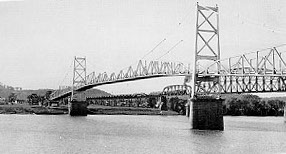
The Silver Bridge collapses, killing 46 people.
Former suspension bridge (stood 1928–1967)
The Silver Bridge was an eyebar-chain suspension bridge built in 1928 that carried U.S. Route 35 over the Ohio River, connecting Point Pleasant, West Virginia, and Gallipolis, Ohio. Officially named the Point Pleasant Bridge, it was popularly known as the Silver Bridge for the color of its aluminum paint.
1967
Venera_7
Soviet spacecraft Venera 7 successfully lands on Venus.
It is the first successful soft landing on another planet.
Venera 7 was a Soviet spacecraft, part of the Venera series of probes to Venus. When it landed on the Venusian surface on 15 December 1970, it became the first spacecraft to execute a successful soft landing on another planet and the first to transmit data from there back to Earth.
1970
John_Paul_Getty_III
John Paul Getty III, grandson of American billionaire J.
Paul Getty, is found alive near Naples, Italy, after being kidnapped by an Italian gang on July 10.
John Paul Getty III was a grandson of the American-born British oil tycoon J. Paul Getty, who was once the richest man in the world. While living in Rome in 1973, he was kidnapped by the 'Ndrangheta, an Italian criminal organization based in Calabria, and held for a $17 million ransom. His grandfather initially refused to pay, but, after John Paul Getty III's severed ear was received by a newspaper, his grandfather relented to a new, lower demand, and Getty was released five months after being kidnapped. Getty subsequently developed an addiction to alcohol and other drugs, leading to an overdose and stroke in 1981 at the age of 25, which left him severely disabled for the rest of his life.
1973
The American Psychiatric Association votes 13–0 to remove homosexuality from its official list of psychiatric disorders, the Diagnostic and Statistical Manual of Mental Disorders.
Professional organization of US psychiatrists
The American Psychiatric Association (APA) is the main professional organization of psychiatrists and trainee psychiatrists in the United States, and the largest psychiatric organization in the world. It has more than 39,200 members who are involved in psychiatric practice, research, and academia representing a diverse population of patients in more than 100 countries.
1973
Jimmy_Carter
U.S.
President Jimmy Carter announces that the United States will recognize the People's Republic of China and sever diplomatic relations with the Republic of China (Taiwan).
James Earl Carter Jr. was an American politician and humanitarian who served as the 39th president of the United States from 1977 to 1981. A member of the Democratic Party, Carter served as the 76th governor of Georgia from 1971 to 1975 and in the Georgia State Senate from 1963 to 1967. He lived longer than any other president in U.S. history, reaching age 100.
1978
A suicide car bombing targeting the Iraqi embassy in Beirut, Lebanon, levels the embassy and kills 61 people, including Iraq's ambassador to Lebanon.
The attack is considered the first modern suicide bombing.
On December 15, 1981, the Iraqi Shi'a Islamist group al-Dawa carried out a suicide car bombing targeting the Iraqi embassy in Beirut, Lebanon. The explosion leveled the embassy and killed 61 people, including Iraq's ambassador to Lebanon, and injured at least 100 others.
1981
Second_Optional_Protocol_to_the_International_Covenant_on_Civil_and_Political_Rights
Second Optional Protocol to the International Covenant on Civil and Political Rights relating the abolition of capital punishment is adopted.
1989 international convention
The Second Optional Protocol to the International Covenant on Civil and Political Rights, aiming at the abolition of the death penalty, is a subsidiary agreement to the International Covenant on Civil and Political Rights. It was created on 15 December 1989 and entered into force on 11 July 1991. As of December 2024, the Optional Protocol has 92 state parties. The most recent country to ratify was Zambia, on 19 December 2024.
1989
The_Troubles
The Troubles: The Downing Street Declaration is issued by British Prime Minister John Major and Irish Taoiseach Albert Reynolds.
1960s–1998 conflict in Northern Ireland
The Troubles were an ethno-nationalist conflict in Northern Ireland that lasted for about 30 years from the late 1960s to 1998. Also known internationally as the Northern Ireland conflict, it began in the late 1960s and is usually deemed to have ended with the Good Friday Agreement of 1998. Although the Troubles mostly took place in Northern Ireland, at times violence spilled over into parts of the Republic of Ireland, England, and mainland Europe.
1993
Tajikistan_Airlines_Flight_3183
Tajikistan Airlines Flight 3183 crashes in the desert near Sharjah, United Arab Emirates, killing 85.
1997 aircraft accident in the United Arab Emirates
Tajikistan Airlines Flight 3183 was a Tupolev Tu-154B-1 that crashed on 15 December 1997 on approach to Sharjah Airport in the United Arab Emirates. There was a sole survivor, the navigator, from a crew of seven and seventy-nine passengers. Investigators determined the cause of the accident was pilot error leading to controlled flight into terrain.
1997
Chernobyl_Nuclear_Power_Plant
The third reactor at the Chernobyl Nuclear Power Plant is shut down.
Decommissioned nuclear power plant in Ukraine
The Chernobyl Nuclear Power Plant (ChNPP) is a nuclear power plant undergoing decommissioning. ChNPP is located near the abandoned city of Pripyat in northern Ukraine, 16.5 kilometres (10 mi) northwest of the city of Chernobyl, 16 kilometres (10 mi) from the Belarus–Ukraine border, and about 100 kilometres (62 mi) north of Kyiv. The plant was cooled by an engineered pond, fed by the Pripyat River about 5 kilometres (3 mi) northwest from its juncture with the Dnieper River. The RBMK type graphite-moderated reactor used in this plant is considered an unusual design. It prioritizes cost efficiency over safety compared to other reactor designs, such as the VVER pressurized water reactor.
2000
Leaning_Tower_of_Pisa
The Leaning Tower of Pisa reopens after 11 years and $27,000,000 spent to stabilize it, without fixing its famous lean.
Bell tower in Pisa, Italy
The Leaning Tower of Pisa, or simply the Tower of Pisa, is the campanile, or freestanding bell tower, of Pisa Cathedral. It is known for its nearly four-degree lean, the result of an unstable foundation. The tower is one of three structures in Pisa's Cathedral Square, which includes the cathedral and Pisa Baptistry. Over time, the flawed tower has become one of the most visited tourist attractions in the world as well as an architectural icon of Italy, receiving over 5 million visitors each year.
2001
Lockheed_Martin_F-22_Raptor
Introduction of the Lockheed Martin F-22 Raptor into USAF active service.
American stealth air superiority fighter
The Lockheed Martin–Boeing F-22 Raptor is an American twin-engine, jet-powered, all-weather, supersonic stealth fighter aircraft. As a product of the United States Air Force's (USAF) Advanced Tactical Fighter (ATF) program, the aircraft was designed as an air superiority fighter, but also incorporates ground attack, electronic warfare, and signals intelligence capabilities. The prime contractor, Lockheed Martin, built most of the F-22 airframe and weapons systems and conducted final assembly, while program partner Boeing provided the wings, aft fuselage, avionics integration, and training systems.
2005
Refugee
A boat carrying 90 asylum seekers crashes into rocks off the coast of Christmas Island, Australia, killing 48 people.
Displaced person
A refugee, according to the United Nations High Commissioner for Refugees (UNHCR), is a person "forced to flee their own country and seek safety in another country. They are unable to return to their own country because of feared persecution as a result of who they are, what they believe in or say, or because of armed conflict, violence or serious public disorder." Such a person may be called an asylum seeker until granted refugee status by a contracting state or by the UNHCR if they formally make a claim for asylum.
2010
South_Sudanese_Civil_War
The South Sudanese Civil War begins when opposition leaders Dr.
Riek Machar, Pagan Amum and Rebecca Nyandeng vote to boycott the meeting of the National Liberation Council at Nyakuron.
The South Sudanese Civil War was a multi-sided civil war in South Sudan fought from 2013 to 2018 between government and opposition forces. The civil war caused rampant human rights abuses, including forced displacement, ethnic massacres, and killings of journalists by various parties. Since the war's end, South Sudan has been governed by a coalition formed by leaders of the former warring factions, Salva Kiir Mayardit and Riek Machar. The country continues to recover from the war while experiencing ongoing and systemic ethnic violence.
2013
Man_Haron_Monis
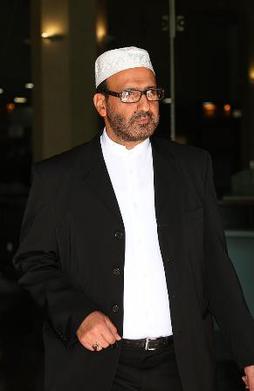
Gunman Man Haron Monis takes 18 hostages inside a café in Martin Place for 16 hours in Sydney.
Monis and two hostages are killed when police raid the café the following morning.
Man Haron Monis was an Iranian-born refugee and Australian citizen who took hostages in a siege at the Lindt Chocolate Café at Martin Place, Sydney on 15 December 2014, lasting for 16 hours, until the early hours of the following morning. The siege resulted in the death of Monis and two hostages.
2014
2017_Java_earthquake
A 6.5Mwearthquake strikes the Indonesian island of Java in the city of Tasikmalaya, resulting in four deaths.
Earthquake centered in Tasikmalaya, West Java, Indonesia
The 2017 Java earthquake occurred on 15 December 2017 when a moment magnitude 6.5 earthquake struck the Indonesian island of Java, specifically the city of Tasikmalaya on 23:47:58 West Indonesian Time in West Java, Indonesia. The earthquake struck at a depth of 91 km and was categorized as a strong but deep earthquake. It was initially registered as a 7.3 magnitude earthquake by Indonesian agencies. Widespread damage was reported across Tasikmalaya, the nearest major city to the epicentre. A tsunami warning was immediately issued by the authorities but was subsequently cancelled. Four people have been confirmed dead.
2017

History runs on facts, and this project runs on coffee!

Your support is incredibly helpful and genuinely appreciated.

Support with a coffee ☕