December 9 in History

Gabriel Narutowicz is elected the first president of Poland.

1922 — Gabriel Narutowicz is elected the first president of Poland

December 9 spans 54 recorded events across recorded history, from 536 to 2021. Below is a curated digest of the most significant moments tied to this date.

By · Wikipedia

Historical Events 54 events 536 – 2021

More major events on December 9

The featured story and these ranked highlights form a quick summary. Every recorded event remains available in the chronology below.

  1. 1851 The first YMCA in North America is established in Montreal. Source
  2. 1861 American Civil War: The Joint Committee on the Conduct of the War is established by Congress. Source
  3. 1931 The Constituent Cortes approves a constitution which establishes the Second Spanish Republic. Source

Did you know

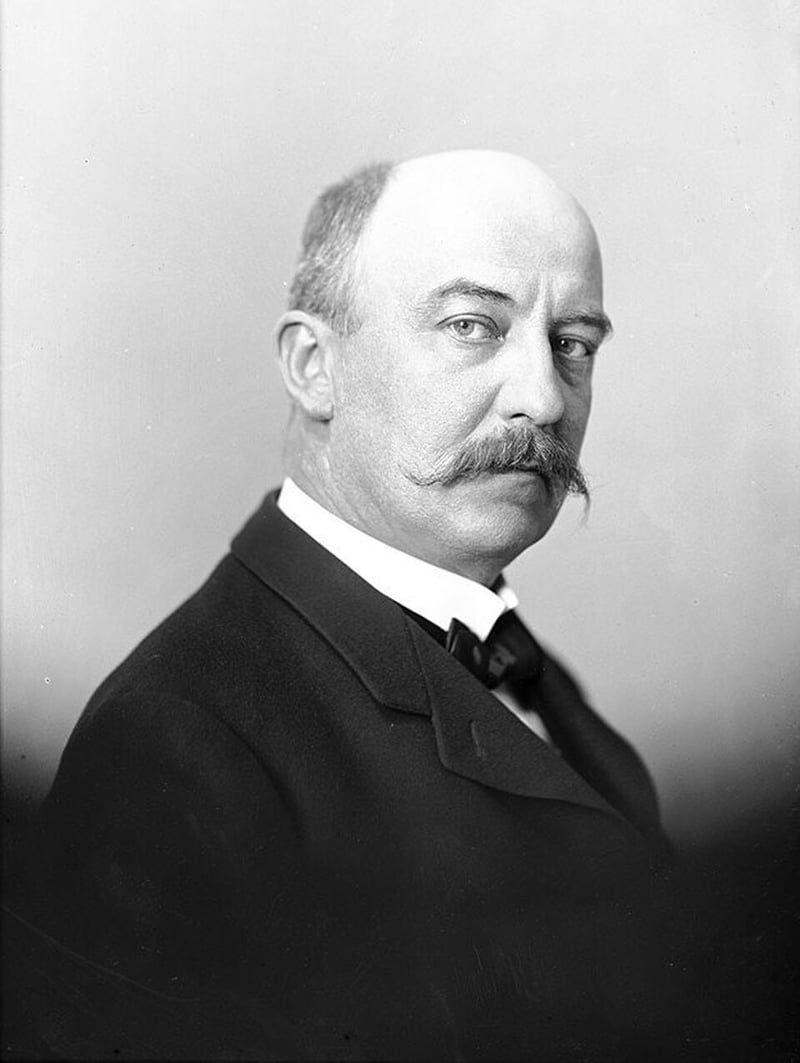
Gabriel Narutowicz was born on March 17, 1865, in Telšiai, Russian Empire, which is now part of Lithuania.
Did you know

He studied engineering at the Zurich Federal Polytechnic University, graduating in 1891 with a degree in engineering.

Did you know

Narutowicz worked as a professor at the Warsaw University of Technology from 1907 to 1918, teaching hydraulic engineering and water management.

Did you know

He was appointed minister of public works in the government of Prime Minister Władysław Grabski in 1920, serving in this position until 1922.

Did you know

Narutowicz was assassinated on December 16, 1922, by Eligiusz Niewiadomski, a right-wing nationalist painter, while attending an art exhibition at the Zachęta National Art Gallery in Warsaw.


Gothic_War_(535–554)
Gothic War: The Byzantine general Belisarius enters Rome unopposed; the Gothic garrison flees the capital.
Byzantine–Gothic war in Italy
The Gothic War between the Eastern Roman Empire during the reign of Emperor Justinian I and the Ostrogothic Kingdom of Italy took place from 535 to 554 in the Italian Peninsula, Dalmatia, Sardinia, Sicily, and Corsica. It was one of the last of the many Gothic wars against the Byzantine Empire. The war had its roots in Justinian's ambition to recover the provinces of the former Western Roman Empire, which had been lost to invading barbarian tribes during the Migration Period.
536
Battle_of_Marj_Ardabil
Battle of Marj Ardabil: The Khazars annihilate an Umayyad army and kill its commander, al-Jarrah ibn Abdallah al-Hakami.
730 battle of the Second Arab-Khazar War
The Battle of Marj Ardabil was a military engagement between the Umayyads and the Khazars in AD 730. A Khazar army led by Barjik, the Khazar Khagan, inflicted a catastrophic defeat on the Umayyads, killing the majority of the army and its leader, al-Jarrah ibn Abdallah. Afterwards, the Khazars sacked Azerbaijan freely at will.
730
Švitrigaila
The first battle between the forces of Švitrigaila and Sigismund Kęstutaitis is fought near the town of Oszmiana (Ashmyany), launching the most active phase of the Lithuanian Civil War.
Grand Duke of Lithuania from 1430 to 1432
Švitrigaila was Grand Duke of Lithuania from 1430 to 1432. He spent most of his life in largely unsuccessful dynastic struggles against his cousins Vytautas and Sigismund Kęstutaitis.
1432
Our_Lady_of_Guadalupe
The Virgin of Guadalupe first appears to Juan Diego at Tepeyac, Mexico City.
Marian apparitions in December 1531
Our Lady of Guadalupe, also known as the Virgin of Guadalupe and as La Virgen Morena, is a Catholic title of the Blessed Virgin Mary associated with four Marian apparitions to Juan Diego and one to his uncle Juan Bernardino reported in December 1531, when the Mexican territories were part of the Spanish Empire.
1531
Qing_dynasty
The Qing dynasty of China, led by Emperor Hong Taiji, invades Joseon.
Manchu-led dynasty of China (1644–1912)
The Qing dynasty, officially the Great Qing, also known as the Qing Empire or Qing China, was a Manchu-led imperial dynasty of China and an early modern empire in East Asia which existed from 1636/1644 to 1912. The last imperial dynasty in Chinese history, the Qing dynasty was preceded by the Ming dynasty and succeeded by the Republic of China. At the height of its power, the empire stretched from the Sea of Japan in the east to the Pamir Mountains in the west, and from the Mongolian Plateau in the north to the South China Sea in the south. Originally emerging from the Later Jin dynasty founded in 1616 and proclaimed in Shenyang in 1636, the dynasty seized control of the Ming capital Beijing and North China in 1644, traditionally considered the start of the dynasty's rule. The dynasty lasted until the Xinhai Revolution of October 1911 led to the abdication of the last emperor in February 1912. The multi-ethnic Qing dynasty assembled the territorial base for modern China. The Qing controlled the most territory of any dynasty in Chinese history, and in 1790 was the fourth-largest empire in world history to that point. It was also the most populous state at the time, with over 426 million citizens in 1907.
1636
American_Revolutionary_War
American Revolutionary War: British troops and Loyalists, misinformed about Patriot militia strength, lose the Battle of Great Bridge, ending British rule in Virginia.
1775–1783 conflict in North America
The American Revolutionary War, also known as the Revolutionary War or American War of Independence or simply the American Revolution, was the armed conflict that comprised the final eight years of the broader American Revolution, in which American Patriot forces organized as the Continental Army and commanded by George Washington defeated the British Army. The conflict was fought in North America, the Caribbean, and the Atlantic Ocean. The war's outcome seemed uncertain for most of the war, but Washington and the Continental Army's decisive victory in the Siege of Yorktown in 1781 led King George III and the Kingdom of Great Britain to negotiate an end to the war. In 1783, in the Treaty of Paris, the British monarchy acknowledged the independence of the Thirteen Colonies, leading to the establishment of the United States as an independent and sovereign nation.
1775
Augustin-Jean_Fresnel
French physicist Augustin-Jean Fresnel, in a memoir read to the Academy of Sciences, coins the terms linear polarization, circular polarization, and elliptical polarization, and reports a direct refraction experiment verifying his theory that optical rotation is a form of birefringence.
French optical physicist (1788–1827)
Augustin-Jean Fresnel was a French civil engineer and physicist whose research in optics led to the almost unanimous acceptance of the wave theory of light, fully supplanting Newton's corpuscular theory, from the late 1830s  until the end of the 19th century. He is perhaps better known for inventing the catadioptric (reflective/refractive) Fresnel lens and for pioneering the use of "stepped" lenses to extend the visibility of lighthouses, saving countless lives at sea. The simpler dioptric stepped lens, first proposed by Count Buffon  and independently reinvented by Fresnel, is used in screen magnifiers and in condenser lenses for overhead projectors.
1822
Antonio_José_de_Sucre
Patriot forces led by General Antonio José de Sucre defeat a Royalist army in the Battle of Ayacucho, putting an end to the Peruvian War of Independence.
President of Peru and Bolivia (1795–1830)
Antonio José de Sucre y Alcalá, known as the "Gran Mariscal de Ayacucho", was a Venezuelan general and politician who served as the president of Bolivia from 1825 to 1828. A close friend and associate of Simón Bolívar, he was one of the primary leaders of South America's struggle for independence from the Spanish Empire.
1824
Texas_Revolution
Texas Revolution: The Texian Army captures San Antonio following the Siege of Béxar.
1835–1836 rebellion
The Texas Revolution was a rebellion by Anglo-American immigrants as well as Hispanic Texans against the centralist government of Mexico in the Mexican state of Coahuila y Tejas. Although the uprising was part of a larger revolt that included other provinces opposed to the regime of President Miguel Barragán and General Antonio López de Santa Anna, the Mexican government believed the United States had instigated the Texas insurrection with the goal of annexation. The Mexican Congress passed the Tornel Decree, declaring that any foreigners fighting against Mexican troops "will be deemed pirates and dealt with as such, being citizens of no nation presently at war with the Republic and fighting under no recognized flag". Only the province of Texas succeeded in breaking with Mexico, establishing the Republic of Texas. It was eventually annexed by the United States about a decade later.
1835
YMCA
The first YMCA in North America is established in Montreal.
Worldwide youth organization
YMCA is a worldwide youth organization based in Vernier, Canton of Geneva, Switzerland, with more than 64 million beneficiaries in 120 countries. It has nearly 90,000 staff, some 920,000 volunteers and 12,000 branches worldwide. It was founded in London on 6 June 1844 by George Williams as the Young Men's Christian Association. The organization's stated aim is to put Christian values into practice by developing a healthy body, mind, and spirit.
1851
Iran
The Iranian city of Bushehr surrenders to occupying British forces.
Country in West Asia
Iran, officially the Islamic Republic of Iran, historically known as Persia, is a country in West Asia. It borders Iraq to the west, Turkey, Azerbaijan, and Armenia to the northwest, the Caspian Sea to the north, Turkmenistan to the northeast, Afghanistan to the east, Pakistan to the southeast, and the Gulf of Oman and the Persian Gulf to the south. With a population of over 92 million, Iran ranks 17th globally in both geographic size and population. It is divided into five regions with 31 provinces. Tehran is the nation's capital and largest city and serves as its primary economic centre.
1856
American_Civil_War
American Civil War: The Joint Committee on the Conduct of the War is established by Congress.
1861–1865 conflict in the United States
The American Civil War was a civil war in the United States between the Union and the Confederacy, which was formed in 1861 by states that had seceded from the Union to preserve slavery in the United States. The South saw slavery as threatened because of the election of Abraham Lincoln and the growing abolitionist movement in the North. The war ended with Union victory, the dissolution of the Confederacy and the abolition of slavery, freeing four million African Americans.
1861
Traffic_light
The first traffic lights are installed, outside the Palace of Westminster in London.
Resembling railway signals, they use semaphore arms and are illuminated at night by red and green gas lamps.
Traffic lights, traffic signals, or stoplights – also known as robots in South Africa, Zambia, and Namibia – are signalling devices positioned at road intersections, pedestrian crossings, and other locations to control the flow of traffic.
1868
Louisiana
In Louisiana, P.
B. S. Pinchback becomes the first African American governor of a U.S. state following the impeachment of Henry C. Warmoth.
Louisiana is a state in the Deep South and South Central regions of the United States. It is bordered by Texas to the west, Arkansas to the north, and Mississippi to the east. Of the 50 U.S. states, it ranks 31st in area and 25th in population, with roughly 4.6 million residents. Reflecting its French heritage, Louisiana is the only U.S. state with political subdivisions termed parishes, which are equivalent to counties, making it one of only two U.S. states not subdivided into counties. Baton Rouge is the state's capital, and New Orleans, a French Louisiana region, is its most populous city with a population of about 363,000 people. Louisiana has a coastline with the Gulf of Mexico to the south; a large part of its eastern boundary is demarcated by the Mississippi River; and the mouth of the Mississippi or delta defines much of its lower topography.
1872
National_Assembly_bombing
National Assembly bombing by Auguste Vaillant during the Ère des attentats (1892–1894).
1893 anarchist bombing in Paris
The National Assembly bombing was a bomb attack carried out on 9 December 1893 in Paris by the anarchist militant Auguste Vaillant. Acting in reaction to other events of the Ère des attentats, literally, "Era of Attacks", (1892–1894), such as the execution of Ravachol, the militant carefully prepared a bomb and managed to enter the galleries of the French National Assembly. He then threw it towards the deputies but was hindered by the arm of another spectator, which caused his attempt to fail. The bomb exploded, killing no one but slightly injuring several people – including Vaillant himself. The session at the National Assembly continued without interruption after the attack, while Vaillant was arrested later that day.
1893
1905_French_law_on_the_Separation_of_the_Churches_and_the_State
In France, a law separating church and state is passed.
Legal basis of state secularism in France
The 1905 French law on the Separation of the Churches and State was passed by the Chamber of Deputies on 3 July 1905. Enacted during the Third Republic, it established state secularism in France. At the time, France was governed by the Bloc des gauches led by Émile Combes. The law was based on three principles: the neutrality of the state, the freedom of religious exercise, and public powers related to the church. This law is seen as the backbone of the French principle of laïcité (secularism). It is, however, not applicable in Alsace and Moselle, which were part of Germany when it was enacted.
1905
Cross_Mountain_Mine_disaster
A mine explosion near Briceville, Tennessee, kills 84 miners despite rescue efforts led by the United States Bureau of Mines.
1911 coal mine explosion near Briceville, Tennessee, United States
The Cross Mountain Mine disaster was a coal mine explosion that occurred on December 9, 1911, near the community of Briceville, Tennessee, in the southeastern United States. In spite of a well-organized rescue effort led by the newly created Bureau of Mines, 84 miners died in the disaster. The cause of the explosion was the ignition of dust and methane gas released by a roof fall. Miners would use open oil lamps to provide a light source down in the mines.
1911
World_War_I
World War I: Field Marshal Allenby captures Jerusalem from the Ottoman Empire.
Global conflict from 1914 to 1918
World War I, or the First World War, also known as the Great War, was a global conflict between two coalitions: the Allies and the Central Powers. Major theatres of war included Europe and the Middle East, and well as parts of Africa and the Asia-Pacific. One of the deadliest conflicts in history, World War I resulted in an estimated 15 to 22 million deaths, including in mass war crimes against civilians and genocides. The conflict saw important developments in weaponry, including the first large-scale use of machine guns, artillery, aircraft, chemical weapons, and tanks, and was a major factor in the deadly Spanish flu pandemic.
1917
Kingdom_of_Romania
World War I: The Kingdom of Romania signs the Armistice of Focșani with the Central Powers.
Kingdom in Europe between 1881 and 1947
The Kingdom of Romania was a constitutional monarchy that existed from 25 March [O.S. 13 March] 1881 with the crowning of prince Karl of Hohenzollern-Sigmaringen as King Carol I, until 30 December 1947 with the abdication of King Michael I and the Romanian Parliament proclamation of the Romanian People's Republic.
1917
The Constituent Cortes approves a constitution which establishes the Second Spanish Republic.
Spain's parliament (the Cortes) when convened as a constituent assembly
The Constituent Cortes is the description of Spain's parliament, the Cortes, when convened as a constituent assembly.
1931
December_9th_Movement
Student protests occur in Beijing's Tiananmen Square, and are subsequently dispersed by government authorities.
1935 student protest against Japanese aggression in Beijing, Republic-era China
The December 9th Movement was a mass protest led by students in Beiping on December 9, 1935, to demand that the Chinese government actively resist Japanese aggression.
1935
Walter_Liggett
Walter Liggett, an American newspaper editor and muckraker, is killed in a gangland murder.
American journalist
Walter William Liggett, was an American journalist who worked at several newspapers in New York City, including the New York Times, The Sun, New York Post, and the New York Daily News. In the Twin Cities during the 1930s, Liggett worked as an investigative journalist and editor of the newspaper Midwest American. He specialized in exposés of Minneapolis and Saint Paul organized crime and their connections to corrupt politicians. He wrote novels including The River Riders. Subjects he wrote about included the timber business in northern Minnesota and the Alaskan gold rush events. He became involved in politics and covered political corruption. He was murdered as a result.
1935
Second_Sino-Japanese_War
Second Sino-Japanese War: Battle of Nanking: Japanese troops under the command of Lt.
Gen. Yasuhiko Asaka launch an assault on the Chinese city of Nanking.
The Second Sino-Japanese War, known in China as the War of Resistance Against Japan, was fought between the Republic of China and the Empire of Japan and its puppet states between 1937 and 1945, following a period of war localized to Manchuria that started in 1931. It is often regarded as the beginning of World War II in Asia, as the wars became heavily intertwined after Japan attacked the United States. It was the largest Asian war in the 20th century.
1937
World_War_II
World War II: Operation Compass: British and Indian troops under the command of Major-General Richard O'Connor attack Italian forces near Sidi Barrani in Egypt.
Global conflict (1939–1945)
World War II, or the Second World War, was a global conflict between two coalitions: the Allies and the Axis powers. Nearly all of the world's countries participated. World War II was the deadliest conflict in history, causing the death of 60 to 75 million people. Millions died as a result of massacres, starvation, disease, and genocides, including the Holocaust. After the Allied victory, Germany, Austria, Japan, and Korea were occupied, and German and Japanese leaders were tried for war crimes.
1940
Republic_of_China_(1912–1949)
World War II: China, Cuba, Guatemala, and the Philippine Commonwealth declare war on Germany and Japan.
Mainland period of the Republic of China
The Republic of China established its governance over Mainland China on 1 January 1912 following the Xinhai Revolution, which overthrew the Manchu-led Qing dynasty and ended China's imperial history. The Beiyang government in Beijing was the internationally recognized government of the ROC from 1912 to 1928, with regional warlords occupying parts of the country after the death of Beiyang leader Yuan Shikai in 1916. In 1926, the Kuomintang (KMT) launched the Northern Expedition, which eventually reunified the country in 1928. The KMT established the Nationalist government and governed the ROC as a one-party state with Nanjing as the capital. In 1949, the KMT was defeated in the Chinese Civil War by the Chinese Communist Party (CCP) and the ROC government retreated to Taiwan, where it remains to this date. The ROC is recorded as a founding member of both the League of Nations and the United Nations. It claimed 11.4 million km2 (4.4 million sq mi) of territory, and its population of 541 million in 1949 made it the most populous country in the world.
1941
Subsequent_Nuremberg_trials
The subsequent Nuremberg trials begin with the Doctors' Trial, prosecuting physicians and officers alleged to be involved in Nazi human experimentation and mass murder under the guise of euthanasia.
1946–1949 trials of Nazi leadership
The subsequent Nuremberg trials were twelve trials for war crimes committed by the leaders of Nazi Germany (1933–1945).
1946
Constituent_Assembly_of_India
The Constituent Assembly of India meets for the first time to write the Constitution of India.
Unicameral assembly for making the Constitution of India
The Constituent Assembly of India was the legislature of the Dominion of India from its independence in August 1947 until 1950, when India became a republic. Best known for its creation of the Indian constitution, its members were mostly elected from the provinces of British India—with a third being nominated by princely states.
1946
The Genocide Convention is adopted.
1948 United Nations resolution that legally defined genocide
The Convention on the Prevention and Punishment of the Crime of Genocide (CPPCG), or the Genocide Convention, is an international treaty that criminalizes genocide and obligates state parties to pursue the enforcement of its prohibition. It was the first legal instrument to codify genocide as a crime and the first human rights treaty unanimously adopted by the United Nations General Assembly on 9 December 1948, during the third session of the United Nations General Assembly. The Convention entered into force on 12 January 1951 and has 153 state parties as of February 2025.
1948
Cold_War
Cold War: Harry Gold is sentenced to 30 years in jail for helping Klaus Fuchs pass information about the Manhattan Project to the Soviet Union.
His testimony is later instrumental in the prosecution of Julius and Ethel Rosenberg.
The Cold War was a period of international geopolitical rivalry between the United States (US) and the Soviet Union (USSR) and their respective allies, the capitalist Western Bloc and communist Eastern Bloc. It began in the aftermath of the Second World War and ended with the dissolution of the Soviet Union in 1991. The term cold war is used because there was no direct fighting between the two superpowers, though each supported opposing sides in regional conflicts known as proxy wars. In addition to the struggle for ideological and economic influence and an arms race in both conventional and nuclear weapons, the Cold War was expressed through technological rivalries such as the Space Race, espionage, propaganda campaigns, embargoes, and sports diplomacy.
1950
McCarthyism
Red Scare: General Electric announces that all communist employees will be discharged from the company.
Phenomenon of US political rhetoric after WWII
McCarthyism is a political practice defined by the accusation and investigation of left-wing individuals of communist and Soviet influence on American institutions and of Soviet espionage in the United States during the late 1940s through the 1950s, heavily associated with the McCarthy era. After the mid-1950s, U.S. senator Joseph McCarthy, who had spearheaded the campaign, gradually lost his public popularity after several of his accusations were found to be false. The U.S. Supreme Court under Chief Justice Earl Warren made a series of rulings on civil and political rights that overturned several key laws and legislative directives, and helped bring an end to the Second Red Scare.
1953
Trans-Canada_Air_Lines_Flight_810-9
Trans-Canada Air Lines Flight 810-9, a Canadair North Star, crashes near Hope, British Columbia, Canada, killing all 62 people on board.
1956 aviation accident
Trans-Canada Air Lines Flight 810-9 was a Canadair North Star on a scheduled flight from Vancouver to Calgary. The plane crashed into Mount Slesse near Chilliwack, British Columbia, Canada, on 9 December 1956 after encountering severe icing and turbulence over the mountains. All 62 people on board died, making it one of the deadliest airline crashes ever as of that date; it still ranks as the sixth deadliest air disaster in Canadian history.
1956
Aeroflot
An Aeroflot Lisunov Li-2 crashes near Anadyr, killing all 12 people on board.
National airline of Russia
PJSC Aeroflot – Russian Airlines, commonly known as Aeroflot, is the flag carrier and the largest airline of Russia. Aeroflot is headquartered in the Central Administrative Okrug, Moscow, with its hub being Sheremetyevo International Airport. The Federal Agency for State Property Management, an agency of the Government of Russia, owns 73.77% of the company, with the rest of the shares being public float.
1956
Coronation_Street
The first episode of Coronation Street, the world's longest-running television soap opera, is broadcast in the United Kingdom.
British television soap opera (1960–present)
Coronation Street is a British television soap opera created by Granada Television and shown on ITV since 9 December 1960. The programme centres on a cobbled, terraced street in the fictional town of Weatherfield in Greater Manchester. The location was itself based on Salford, the hometown of the show's first screenwriter and creator, Tony Warren.
1960
Tanganyika_(1961–1964)
Tanganyika becomes independent from Britain.
Country in East Africa from 1961 to 1964
Tanganyika was a sovereign state, comprising the mainland part of present-day Tanzania, that existed from 1961 until 1964. It first gained independence from the United Kingdom on 9 December 1961 as a Commonwealth realm headed by Queen Elizabeth II before becoming a republic within the Commonwealth of Nations as the Republic of Tanganyika a year later. After signing the Articles of Union on 22 April 1964 and passing an Act of Union on 25 April, Tanganyika officially joined with the People's Republic of Zanzibar to form the United Republic of Tanganyika and Zanzibar on Union Day, 26 April 1964. The new state changed its name to the United Republic of Tanzania within a year.
1961
Kecksburg_UFO_incident
Kecksburg UFO incident: A fireball is seen from Michigan to Pennsylvania; with witnesses reporting something crashing in the woods near Pittsburgh.
1965 fireball sighting in North America
The Kecksburg UFO incident occurred on December 9, 1965, at Kecksburg, Pennsylvania, United States, when a fireball was reported by citizens of six U.S. states and Canada over Detroit, Michigan, and Windsor, Ontario. Astronomers said it was likely to have been a meteor bolide burning up in the atmosphere and descending at a steep angle. NASA released a statement in 2005 reporting that experts had examined fragments from the area and determined they were from a Soviet satellite, but that records of their findings were lost in 1987. NASA responded to court orders and Freedom of Information Act requests to search for the records. The incident gained wide notoriety in popular culture and ufology, with speculation ranging from extraterrestrial craft to debris from the Soviet space probe Kosmos 96, and is often called "Pennsylvania's Roswell".
1965
Douglas_Engelbart
Douglas Engelbart gave what became known as "The Mother of All Demos", publicly debuting the computer mouse, hypertext, and the bit-mapped graphical user interface using the oN-Line System (NLS).
American engineer and inventor (1925–2013)
Douglas Carl Engelbart was an American engineer, inventor, and a pioneer in many aspects of computer science. He is best known for his work on founding the field of human–computer interaction, particularly while at his Augmentation Research Center Lab in SRI International, which resulted in creation of the computer mouse, and the development of hypertext, networked computers, and precursors to graphical user interfaces. These were demonstrated at The Mother of All Demos in 1968. Engelbart's law, the observation that the intrinsic rate of human performance is exponential, is named after him.
1968
William_P._Rogers
U.S.
Secretary of State William P. Rogers proposes his plan for a ceasefire in the War of Attrition; Egypt and Jordan accept it over the objections of the PLO, which leads to civil war in Jordan in September 1970.
William Pierce Rogers was an American politician, diplomat, and attorney. A member of the Republican Party, he served as Attorney General in the administration of Dwight D. Eisenhower and as U.S. Secretary of State in the administration of Richard Nixon.
1969
India–Pakistan_war_of_1971
Indo-Pakistani War: The Indian Air Force executes an airdrop of Indian Army units, bypassing Pakistani defences.
Military confrontation between India and Pakistan alongside the Bangladesh Liberation War
The India–Pakistan war of 1971, also known as the third Indo-Pakistani war, was a military confrontation between India and Pakistan that occurred during the Bangladesh Liberation War in East Pakistan from 3 December 1971 until the Pakistani capitulation in Dhaka on 16 December 1971. The war began with Pakistan's Operation Chengiz Khan, consisting of preemptive aerial strikes on eight Indian air stations. The strikes led to India declaring war on Pakistan, marking their entry into the war for East Pakistan's independence, on the side of Bengali nationalist forces. India's entry expanded the existing conflict with Indian and Pakistani forces engaging on both the eastern and western fronts.
1971
British and Irish authorities sign the Sunningdale Agreement in an attempt to establish a power-sharing Northern Ireland Executive and a cross-border Council of Ireland.
1973 treaty between Ireland and the United Kingdom
The Sunningdale Agreement was an attempt to establish a power-sharing Northern Ireland Executive and a cross-border Council of Ireland. The agreement was signed by the British and Irish government in Sunningdale Park, Sunningdale, Berkshire, on 9 December 1973. Unionist opposition, violence and a general strike caused the collapse of the agreement in May 1974.
1973
Smallpox
The eradication of the smallpox virus is certified, making smallpox the first of only two diseases that have been driven to extinction (with rinderpest in 2011 being the other).
Eradicated viral disease
Smallpox was an infectious disease caused by Variola virus, which belongs to the genus Orthopoxvirus. The last naturally occurring case was diagnosed in October 1977, and the World Health Organization (WHO) certified the global eradication of the disease in 1980, making smallpox the only human disease to have been eradicated.
1979
Israeli–Palestinian_conflict
Israeli–Palestinian conflict: The First Intifada begins in the Gaza Strip and West Bank.
Ongoing military and political conflict in West Asia
Israel and the Palestinians are engaged in an ongoing military and political conflict about land and self-determination within the former territory of Mandatory Palestine. Key aspects of the conflict have included Palestinian refugees, the Israeli occupation of the West Bank and Gaza Strip, the status of Jerusalem, Israeli settlements, borders, security, water rights, the permit regime in the West Bank and in the Gaza Strip, Palestinian freedom of movement, and the Palestinian right of return.
1987
Somalia
American troops land in Somalia for Operation Restore Hope.
Country in the Horn of Africa
Somalia, officially the Federal Republic of Somalia, is the easternmost country in continental Africa. Stretching across the Horn of Africa, it borders Ethiopia to the west, Djibouti to the northwest, Kenya to the southwest, the Gulf of Aden to the north, and the Indian Ocean to the east. Somalia has the longest coastline on Africa's mainland. Somalia has an estimated population of more than 18 million, of which 2.7 million live in the capital and largest city, Mogadishu. As one of Africa's most ethnically homogeneous countries, around 85% of its residents are ethnic Somalis. The official and national language of the country is Somali while Arabic is recognised as a second language. The overwhelming majority of the population are Sunni Muslims.
1992
Female_toplessness_in_Canada
Gwen Jacob is acquitted of committing an indecent act, giving women the right to be topless in Ontario, Canada.
In Canada, topfreedom has primarily been an attempt to combat the interpretation of indecency laws that considered a woman's breasts to be indecent, and therefore their exhibition in public an offence. In British Columbia, it is a historical issue dating back to the 1930s and the public protests against the materialistic lifestyle held by the radical religious sect of the Freedomites, whose pacifist beliefs led to their exodus from Russia to Canada at the end of the 19th century. The Svobodniki became famous for their public nudity: primarily for their nude marches in public and the acts of arson committed also in the nude.
1996
2003_Red_Square_bombing
A blast in the center of Moscow kills six people and wounds several more.
2003 attack by Chechen terrorists in Moscow, Russia
The 2003 Red Square bombing was the 9 December 2003 suicide bombing on Mohovaja street in Moscow.
2003
Space_Shuttle_program
Space Shuttle program: Space Shuttle Discovery is launched on STS-116 carrying the P5 truss segment of the International Space Station.
1972–2011 United States human spaceflight program
The Space Shuttle program was the fourth human spaceflight program carried out by the U.S. National Aeronautics and Space Administration (NASA), which accomplished routine transportation for Earth-to-orbit crew and cargo from 1981 to 2011. Its official program name was carried over from the 1969 plan for the Space Transportation System (STS) of reusable spacecraft. Only the shuttle and supporting rockets were funded for development; a proposed nuclear lunar shuttle in the plan was canceled in 1972. It flew 135 missions and carried 355 astronauts from 16 countries, many on multiple trips.
2006
Governor_of_Illinois
Governor of Illinois Rod Blagojevich is arrested by federal officials for crimes including attempting to sell the U.S.
Senate seat being vacated by President-elect Barack Obama.
The governor of Illinois is the head of government of Illinois, and the various agencies and departments over which the officer has jurisdiction, as prescribed in the state constitution. It is a directly elected position, votes being cast by popular suffrage of residents of the state. The governor is responsible for endorsing or vetoing laws passed by the Illinois General Assembly. The office also carries the power of pardon and commutation under state law. The governor is commander-in-chief of the state's land, air and sea forces when they are in state service. Illinois is one of 13 states that does not place a term limit for governor.
2008
2012_Nuevo_León_Learjet_25_crash
A plane crash in Mexico kills seven people including singer Jenni Rivera.
Aviation accident in Mexico
On 9 December 2012, a Learjet 25 business jet carrying five passengers including Mexican-American singer Jenni Rivera crashed south of Monterrey, Mexico, minutes after taking off from the city's international airport. All aboard, including two crew members, were killed.
2012
2013_Bintaro_train_crash
At least seven are dead and 63 are injured following a train accident near Bintaro, Indonesia.
Train crash in Indonesia
The 2013 Bintaro rail crash occurred on 9 December 2013 when a KRL Commuterline train crashed into a Pertamina gasoline tanker at a railroad crossing in Bintaro, Jakarta, Indonesia on a Monday morning, causing at least one female-only carriage to overturn and burst into flames. At least 7 people were killed and another 63 were wounded in the crash.
2013
Park_Geun-hye
President Park Geun-hye of South Korea is impeached by the country's National Assembly in response to a major political scandal.
President of South Korea from 2013 to 2017
Park Geun-hye is a South Korean politician who served as the 11th president of South Korea from 2013 until her removal from office in 2017. A member of the Grand National, Saenuri and Liberty Korea parties and the eldest daughter of the third president, Park Chung Hee, she was the first woman in the country and the first in East Asia to be elected as head of state. Park previously served as the acting first lady of South Korea under her father's presidency from 1974 until her father's assassination in 1979.
2016
Madagali
At least 57 people are killed and a further 177 injured when two schoolgirl suicide bombers attack a market area in Madagali, Adamawa, Nigeria in the Madagali suicide bombings.
LGA and town in Adamawa State, Nigeria
Madagali or Madagli is a town and local government area in Adamawa State, Nigeria, adjacent to the border with Cameroon.
2016
Marriage_Amendment_(Definition_and_Religious_Freedoms)_Act_2017
The Marriage Amendment Bill receives royal assent and comes into effect, making Australia the 26th country to legalize same-sex marriage.
2017 Australian law legalising same-sex marriage
The Marriage Amendment (Definition and Religious Freedoms) Act 2017 (Cth) is an act of the Parliament of Australia, which legalises same-sex marriage in Australia by amending the Marriage Act 1961 to allow marriage between two persons of marriageable age, regardless of their gender.
2017
Whakaari_/_White_Island
A volcano on Whakaari / White Island, New Zealand, kills 22 people after it erupts.
Island volcano in New Zealand's Bay of Plenty
Whakaari / White Island, also known as White Island or Whakaari, is an active andesite stratovolcano situated 48 km (30 mi) from the east coast of the North Island of New Zealand, in the Bay of Plenty. The island covers an area of approximately 325 ha, which is just the peak of a much larger submarine volcano.
2019
Central_America
Fifty-five people are killed and more than 100 injured when a truck with 160 migrants from Central America overturned in Chiapas, Mexico.
Subregion of North America
Central America is a subregion of North America. Its political boundaries are defined as bordering Mexico to the north, Colombia to the southeast, the Caribbean to the east, and the Pacific Ocean to the southwest. Central America is usually defined as consisting of seven countries: Belize, Costa Rica, El Salvador, Guatemala, Honduras, Nicaragua, and Panama, and also, in specialized contexts, including Mexico. Within Central America is the Mesoamerican biodiversity hotspot, which extends from southern Mexico to southeastern Panama. Due to the presence of several active geologic faults and the Central America Volcanic Arc, seismic activity in the region, such as volcanic eruptions and earthquakes, is high, which has caused death, injury, and property damage.
2021

History runs on facts, and this project runs on coffee!

Your support is incredibly helpful and genuinely appreciated.

Support with a coffee ☕