January 12 in History

The University of the Philippines College of Law is established.

1911 — The University of the Philippines College of Law is established

January 12 spans 43 recorded events across recorded history, from 475 to 2020. Below is a curated digest of the most significant moments tied to this date.

By · Wikipedia

Historical Events 43 events 475 – 2020

More major events on January 12

The featured story and these ranked highlights form a quick summary. Every recorded event remains available in the chronology below.

  1. 1932 Hattie Caraway becomes the first woman elected to the United States Senate. Source
  2. 1962 Vietnam War: Operation Chopper, the first American combat mission and first American helicopter assault in the war, takes place. Source
  3. 2012 Violent protests occur in Bucharest, Romania, as two-day-old demonstrations continue against President Traian Băsescu's economic austerity measures. Clashes are reported in numerous Romanian cities between protesters and law enforcement officers. Source

Did you know

In 1911, The University of the Philippines College of Law is established. This featured entry focuses on the immediate decision and its direct historical impact.

Did you know

The University of the Philippines College of Law is the law school of the University of the Philippines Diliman. This helps explain why the event mattered beyond the initial announcement.

Did you know

Formally established in 1911 in UP Manila, it is the third oldest continually-operating law school in the Philippines. This clarifies the institutional and public response around the event.

Did you know

Since 1948, it has been based in UP Diliman in Quezon City, the flagship of the UP System's eight constituent universities. This shows how the event shaped policy and public communication in the same period.

Did you know

The college also holds extension classes at the Bonifacio Global City campus of UP Diliman in Taguig and the Iloilo City campus of UP Visayas. This helps explain why the event mattered beyond the initial announcement.

List_of_Byzantine_emperors
Byzantine Emperor Zeno is forced to flee his capital at Constantinople, and his general, Basiliscus gains control of the empire.
The foundation of Constantinople in 330 AD marks the conventional start of the Byzantine Empire, which fell to the Ottoman Empire in 1453 AD. Only the emperors who were recognized as legitimate rulers and exercised sovereign authority are included, to the exclusion of junior co-emperors who never attained the status of sole or senior ruler, as well as of the various usurpers or rebels who claimed the imperial title.
475
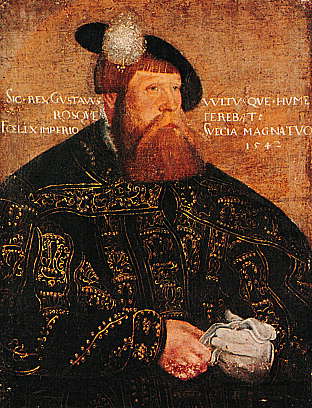
Gustav_Vasa
Gustav I of Sweden is crowned King of Sweden, having already reigned since his election in June 1523.
King of Sweden from 1523 to 1560
Gustav Eriksson Vasa, also known as Gustav I, was King of Sweden from 1523 until his death in 1560. He was previously self-recognised Protector of the Realm (Riksföreståndare) from 1521, during the Swedish War of Liberation against King Christian II of Denmark, Norway and Sweden. Gustav rose to lead this war following the Stockholm Bloodbath, where his father was executed. Gustav's election as king on 6 June 1523 and his triumphant entry into Stockholm eleven days later marked Sweden's final secession from the Kalmar Union.
1528
Bayinnaung
Bayinnaung, who would go on to assemble the largest empire in the history of Southeast Asia, is crowned King of Burma.
Emperor of the Toungoo dynasty
Bayinnaung Kyawhtin Nawrahta was King of Burma from 30 April 1550 until his death in 1581, during the Toungoo dynasty. His reign is considered one of the most momentous in Burmese history, famously described as "the greatest explosion of human energy ever seen in Burma". During his rule, he assembled the largest empire in Southeast Asian history, which encompassed much of present-day Myanmar, as well as the Shan States, Lan Na, Lan Xang, Manipur, and the Ayutthaya Kingdom.
1554
Belém
The city of Belém, Brazil is founded on the Amazon River delta by Portuguese captain Francisco Caldeira Castelo Branco.
Capital and largest city of Pará, Brazil
Belém, often called Belém of Pará, is the capital and largest city of the state of Pará in the north of Brazil. It is the gateway to the Amazon River with a busy port, airport, and bus/coach station. Belém lies approximately 100 km upriver from the Atlantic Ocean, on the Pará River, which is part of the greater Amazon River system, separated from the larger part of the Amazon delta by Ilha de Marajó. With an estimated population of 1,398,531 people — or 2,491,052, considering its metropolitan area — it is the 12th most populous city in Brazil, as well as the 16th by economic relevance. It is the second largest in the North Region, second only to Manaus, in the state of Amazonas.
1616
Thomas_Pinckney
Federalist Thomas Pinckney appointed first U.S.
minister to Britain.
Thomas Pinckney was an American statesman, diplomat, and military officer who fought in both the American Revolutionary War and the War of 1812, achieving the rank of major general. He served as 36th governor of South Carolina and as the U.S. minister to Great Britain.
1792
John_Rennie_the_Elder
John Rennie's scheme to defend St Mary's Church, Reculver, founded in 669, from coastal erosion is abandoned in favour of demolition, despite the church being an exemplar of Anglo-Saxon architecture and sculpture.
Scottish civil engineer (1761–1821)
John Rennie was a Scottish civil engineer who designed many bridges, canals, docks and warehouses, and a pioneer in the use of structural cast-iron.
1808
The organizational meeting leading to the creation of the Wernerian Natural History Society, a former Scottish learned society, is held in Edinburgh.
Learned society in Scotland (1808–58)
The Wernerian Natural History Society, commonly abbreviated as the Wernerian Society, was a learned society interested in the broad field of natural history, and saw papers presented on various topics such as mineralogy, plants, insects, and scholarly expeditions. The Society was an offshoot of the Royal Society of Edinburgh, and from its beginnings it was a rather elite organization.
1808
Sicilian_revolution_of_1848
The Palermo rising takes place in Sicily against the Bourbon Kingdom of the Two Sicilies.
Rebellion against Bourbon rule in the Kingdom of Sicily
The Sicilian revolution of 1848 was the first of the numerous Revolutions of 1848 which swept across Europe. It was a popular rebellion against the rule of Ferdinand II of the House of Bourbon, King of the Two Sicilies. Three revolutions against the Bourbon ruled Kingdom of the Two Sicilies had previously occurred on the island of Sicily starting from 1800: this final one, which commenced on 12 January 1848, resulted in an independent state which survived for 16 months. The Sicilian Constitution of 1848 which survived the 16 months was advanced for its time in liberal democratic terms, as was the proposal of a unified Italian confederation of states. It was in effect a curtain-raiser to the end of the Bourbon kingdom of the Two Sicilies, finally completed by Giuseppe Garibaldi's Expedition of the Thousand in 1860, the Siege of Gaeta of 1860–1861 and the proclamation of the unified Kingdom of Italy.
1848
Royal_Aeronautical_Society
The Royal Aeronautical Society is formed in London.
British multi-disciplinary professional institution
The Royal Aeronautical Society, also known as the RAeS, is a British multi-disciplinary professional institution dedicated to the global aerospace community. Founded in 1866, it is the oldest aeronautical society in the world. Members, Fellows, and Companions of the society can use the post-nominal letters MRAeS, FRAeS, or CRAeS, respectively.
1866
Yohannes_IV
Yohannes IV is crowned Emperor of Ethiopia in Axum, the first imperial coronation in that city in over 200 years.
Emperor of Ethiopia from 1871 to 1889
Yohannes IV was Emperor of Ethiopia from 1871 to his death in 1889 at the Battle of Gallabat, and king of Tigray from 1869 to 1871. During his reign he successfully defended Ethiopia against a large-scale Egyptian invasion.
1872
National_Trust
The National Trust is founded in the United Kingdom.
Conservation organisation in England, Wales and Northern Ireland
The National Trust is a heritage and nature conservation charity and membership organisation in the United Kingdom, operating in England, Wales and Northern Ireland only.
1895
United_States_House_of_Representatives
The United States House of Representatives rejects a proposed constitutional amendment to require states to give women the right to vote.
Lower house of the U.S. Congress
The United States House of Representatives is a chamber of the bicameral United States Congress; with the United States Senate being the other chamber. Together, the House and Senate have the authority under Article One of the Constitution of the United States in enumerated matters to pass or defeat federal legislation, known as bills. Those that are also passed by the Senate are sent to the president for signature or veto. The House's exclusive powers include initiating all revenue bills, impeaching federal officers, and electing the president if no candidate receives a majority of votes in the Electoral College.
1915
Oswald_Boelcke
Oswald Boelcke and Max Immelmann become the first German aviators to earn the Pour le Mérite, receive the German Empire's highest military award, for achieving eight aerial victories each over Allied aircraft.
German World War I flying ace (1891–1916)
Hauptmann Oswald Boelcke was a German professional soldier and pioneering flying ace credited with 40 aerial victories during World War I. Boelcke is honored as the father of the German fighter air force, and of air combat as a whole. He was a highly influential mentor, patrol leader, and tactician in the first years of air combat, 1915 and 1916.
1916
Minnie_Pit_Disaster
The Minnie Pit Disaster coal mining accident occurs in Halmer End, Staffordshire, in which 155 men and boys die.
1918 coal mining accident in England
The Minnie Pit disaster was a coal mining accident that took place on 12 January 1918 in Halmer End, Staffordshire, in which 155 men and boys died. The disaster, which was caused by an explosion due to firedamp, is the worst ever recorded in the North Staffordshire Coalfield. An official investigation never established what caused the ignition of flammable gases in the pit.
1918
Hattie_Caraway
Hattie Caraway becomes the first woman elected to the United States Senate.
American politician (1878–1950)
Hattie Ophelia Wyatt Caraway was an American politician who was United States Senator from Arkansas from 1931 to 1945. She was the first woman elected to the Senate, the first woman to serve a full term as a United States senator, and the first woman to be reelected to the Senate. She was also the first woman to preside over the Senate. She won reelection to a full term in 1932 with the active support of fellow Senator Huey Long, of neighboring Louisiana.
1932
Casas_Viejas_incident
Casas Viejas incident: 22 peasants killed by the Security and Assault Corps in Casas Viejas, Spain.
1933 mass killing in Andalusia, Spain
The Casas Viejas incident, also known as the Casas Viejas massacre, was a failed civil uprising that took place from 10 to 12 January 1933, in the village of Casas Viejas as part of the larger anarchist insurrection of January 1933 with the aim of toppling the Second Spanish Republic and implementing anarcho-communism. The incident constituted one of the most tragic events in the history of the Republic up until that point, resulting in a political crisis which led to the collapse of the second Azaña government and the end of the Reformist Biennium and the triumph of the right wing coalition in the following November of 1933 general election.
1933
World_War_II
World War II: United States President Franklin D.
Roosevelt creates the National War Labor Board.
World War II, or the Second World War, was a global conflict between two coalitions: the Allies and the Axis powers. Nearly all of the world's countries participated. World War II was the deadliest conflict in history, causing the death of 60 to 75 million people. Millions died as a result of massacres, starvation, disease, and genocides, including the Holocaust. After the Allied victory, Germany, Austria, Japan, and Korea were occupied, and German and Japanese leaders were tried for war crimes.
1942
Red_Army
World War II: The Red Army begins the Vistula–Oder Offensive.
Soviet army and air force from 1918 to 1946
The Workers' and Peasants' Red Army, often referred by its shortened name as the Red Army, was the army and air force of the Russian Soviet Republic and, from 1922, the Soviet Union. The army was established in January 1918 by a decree of the Council of People's Commissars to oppose the military forces of the new nation's adversaries during the Russian Civil War, especially the various groups collectively known as the White Army. In February 1946, the Red Army was renamed the "Soviet Army". Following the dissolution of the Soviet Union, it was split between the post-Soviet states, with its bulk becoming the Russian Ground Forces, commonly considered to be the successor of the Soviet Army.
1945
Martin_2-0-2
A Martin 2-0-2 and Douglas DC-3 collide over Boone County, Kentucky, killing 15 people.
Twin-piston-engine US piston airliner, 1946
The Martin 2-0-2 was a low-wing, all-metal, twin piston-engined American airliner designed and built by the Glenn L. Martin Company. Introduced in 1947, the 40 passenger unpressurized aircraft was powered by Pratt & Whitney R-2800 CA-18 Double Wasp 18-cylinder air-cooled radial engine, and cruised at 255 knots.
1955
Vietnam_War
Vietnam War: Operation Chopper, the first American combat mission and first American helicopter assault in the war, takes place.
1955–1975 war in Southeast Asia
The Vietnam War was an armed conflict in Vietnam, Laos, and Cambodia fought between North Vietnam and South Vietnam and their allies. North Vietnam was supported by the Soviet Union and China, while South Vietnam was supported by the United States and other anti-communist nations. The conflict was the second of the Indochina wars and a proxy war of the Cold War. The Vietnam War was one of the postcolonial wars of national liberation, a theater in the Cold War, and a civil war, with civil warfare a defining feature from the outset. Direct US military involvement escalated from 1965 until US forces were withdrawn in 1973. The fighting spilled into the Laotian and Cambodian civil wars, which ended with all three countries becoming communist in 1975.
1962
Zanzibar
Rebels in Zanzibar begin a revolt known as the Zanzibar Revolution and proclaim a republic.
Semi-autonomous region of Tanzania
Zanzibar is a Tanzanian semi-autonomous region off the coast of East Africa. It is located in the Indian Ocean, and consists of many small islands and two large ones: Unguja Island and Pemba Island. The capital is Zanzibar City, located on the island of Unguja. Its historic centre, Stone Town, is a World Heritage Site.
1964
Lyndon_B._Johnson
Lyndon B.
Johnson states that the United States should stay in South Vietnam until Communist aggression there is ended.
Lyndon Baines Johnson, also known as LBJ, was the 36th president of the United States from 1963 to 1969. Johnson was vice president under John F. Kennedy from 1961 until Kennedy's assassination in 1963, when he assumed the presidency. Before becoming vice president, he served in both houses of the U.S. Congress, representing Texas as a member of the Democratic Party.
1966
Dr.
James Bedford becomes the first person to be cryonically preserved with intent of future resuscitation.
James Hiram Bedford was an American psychology professor at the University of California who wrote several books on occupational counseling. He is the first person whose body was cryopreserved after legal death, and remains preserved at the Alcor Life Extension Foundation.
1967
New_York_Jets
The New York Jets of the American Football League defeat the Baltimore Colts of the National Football League to win Super Bowl III in what is considered to be one of the greatest upsets in sports history.
National Football League franchise in East Rutherford, New Jersey
The New York Jets are a professional American football team based in the New York metropolitan area. The Jets compete in the National Football League (NFL) as a member of the American Football Conference (AFC) East division. The team plays its home games at MetLife Stadium at the Meadowlands Sports Complex in East Rutherford, New Jersey, five miles west of New York City. The team is headquartered in Florham Park, New Jersey. The franchise is legally organized as a limited liability company under the name New York Jets, LLC.
1969
Biafra
Biafra capitulates, ending the Nigerian Civil War.
1967–1970 partially recognised state in Africa
Biafra, officially the Republic of Biafra, was a partially recognised state in West Africa that declared independence from Nigeria and existed from 1967 to 1970. Its territory consisted of the former Eastern Region of Nigeria, predominantly inhabited by the Igbo ethnic group, but with sizable chunks of the region belonging to the Ijaw, Efik, Ibibio and other tribes. Biafra was established on 30 May 1967 by Igbo military officer and Eastern Region governor Chukwuemeka Odumegwu Ojukwu under his presidency, following a series of ethnic tensions and military coups after Nigerian independence in 1960 that culminated in the 1966 anti-Igbo pogrom.
1970
Harrisburg_Seven
The Harrisburg Seven: Rev.
Philip Berrigan and five other activists are indicted on charges of conspiring to kidnap Henry Kissinger and of plotting to blow up the heating tunnels of federal buildings in Washington, D.C.
The Harrisburg Seven were a group of religious anti-war activists, led by Philip Berrigan, charged in 1971 in a failed conspiracy case in the United States District Court for the Middle District of Pennsylvania, located in Harrisburg. The seven were Phillip Berrigan, Elizabeth McAlister, Rev. Neil McLaughlin, Rev. Joseph Wenderoth, Eqbal Ahmad, Anthony Scoblick, and Mary Cain Scoblick.
1971
United_Nations_Security_Council
The United Nations Security Council votes 11–1 to allow the Palestine Liberation Organization to participate in a Security Council debate (without voting rights).
United Nations members responsible for drafting
The United Nations Security Council is one of the six principal organs of the United Nations, and is the United Nations' executive branch, having primary responsibility for the maintenance of international peace and security. Its powers, outlined in the UN Charter, include establishing peacekeeping operations, authorizing military action, and imposing international sanctions. Under Chapter VII of the UN Charter, the Council may identify threats to international peace, determine breaches of that peace, and authorize responses up to and including the use of force. It is the only UN body with the authority to adopt binding international law by issuing resolutions binding on all member states. The Council also recommends the admission of new member states to the UN General Assembly, and approves changes to the Charter. It is led by the President of the Security Council and the Secretary General as its Executive Administrator overseeing the implementation of its decisions and mandates.
1976
Space_Shuttle_program
Space Shuttle program: Congressman and future NASA Administrator Bill Nelson lifts off from Kennedy Space Center aboard Columbia on mission STS-61-C as a payload specialist.
1972–2011 United States human spaceflight program
The Space Shuttle program was the fourth human spaceflight program carried out by the U.S. National Aeronautics and Space Administration (NASA), which accomplished routine transportation for Earth-to-orbit crew and cargo from 1981 to 2011. Its official program name was carried over from the 1969 plan for the Space Transportation System (STS) of reusable spacecraft. Only the shuttle and supporting rockets were funded for development; a proposed nuclear lunar shuttle in the plan was canceled in 1972. It flew 135 missions and carried 355 astronauts from 16 countries, many on multiple trips.
1986
Baku_pogrom
A seven-day pogrom breaks out against the Armenian civilian population of Baku, Azerbaijan, during which Armenians were beaten, tortured, murdered, and expelled from the city.
1990 pogrom against Armenians in Azerbaijan SSR
From January 12, 1990, a seven-day pogrom broke out against the Armenian civilian population in Baku, during which Armenians were beaten, murdered, and expelled from the city by Azerbaijanis. There were also many raids on apartments, robberies and arsons. According to the Human Rights Watch reporter Robert Kushen, "the action was not entirely spontaneous, as the attackers had lists of Armenians and their addresses". The pogrom of Armenians in Baku was one of the acts of ethnic violence in the context of the First Nagorno-Karabakh War, directed against the demands of the Nagorno-Karabakh Armenians to secede from Azerbaijan and unify with Armenia.
1990
Gulf_War
Persian Gulf War: An act of the U.S.
Congress authorizes the use of American military force to drive Iraq out of Kuwait.
The Gulf War was an armed conflict between Iraq and a 42-country coalition led by the United States. The coalition's efforts were in two phases: Operation Desert Shield, which marked the military buildup from August 1990 to January 1991; and Operation Desert Storm, from the bombing campaign against Iraq on 17 January until the American-led liberation of Kuwait on 28 February.
1991
Space_Shuttle_Atlantis
Space Shuttle program: Atlantis launches from the Kennedy Space Center on mission STS-81 to the Russian space station Mir, carrying astronaut Jerry M.
Linenger for a four-month stay on board the station, replacing astronaut John E. Blaha.
Space Shuttle Atlantis is a retired Space Shuttle orbiter vehicle which belongs to NASA, the spaceflight and space exploration agency of the United States. Atlantis was manufactured by the Rockwell International company in Southern California and was delivered to the Kennedy Space Center in Eastern Florida in April 1985. Atlantis is the fourth operational and the second-to-last Space Shuttle built. Its maiden flight was STS-51-J made from October 3 to 7, 1985.
1997
Human_cloning
Nineteen European nations agree to forbid human cloning.
Creation of a genetically identical copy of a human
Human cloning is the creation of a genetically identical copy of a human. The term is generally used to refer to artificial human cloning, which is the reproduction of human cells and tissue. It does not refer to the natural conception and delivery of identical twins. The possibilities of human cloning have raised controversies. These ethical concerns have prompted several nations to pass laws regarding human cloning.
1998
Downtown_Disney
Downtown Disney opens to the public as part of the Disneyland Resort in Anaheim, California.
Shopping complex in Anaheim, California
Downtown Disney is a lifestyle center located at the Disneyland Resort in Anaheim, California, United States. It opened on January 12, 2001; a component of the Disneyland Resort expansion project alongside the Disney California Adventure theme park and Disney's Grand Californian Hotel & Spa.
2001
Ocean_liner
The world's largest ocean liner, RMS Queen Mary 2, makes its maiden voyage.
Type of passenger ship
An ocean liner is a type of passenger ship that was primarily used for transportation across seas or oceans. Ocean liners may also carry cargo or mail, and may sometimes be used for other purposes. The Queen Mary 2 is the only active ocean liner in 2026, serving with Cunard Line.
2004
Deep_Impact_(spacecraft)
Deep Impact launches from Cape Canaveral on a Delta II rocket.
NASA space probe launched in 2005
Deep Impact was a NASA space probe launched from Cape Canaveral Air Force Station on January 12, 2005. It was designed to study the interior composition of the comet Tempel 1 (9P/Tempel), by releasing an impactor into the comet. At 05:52 UTC on July 4, 2005, the Impactor successfully collided with the comet's nucleus. The impact excavated debris from the interior of the nucleus, forming an impact crater. Photographs taken by the spacecraft showed the comet to be more dusty and less icy than had been expected. The impact generated an unexpectedly large and bright dust cloud, obscuring the view of the impact crater.
2005
Incidents_during_the_Hajj
A stampede during the Stoning of the Devil ritual on the last day at the Hajj in Mina, Saudi Arabia, kills at least 362 Muslim pilgrims.
Accidents during the annual Islamic pilgrimage to Mecca
There have been numerous incidents during the Hajj, the Muslim pilgrimage to the cities of Mecca and Medina, that have caused loss of life. Every follower of Islam is required to perform the Hajj in Mecca at least once in their lifetime, if able to do so; the pilgrimage is one of the Five Pillars of Islam. During the month of the Hajj, Mecca must cope with as many as three million pilgrims.
2006
Comet_McNaught
Comet C/2006 P1 (McNaught), one of the brightest comets ever observed is at its zenith visible during the day.
Great Comet of 2007
Comet McNaught, also known as the Great Comet of 2007 and given the designation C/2006 P1, is a non-periodic comet discovered on 7 August 2006 by British-Australian astronomer Robert H. McNaught using the Uppsala Southern Schmidt Telescope. It was the brightest comet in over 40 years, and was easily visible to the naked eye for observers in the Southern Hemisphere in January and February 2007.
2007
2010_Haiti_earthquake
An earthquake in Haiti occurs, killing between 220,000 and 300,000 people and destroying much of the capital Port-au-Prince.
Magnitude 7.0 Mw earthquake
A catastrophic magnitude 7.0 Mw earthquake struck Haiti at 16:53 local time on Tuesday, 12 January 2010. The epicenter was near the town of Léogâne, Ouest department, approximately 25 kilometres (16 mi) west of Port-au-Prince, Haiti's capital.
2010
2012_Romanian_protests
Violent protests occur in Bucharest, Romania, as two-day-old demonstrations continue against President Traian Băsescu's economic austerity measures.
Clashes are reported in numerous Romanian cities between protesters and law enforcement officers.
The 2012 Romanian protests were a series of protests and civil manifestations triggered by the introduction of new health reform legislation. In particular, President Traian Băsescu criticized the Deputy Minister of Health, Raed Arafat, on a Romanian television broadcast. The protests became violent, with both protesters and members of the Gendarmerie sustaining injuries during their clashes.
2012
Government raids kill 143 Boko Haram fighters in Kolofata, Cameroon.
Failed assault by Boko Haram on a Cameroonian military base
On January 12, 2015, militants from Boko Haram attacked a Cameroonian military base in Kolofata, Far North Region, Cameroon. The raid was unsuccessful, and over 100 Boko Haram fighters were killed.
2015
January_2016_Istanbul_bombing
Ten people are killed and 15 wounded in a bombing near the Blue Mosque in Istanbul.
ISIL suicide bombing in Turkey
On 12 January 2016, a suicide attack in Istanbul's historic Sultanahmet district killed 13 people, all foreigners, and injured 14 others. The attack occurred at 10:20 local time, near the Blue Mosque and the Hagia Sophia, an area popular among tourists. The attacker was Nabil Fadli, a Syrian member of the Islamic State.
2016
Taal_Volcano
Taal Volcano in the Philippines erupts and kills 39 people.
Volcano in Batangas, Philippines
Taal Volcano, also known as Taal Caldera, is a large caldera filled by Taal Lake in the Philippines. Located in the province of Batangas about 50 kilometers (31 mi) south of Manila, the volcano is the second most active volcano in the country, with 39 recorded historical eruptions, all concentrated on Volcano Island, near the middle of Taal Lake. The caldera was formed by prehistoric eruptions between less than 670,000 and less than 6,000 years ago. The cones Batulao, Macolod, and Sungay are remnants of the early pre-caldera Taal system, with Batulao being the earliest known cone.
2020

History runs on facts, and this project runs on coffee!

Your support is incredibly helpful and genuinely appreciated.

Support with a coffee ☕