January 14 in History

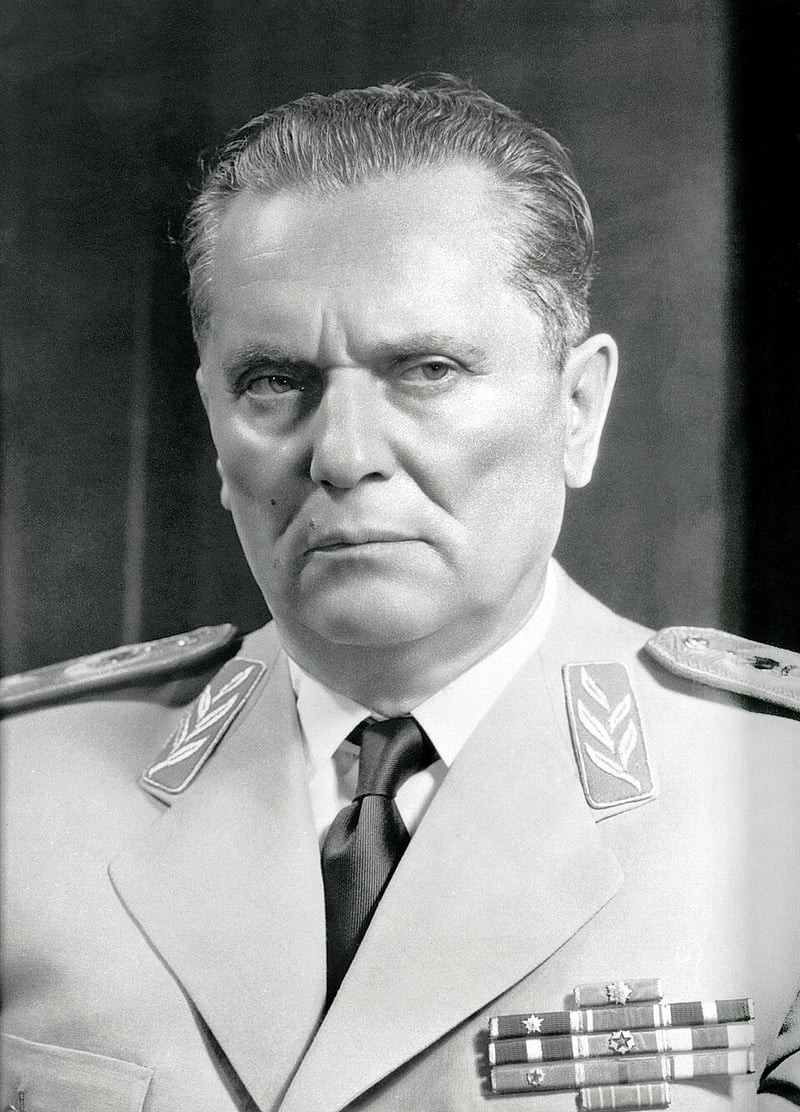
Josip Broz Tito is elected the first President of Yugoslavia.

1953 — Josip Broz Tito is elected the first President of Yugoslavia

January 14 spans 30 recorded events across recorded history, from 1236 to 2026. Below is a curated digest of the most significant moments tied to this date.

By · Wikipedia

Historical Events 30 events 1236 – 2026

More major events on January 14

The featured story and these ranked highlights form a quick summary. Every recorded event remains available in the chronology below.

  1. 1784 American Revolutionary War: Ratification Day, United States: Congress ratifies the Treaty of Paris with Great Britain. Source
  2. 1899 RMS Oceanic, the largest ship afloat since SS Great Eastern, is launched. Source
  3. 1814 Treaty of Kiel: Frederick VI of Denmark cedes the Kingdom of Norway to Charles XIII of Sweden in return for Pomerania. Source

Did you know

In 1953, Josip Broz Tito is elected the first President of Yugoslavia. This featured entry focuses on the immediate decision and its direct historical impact.
Did you know

This article lists the heads of state of Yugoslavia from the creation of the Kingdom of Serbs, Croats and Slovenes in 1918 until the breakup of the Socialist Federal Republic of Yugoslavia in 1992. This helps explain why the event mattered beyond the initial announcement.

Did you know

In 1953, Josip Broz Tito is elected the first President of Yugoslavia had consequences that extended beyond the first headline. The key context is the institutions involved, the policy shift, and how the public response evolved afterward.

Did you know

In 1953, Josip Broz Tito is elected the first President of Yugoslavia had consequences that extended beyond the first headline. The key context is the institutions involved, the policy shift, and how the public response evolved afterward.

Did you know

In 1953, Josip Broz Tito is elected the first President of Yugoslavia had consequences that extended beyond the first headline. The key context is the institutions involved, the policy shift, and how the public response evolved afterward.


Henry_III_of_England
King Henry III of England marries Eleanor of Provence.
King of England from 1216 to 1272
Henry III, also known as Henry of Winchester, was King of England, Lord of Ireland and Duke of Aquitaine from 1216 until his death in 1272.
1236
Andrew_III_of_Hungary
Andrew III of Hungary dies, ending the Árpád dynasty in Hungary.
King of Hungary and Croatia from 1290 to 1301
Andrew III the Venetian was King of Hungary and Croatia between 1290 and 1301. His father, Stephen the Posthumous, was the posthumous son of Andrew II of Hungary although Stephen's older half brothers considered him a bastard. Andrew grew up in Venice, and first arrived in Hungary upon the invitation of a rebellious baron, Ivan Kőszegi, in 1278. Kőszegi tried to play Andrew off against Ladislaus IV of Hungary, but the conspiracy collapsed and Andrew returned to Venice.
1301
Third_Battle_of_Panipat
The Third Battle of Panipat, the largest battle of the 18th century, is fought in India between the Afghan Durrani Empire under Ahmad Shah Durrani, and the Maratha Empire under Sadashivrao Bhau.
1761 battle between the Durrani Empire and Marathas
The Third Battle of Panipat took place on 14 January 1761 between the Maratha Empire and the invading army of the Durrani Empire. The battle took place in and around the city of Panipat, approximately 97 kilometres (60 mi) north of Delhi. The Afghans were supported by three key allies in India: Najib-ud-Daula who persuaded the support of the Rohilla chiefs, elements of the declining Mughal Empire, and most prized the Oudh State under Shuja-ud-Daula. The Maratha army was led by Sadashivrao Bhau, who was third-highest authority of the Maratha Confederacy after the Chhatrapati and the Peshwa. The bulk of the Maratha army was stationed in the Deccan Plateau with the Peshwa.
1761
American_Revolutionary_War
American Revolutionary War: Ratification Day, United States: Congress ratifies the Treaty of Paris with Great Britain.
1775–1783 conflict in North America
The American Revolutionary War, also known as the Revolutionary War or American War of Independence or simply the American Revolution, was the armed conflict that comprised the final eight years of the broader American Revolution, in which American Patriot forces organized as the Continental Army and commanded by George Washington defeated the British Army. The conflict was fought in North America, the Caribbean, and the Atlantic Ocean. The war's outcome seemed uncertain for most of the war, but Washington and the Continental Army's decisive victory in the Siege of Yorktown in 1781 led King George III and the Kingdom of Great Britain to negotiate an end to the war. In 1783, in the Treaty of Paris, the British monarchy acknowledged the independence of the Thirteen Colonies, leading to the establishment of the United States as an independent and sovereign nation.
1784
Battle_of_Rivoli
The Battle of Rivoli is fought with a decisive French victory by Napoleon Bonaparte, marking the beginning of the end of the War of the First Coalition and the start of French hegemony over Italy for two decades.
1797 battle of the War of the First Coalition
The Battle of Rivoli was a key military engagement during the War of the First Coalition near the village of Rivoli, then part of the Republic of Venice. In the climax of the Italian campaign of 1796–1797, the outnumbered French Army of Italy, commanded by General Napoleon Bonaparte, decisively defeated the attacking Austrian army led by General of the Artillery József Alvinczi. Alvinczi was attempting to march south in a fourth and final effort to relieve the siege of Mantua, despite his deteriorating health. The French victory at Rivoli demonstrated Bonaparte's capability and deftness as a military commander. The French victory also led to the Austrian surrender of Mantua in February, French consolidation of northern Italy, and ultimately France's victory over Austria in the war later that year.
1797
Treaty_of_Kiel
Treaty of Kiel: Frederick VI of Denmark cedes the Kingdom of Norway to Charles XIII of Sweden in return for Pomerania.
1814 treaty between the UK, Sweden, and Denmark–Norway
The Treaty of Kiel or Peace of Kiel was concluded between the United Kingdom of Great Britain and Ireland and the Kingdom of Sweden on one side and the Kingdoms of Denmark and Norway on the other side on 14 January 1814 in Kiel. It ended the hostilities between the parties in the ongoing Napoleonic Wars, where the United Kingdom and Sweden were part of the anti-French alliance while Denmark–Norway was allied to the French Empire.
1814
Napoleon_III
Napoleon III of France escapes an assassination attempt made by Felice Orsini and his accomplices in Paris.
Emperor of the French from 1852 to 1870
Napoleon III was President of France from 1848 to 1852 and then Emperor of the French from 1852 until his deposition in 1870. He was the first elected president, second emperor, and last monarch of France. He created the Second French Empire in 1852, which began a period of rapid industrialization and expansion of infrastructure in France and saw the rise of French influence in world politics after several decades of instability. As head of state of France for 22 years, he was the longest-reigning French head of state since the end of the ancien régime.
1858
RMS_Oceanic
RMS Oceanic, the largest ship afloat since SS Great Eastern, is launched.
Transatlantic ocean liner
RMS Oceanic was a transatlantic ocean liner built for the White Star Line. She sailed on her maiden voyage on 6 September 1899 and was the largest ship in the world until 1901. At the outbreak of World War I she was converted into an armed merchant cruiser. On 8 August 1914 she was commissioned into Royal Navy service.
1899
Giacomo_Puccini
Giacomo Puccini's Tosca opens in Rome.
Italian opera composer (1858–1924)
Giacomo Antonio Domenico Michele Secondo Maria Puccini was an Italian composer known primarily for his operas. Widely regarded as the greatest and most successful proponent of Italian opera after Verdi, he was descended from a long line of composers, stemming from the late Baroque era. Though his early work was firmly rooted in traditional late-nineteenth-century Romantic Italian opera, it later developed in the realistic verismo style, of which he became one of the leading exponents.
1900
1907_Kingston_earthquake
An earthquake in Kingston, Jamaica kills more than 1,000 people.
Earthquake in Jamaica
The 1907 Kingston earthquake which shook the capital of the island of Jamaica with a magnitude of 6.2 on the moment magnitude scale on Monday 14 January, at about 3:30 p.m. local time, is described by the United States Geological Survey as one of the world's deadliest earthquakes recorded in history. Every building in Kingston was damaged by the earthquake and subsequent fires, which lasted for three hours before any efforts could be made to check them, culminating in the death of about 1,000 people, and causing approximately $30 million in material damage. Shortly after, a tsunami was reported on the north coast of Jamaica, with a maximum wave height of about 2 m (6–8 ft).
1907
Roald_Amundsen
Roald Amundsen's South Pole expedition makes landfall on the eastern edge of the Ross Ice Shelf.
Norwegian polar explorer (1872–1928)
Roald Engelbregt Gravning Amundsen was a Norwegian explorer of polar regions. He was a key figure of the period known as the Heroic Age of Antarctic Exploration.
1911
Queen_Maud_Land
Norway claims Queen Maud Land in Antarctica.
Norway's territorial claim in Antarctica
Queen Maud Land is a roughly 2.7-million-square-kilometre (1.0-million-square-mile) region of Antarctica claimed by Norway as a dependent territory. It borders the claimed British Antarctic Territory 20° west, specifically the Caird Coast, Coats Land on the West, and the Australian Antarctic Territory 45° east, specifically Enderby Land on the East. In addition, a small unclaimed area from 1939 was annexed in June 2015. Positioned in East Antarctica, it makes out about one-fifth of the continent, and is named after the Norwegian Queen Maud (1869–1938).
1939
World_War_II
World War II: Japan begins Operation Ke, the successful operation to evacuate its forces from Guadalcanal during the Guadalcanal campaign.
Global conflict (1939–1945)
World War II, or the Second World War, was a global conflict between two coalitions: the Allies and the Axis powers. Nearly all of the world's countries participated, with many engaging in total war on an unprecedented scale. World War II was the deadliest conflict in history, causing the deaths of 60 to 75 million people, a majority of whom were civilians. Millions died as a result of massacres, starvation, disease, and genocides including the Holocaust. After the Allied victory, Germany, Austria, Japan, and Korea were occupied, and German and Japanese leaders were tried for war crimes.
1943
Franklin_D._Roosevelt
World War II: Franklin D.
Roosevelt and Winston Churchill begin the Casablanca Conference to discuss strategy and study the next phase of the war.
Franklin Delano Roosevelt, also known as FDR, was the 32nd president of the United States, serving from 1933 until his death in 1945. He is the longest-serving US president and the only one to have served more than two terms. His first two terms were centered on combating the Great Depression, while his third and fourth focused on US involvement in World War II. A member of the Democratic Party, Roosevelt served in the New York State Senate from 1911 to 1913 and as the 44th governor of New York from 1929 to 1932.
1943
National_Airlines_Flight_83
National Airlines Flight 83 crashes during landing at Philadelphia International Airport, killing seven passengers and crew.
1951 aviation accident
National Airlines Flight 83 was a United States domestic flight from Newark International Airport, serving New York City, to Philadelphia. On January 14, 1951, the Douglas DC-4 of National Airlines crashed on landing at Philadelphia International Airport. The aircraft over-shot the runway, ran into a ditch and caught fire. Of the 28 people on board, 7 were killed and 11 injured. One of the dead was the lone flight attendant, Frankie Housley, who had gone back into the burning aircraft to try to save more passengers.
1951
NBC
NBC's long-running morning news program Today debuts, with host Dave Garroway.
American broadcast television network
The National Broadcasting Company (NBC) is an American commercial broadcast television and radio network, serving as the flagship property of NBC Entertainment, a division of NBCUniversal, which is a subsidiary of Comcast. It is one of NBCUniversal's two flagship subsidiaries, alongside Universal Studios. It is the first and oldest major broadcast network in the United States.
1952
Hudson_Motor_Car_Company
The Hudson Motor Car Company merges with Nash-Kelvinator Corporation forming the American Motors Corporation.
American auto company
The Hudson Motor Car Company made Hudson and other branded automobiles in Detroit, Michigan, and abroad, from 1909 until 1954.
1954
Kripalu_Maharaj
Kripalu Maharaj is named fifth Jagadguru (world teacher) after giving seven days of speeches before 500 Hindu scholars.
Hindu spiritual leader (1922–2013)
Jagadguru Kripalu Maharaj was an Indian spiritual guru who founded Prem Mandir, a major pilgrimage and tourist destination in Vrindavan and Jagadguru Kripalu Parishat (JKP). JKP is a Hindu non-profit organization with five main ashrams, four in India and one in the United States.
1957
Reserve_Bank_of_Australia
The Reserve Bank of Australia, the country's central bank and banknote issuing authority authorized by the 1959 Reserve Bank Act, is established.
Central bank of Australia
The Reserve Bank of Australia (RBA) is Australia's central bank and banknote issuing authority. It has had this role since 14 January 1960, when the Reserve Bank Act 1959 removed the central banking functions from the Commonwealth Bank.
1960
Counterculture_of_the_1960s
Counterculture of the 1960s: The Human Be-In takes place in San Francisco, California's Golden Gate Park, launching the Summer of Love.
Anti-establishment cultural phenomenon
The counterculture of the 1960s was an anti-establishment cultural phenomenon and political movement that developed in the Western world during the mid-20th century. It began in the mid-1960s and continued through the early 1970s. It is often synonymous with cultural liberalism and with the various social changes of the decade. The effects of the movement have been ongoing to the present day. The aggregate movement gained momentum as the civil rights movement in the United States had made significant progress, such as the Voting Rights Act of 1965, and with the intensification of the Vietnam War that same year, it became revolutionary to some.
1967
USS_Enterprise_fire
USS Enterprise fire: An accidental explosion aboard the USS Enterprise near Hawaii kills 28 people.
1969 fire on a US aircraft carrier
On January 14, 1969, a major fire and a series of explosions aboard the aircraft carrier USS Enterprise off the coast of O'ahu, Hawaii, United States, led to the deaths of 28 sailors and injuries to 314 others. Additionally, 15 aircraft were destroyed in the incident. A Zuni rocket detonated under a plane's wing, causing a fire that touched off more munitions, blowing holes in the flight deck that allowed burning jet fuel to enter the ship. The cost of replacing the aircraft and repairing the ship cost over US$126 million.
1969
Margrethe_II
Queen Margrethe II of Denmark ascends the throne, the first Queen of Denmark since 1412 and the first Danish monarch not named Frederik or Christian since 1513.
Queen of Denmark from 1972 to 2024
Margrethe II is a member of the Danish royal family who reigned as Queen of Denmark from 14 January 1972 until her abdication on 14 January 2024. Having reigned for exactly 52 years, she is the second-longest-reigning Danish monarch after Christian IV.
1972
Elvis_Presley
Elvis Presley's concert Aloha from Hawaii is broadcast live via satellite, and sets the record as the most watched broadcast by an individual entertainer in television history.
American singer and actor (1935–1977)
Elvis Aaron Presley was an American singer and actor. Referred to as the "King of Rock and Roll", he is widely regarded as one of the most culturally significant figures of the 20th century. Presley's energetic and sexually provocative performance style, combined with a mixture of influences across color lines during a transformative era in race relations, brought both great success and initial controversy.
1973
Sinking_of_the_MS_Jan_Heweliusz
Sinking of the MS Jan Heweliusz: In Poland's worst peacetime maritime disaster, ferry MS Jan Heweliusz sinks off the coast of Rügen, drowning 55 passengers.
1993 maritime disaster
MS Jan Heweliusz sank on 14 January 1993, between about 04:10 and 05:12 (UTC+1) as the ship was crossing the Baltic Sea, en route from Świnoujście, Poland, to Ystad, Sweden. Out of 65 passengers and crew, 56 died in the disaster, making it the largest peacetime maritime disaster in Polish history.
1993
Al-Qaeda_insurgency_in_Yemen
Yemen declares an open war against the terrorist group al-Qaeda.
Insurgency in Yemen by Al-Qaeda
The Al-Qaeda insurgency in Yemen is an ongoing armed conflict between the Yemeni government, the United States and their allies, and al-Qaeda-affiliated groups in Yemen. It was formerly a part of the Global War on Terrorism.
2010
Multiple explosions reported near the Sarinah Building, Jakarta, followed by shootout between perpetrators and the police, killing seven people.
The Islamic State of Iraq and the Levant claimed responsibility.
On 14 January 2016, multiple explosions and gunfire were reported near the Sarinah shopping mall in central Jakarta, Indonesia, at the intersection of Jalan Kyai Haji Wahid Hasyim and Jalan MH Thamrin. One blast went off in a Burger King restaurant outside the mall. The attack occurred near a United Nations (UN) information centre, as well as luxury hotels and foreign embassies. The United Nations Environment Programme (UNEP) confirmed that a Dutch UN official was seriously injured in the attacks. It was reported an armed stand-off took place on the fourth level of the Menara Cakrawala on Jalan MH Thamrin. At least eight people—four attackers and four civilians —were killed, and 23 others were injured due to the attack. The Islamic State (IS) claimed responsibility.
2016
Saha_Airlines
A Saha Airlines Boeing 707 crashes at Fath Air Base near Karaj in Alborz Province, Iran, killing 15 people.
Iranian airline
Saha Airlines is an Iranian airline based in Tehran that operates scheduled domestic flights. It is owned by the Islamic Republic of Iran Air Force and banned from the European Union. It operates domestic passenger services as well as cargo charters and was the last civil operator of the Boeing 707 in the world.
2019
Abdication_of_Margrethe_II
Queen Margrethe II abdicates as Queen of Denmark and is succeeded by her son, Frederik X.
2024 succession in the Kingdom of Denmark
The abdication of Margrethe II as Queen of Denmark took place on 14 January 2024, the 52nd anniversary of her accession, being the first voluntary abdication of a Danish monarch since that of Eric III in 1146.
2024
Sikhio_train_disaster
Thirty-two people are killed when a crane falls onto a passenger train in Sikhio district, Thailand.
Deadly rail accident in Thailand
At 09:13 Indochina Time (UTC+07:00) on 14 January 2026, a construction crane fell on a passenger train with 157 passengers on board in Sikhio district, Nakhon Ratchasima province, Thailand, killing 30 and injuring 69 others.
2026

History runs on facts, and this project runs on coffee!

Your support is incredibly helpful and genuinely appreciated.

Support with a coffee ☕