January 24 in History

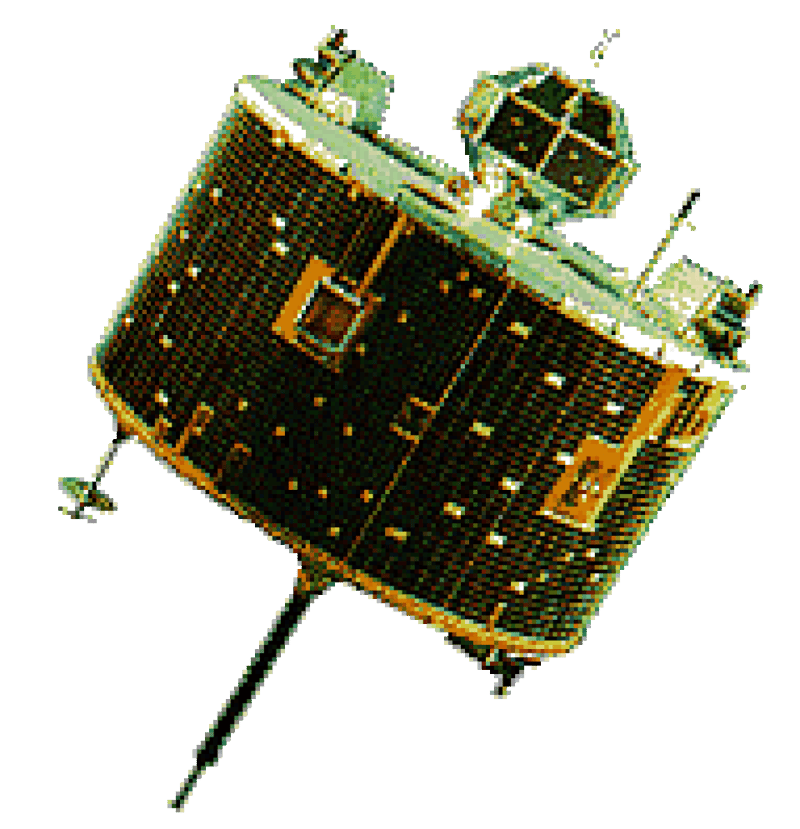
Japan launches Hiten, the country's first lunar probe, the first robotic lunar p

1990 — Japan launches Hiten, the country's first lunar probe, the first robotic lunar probe since the Soviet Union's Luna 24 in 1976, and the first lunar probe launched by a country other than Soviet Union or the United States

January 24 spans 42 recorded events across recorded history, from 41 to 2026. Below is a curated digest of the most significant moments tied to this date.

By · Wikipedia

Historical Events 42 events 41 – 2026

More major events on January 24

The featured story and these ranked highlights form a quick summary. Every recorded event remains available in the chronology below.

  1. 1857 The University of Calcutta is formally founded as the first fully fledged university in South Asia. Source
  2. 1651 Arauco War: Spanish and Mapuche authorities meet in the Parliament of Boroa renewing the fragile peace established at the parliaments of Quillín in 1641 and 1647. Source
  3. 1933 The 20th Amendment to the United States Constitution is ratified, changing the beginning and end of terms for all elected federal offices. Source

Did you know

The Soviet Union was formed in 1922 and dissolved in 1991, spanning nearly seven decades of existence.
Did you know

The Russian Soviet Federative Socialist Republic was the largest and most populous republic within the Soviet Union.

Did you know

The Soviet Union's capital and largest city was Moscow, a major cultural and economic center.

Did you know

The Communist Party governed the Soviet Union under Marxism–Leninism, with soviet councils playing a key role in decision-making.

Did you know

The Soviet economy was centrally planned, with the government controlling key sectors and industries.


Claudius is proclaimed Roman emperor by the Praetorian Guard after they assassinate the previous emperor, his nephew Caligula.
Calendar year
AD 41 (XLI) was a common year starting on Sunday of the Julian calendar. At the time, it was known as the Year of the Consulship of C. Caesar Augustus Germanicus and Cn. Sentius Saturninus. The denomination AD 41 for this year has been used since the early medieval period, when the Anno Domini calendar era became the prevalent method in Europe for naming years.
41
Start of the First Fatimid invasion of Egypt.
10th-century invasion of Egypt
The first Fatimid invasion of Egypt occurred in 914–915, soon after the establishment of the Fatimid Caliphate in Ifriqiya in 909. The Fatimids launched an expedition east, against the Abbasid Caliphate, under the Berber General Habasa ibn Yusuf. Habasa succeeded in subduing the cities on the Cyrenaican coast between Ifriqiya and Egypt, and captured Alexandria. The Fatimid heir-apparent, al-Qa'im bi-Amr Allah, then arrived to take over the campaign. Attempts to conquer the Egyptian capital, Fustat, were beaten back by the Abbasid troops in the province. A risky affair even at the outset, the arrival of Abbasid reinforcements from Syria and Iraq under Mu'nis al-Muzaffar doomed the invasion to failure, and al-Qa'im and the remnants of his army abandoned Alexandria and returned to Ifriqiya in May 915. The failure did not prevent the Fatimids from launching another unsuccessful attempt to capture Egypt four years later. It was not until 969 that the Fatimids conquered Egypt and made it the centre of their empire.
914
Council_of_Florence
The Council of Basel suspends Pope Eugene IV.
Ecumenical Council of the Catholic Church (1431–1449)
The Council of Florence was the seventeenth ecumenical council recognized by the Catholic Church, held between 1431 and 1445. It was convened in territories under the Holy Roman Empire. Italy became a venue of a Catholic ecumenical council after a gap of about two centuries. It was convoked in Basel as the Council of Basel by Pope Martin V shortly before his death in February 1431 and took place in the context of the Hussite Wars in Bohemia and the rise of the Ottoman Empire. At stake was the greater conflict between the conciliar movement and the principle of papal supremacy.
1438
Matthias_Corvinus
Matthias Corvinus is elected King of Hungary.
King of Hungary and Croatia from 1458 to 1490
Matthias Corvinus was King of Hungary and Croatia from 1458 to 1490, as Matthias I. He is often given the epithet "the Just". After conducting several military campaigns, he was elected King of Bohemia in 1469 and adopted the title Duke of Austria in 1487. He was the son of John Hunyadi, Regent of Hungary, who died in 1456. In 1457, Matthias was imprisoned along with his older brother, Ladislaus Hunyadi, on the orders of King Ladislaus the Posthumous. Ladislaus Hunyadi was executed, causing a rebellion that forced King Ladislaus to flee Hungary. After the King died unexpectedly, Matthias's uncle Michael Szilágyi persuaded the Estates to unanimously proclaim the 14-year-old Matthias as king on 24 January 1458. He began his rule under his uncle's guardianship, but he took effective control of government within two weeks.
1458
Henry_VIII
King Henry VIII of England suffers an accident while jousting, leading to a brain injury that historians say may have influenced his later erratic behaviour and possible impotence.
King of England from 1509 to 1547
Henry VIII was King of England and Ireland from 22 April 1509 until his death in 1547.
1536
Arauco_War
Arauco War: Spanish and Mapuche authorities meet in the Parliament of Boroa renewing the fragile peace established at the parliaments of Quillín in 1641 and 1647.
Conflict between Spanish settlers of Chile and indigenous peoples (16th–17th centuries)
The Arauco War was a long-running conflict between colonial Spaniards and the Mapuche people, mostly fought in the Araucanía region of Chile. The conflict began at first as a reaction by the Mapuche to the Spanish conquerors attempting to establish cities and force the natives into servitude. It subsequently evolved over time into phases comprising drawn-out sieges, slave-hunting expeditions, pillaging raids, punitive expeditions, and renewed Spanish attempts to secure lost territories. Abduction of women and war rape was common on both sides.
1651
Charles_II_of_England
King Charles II of England dissolves the Cavalier Parliament.
King of England, Scotland, and Ireland from 1660 to 1685
Charles II was King of Scotland from 1649 until 1651 and King of England, Scotland, and Ireland from the 1660 Restoration of the monarchy until his death in 1685.
1679
Charles_VII,_Holy_Roman_Emperor
Charles VII Albert becomes Holy Roman Emperor.
Holy Roman Emperor from 1742 to 1745
Charles VII was elector of Bavaria from 26 February 1726 and Holy Roman Emperor from 24 January 1742 to his death on 20 January 1745. He was also King of Bohemia from 1741 to 1743. Charles was a member of the House of Wittelsbach, and his reign as Holy Roman Emperor thus marked the end of three centuries of uninterrupted Habsburg imperial rule, although he was related to the Habsburgs by both blood and marriage.
1742
Seven_Years'_War
During the Seven Years' War the leading burghers of Königsberg submit to Elizabeth of Russia, thus forming Russian Prussia (until 1763).
Global war among European powers (1756–1763)
The Seven Years' War, 1756 to 1763, was a global war fought by numerous great powers, primarily in Europe, with significant subsidiary campaigns in North America and the Indian subcontinent. The primary warring states were Great Britain and Prussia fighting against France and Austria, with other countries joining these coalitions: Portugal, Spain, Sweden, and Russia, plus Saxony and many other minor states of the Holy Roman Empire. Related conflicts include the Third Silesian War, French and Indian War, Third Carnatic War, Anglo-Spanish War (1762–1763), and Spanish–Portuguese War.
1758
Crossing_of_the_Andes
Crossing of the Andes: Many soldiers of Juan Gregorio de las Heras are captured during the action of Picheuta.
Feat in the South American wars of independence
The Crossing of the Andes was one of the most important feats in the Argentine and Chilean wars of independence. A combined army of Argentine soldiers and Chilean exiles crossed the Andes mountains to invade Chile, leading to its liberation from Spanish rule.
1817
Salvador,_Bahia
Slaves in Salvador da Bahia, Brazil, stage a revolt, which is instrumental in ending slavery there 50 years later.
Capital city of Bahia, Brazil
Salvador is a Brazilian municipality and capital city of the state of Bahia. Situated in the Zona da Mata in the Northeast Region of Brazil, Salvador is recognized throughout the country and internationally for its cuisine, music, and architecture. The African influence in many cultural aspects of the city makes it a center of Afro-Brazilian culture. As the first capital of Colonial Brazil, the city is one of the oldest in the Americas. Its foundation in 1549 by Tomé de Sousa took place on account of the implementation of the General Government of Brazil by the Portuguese Empire.
1835
California_gold_rush
California Gold Rush: James W.
Marshall finds gold at Sutter's Mill near Sacramento.
The California gold rush (1848–1855) was a gold rush in California, which began on January 24, 1848, when gold was found by James W. Marshall at Sutter's Mill in Coloma, California. The news of gold brought approximately 300,000 people from the rest of the United States and abroad to California, which had recently been conquered from Mexico. The sudden influx of gold into the money supply reinvigorated the American economy; the sudden population increase allowed California to grow rapidly into statehood in the Compromise of 1850. The gold rush had severe effects on Native Californians and accelerated the Native American population's decline from factors including disease, starvation, and according to certain sources, acts of unprovoked aggression.
1848
University_of_Calcutta
The University of Calcutta is formally founded as the first fully fledged university in South Asia.
Public university in Kolkata, West Bengal, India
The University of Calcutta, informally known as Calcutta University (CU), is a public state research university located in Kolkata, also known as Calcutta, in West Bengal, India. It has 151 affiliated undergraduate colleges and 16 institutes in Kolkata and nearby areas. It was established on 24 January 1857 and is the oldest multidisciplinary university of the Indian Subcontinent and the Southeast Asian Region. Today, the university's jurisdiction is limited to a few districts of West Bengal, but at the time of its establishment, it had a catchment area ranging from Kabul to Myanmar. It is accredited as an "A" grade university by the National Assessment and Accreditation Council (NAAC).
1857
United_Principalities_of_Moldavia_and_Wallachia
The United Principalities of Moldavia and Wallachia (later named Romania) is formed as a personal union under the rule of Domnitor Alexandru Ioan Cuza.
1859–1881 personal union and early form of the modern Romanian state
The United Principalities of Moldavia and Wallachia, commonly called United Principalities or Wallachia and Moldavia, was the personal union of the Principality of Moldavia and the Principality of Wallachia. The union was formed on 5 February [O.S. 24 January] 1859 when Alexandru Ioan Cuza was elected as the Domnitor of both principalities. Their separate autonomous vassalage in the Ottoman Empire continued with the unification of both principalities. On 3 February [O.S. 22 January] 1862, Moldavia and Wallachia formally united to create the Romanian United Principalities or Romania the core of the Romanian nation state.
1859
Second_Boer_War
Second Boer War: Boers stop a British attempt to break the Siege of Ladysmith in the Battle of Spion Kop.
1899–1902 war in South Africa
The Second Boer War was a conflict fought between the British Empire and the Boer republics over Britain's influence in Southern Africa.
1900
Scouting
The first Boy Scout troop is organized in England by Robert Baden-Powell.
Youth movement
Scouting or the Scout Movement is a youth movement which became popularly established in the first decade of the 20th century.
1908
World_War_I
World War I: British Grand Fleet battle cruisers under Vice-Admiral Sir David Beatty engage Rear-Admiral Franz von Hipper's battle cruisers in the Battle of Dogger Bank.
Global conflict from 1914 to 1918
World War I, or the First World War, also known as the Great War, was a global conflict between two coalitions: the Allies and the Central Powers. Major theatres of war included Europe and the Middle East, and well as parts of Africa and the Asia-Pacific. One of the deadliest conflicts in history, World War I resulted in an estimated 15 to 22 million deaths, including in mass war crimes against civilians and genocides. The conflict saw important developments in weaponry, including the first large-scale use of machine guns, artillery, aircraft, chemical weapons, and tanks, and was a major factor in the deadly Spanish flu pandemic.
1915
In Brushaber v.
Union Pacific Railroad Co., the Supreme Court of the United States declares the federal income tax constitutional.
Brushaber v. Union Pacific Railroad Co., 240 U.S. 1 (1916), was a landmark United States Supreme Court case in which the Court upheld the validity of a tax statute called the Revenue Act of 1913, also known as the Tariff Act, Ch. 16, 38 Stat. 166, enacted pursuant to Article I, section 8, clause 1 of, and the Sixteenth Amendment to, the United States Constitution, allowing a federal income tax. The Sixteenth Amendment had been ratified earlier in 1913. The Revenue Act of 1913 imposed income taxes that were not apportioned among the states according to each state's population.
1916
The Gregorian calendar is introduced in Russia by decree of the Council of People's Commissars effective February 14 (New Style).
Internationally accepted civil calendar
The Gregorian calendar is the calendar used in most parts of the world. It went into effect in October 1582 following the papal bull Inter gravissimas issued by Pope Gregory XIII, which introduced it as a modification of, and replacement for, the Julian calendar. The principal change was to space leap years slightly differently to make the average calendar year 365.2425 days long rather than the Julian calendar's 365.25 days, thus more closely approximating the 365.2422-day "tropical" or "solar" year that is determined by the Earth's revolution around the Sun.
1918
Twentieth_Amendment_to_the_United_States_Constitution
The 20th Amendment to the United States Constitution is ratified, changing the beginning and end of terms for all elected federal offices.
1933 amendment changing term dates for elected federal officials
The Twentieth Amendment to the United States Constitution moved the beginning and ending of the terms of the president and vice president from March 4 to January 20, and of members of Congress from March 4 to January 3. It also has provisions that determine what is to be done when there is no president-elect. The Twentieth Amendment was adopted on January 23, 1933.
1933
Gottfried Krueger Brewing Company starts selling the first canned beer.
Brewery in Newark, New Jersey (1858–1961)
The Gottfried Krueger Brewing Company was a brewery in Newark, New Jersey founded by Gottfried Krueger and John Laible in 1858. The company produced Krueger's Special Beer, the first beer to be sold in cans, in November 1933.
1935
The deadliest earthquake in Chilean history strikes Chillán, killing approximately 28,000 people.
Deadliest earthquake in Chile
The 1939 Chillán earthquake occurred in south-central Chile on 24 January with a surface-wave magnitude of 8.3 and a maximum Mercalli intensity of X (Extreme). With a death toll of around 28,000, compared to the 2,231–6,000 of the Great Chilean earthquake of 1960, it is the single deadliest earthquake in Chile.
1939
World_War_II
World War II: The Allies bombard Bangkok, leading Thailand, then under Japanese control, to declare war against the United States and United Kingdom.
Global conflict (1939–1945)
World War II, or the Second World War, was a global conflict between two coalitions: the Allies and the Axis powers. Nearly all of the world's countries participated. World War II was the deadliest conflict in history, causing the death of 60 to 75 million people. Millions died as a result of massacres, starvation, disease, and genocides, including the Holocaust. After the Allied victory, Germany, Austria, Japan, and Korea were occupied, and German and Japanese leaders were tried for war crimes.
1942
Franklin_D._Roosevelt
World War II: Franklin D.
Roosevelt and Winston Churchill conclude a conference in Casablanca.
Franklin Delano Roosevelt, also known as FDR, was the 32nd president of the United States, serving from 1933 until his death in 1945. He is the longest-serving US president and the only one to have served more than two terms. His first two terms were centered on combating the Great Depression, while his third and fourth focused on US involvement in World War II. A member of the Democratic Party, Roosevelt served in the New York State Senate from 1911 to 1913 and as the 44th governor of New York from 1929 to 1932.
1943
United_Nations_General_Assembly
The United Nations General Assembly passes its first resolution to establish the United Nations Atomic Energy Commission.
Intergovernmental organization organ
The United Nations General Assembly is one of the six principal organs of the United Nations (UN), serving as its main deliberative, policymaking, and representative organ. Currently in its 80th session, its powers, composition, functions, and procedures are set out in Chapter IV of the United Nations Charter.
1946
Algerian_War
Algerian War: Some units of European volunteers in Algiers stage an insurrection known as the "barricades week", during which they seize government buildings and clash with local police.
1954–1962 war of Algerian independence from France
The Algerian War, also known as the Algerian Revolution, the Franco-Algerian War, or the Algerian War of Independence, was an armed conflict between France and the Algerian National Liberation Front (FLN) from 1954 to 1962, which led to Algeria winning its independence from France. An important decolonization war, it was a complex conflict characterized by guerrilla warfare and war crimes. The conflict also became a civil war between the different communities and within the communities. The war took place mainly on the territory of French Algeria, with repercussions in metropolitan France.
1960
1961_Goldsboro_B-52_crash
Goldsboro B-52 crash: A bomber carrying two H-bombs breaks up in mid-air over North Carolina.
The uranium core of one weapon remains lost.
The 1961 Goldsboro B-52 crash was an aviation accident that occurred near Goldsboro, North Carolina, United States, on 24 January 1961. A Boeing B-52 Stratofortress carrying two 3.8-megaton Mark 39 nuclear bombs broke up in mid-air, dropping its nuclear payload in the process. Five crewmen successfully ejected or bailed out of the aircraft and landed safely; another ejected, but did not survive the landing, and two of them were killed in the crash.
1961
Air_India_Flight_101
Air India Flight 101 crashes into Mont Blanc.
1966 aviation accident in France
Air India Flight 101 was a scheduled Air India passenger flight from Bombay to London, via Delhi, Beirut, and Geneva. On the morning of 24 January 1966 at 8:02 CET, on approach to Geneva, the Boeing 707 operating the flight accidentally crashed into Mont Blanc in France, killing all 117 people on board. Among the victims was Homi Jehangir Bhabha, the founder and chairman of the Atomic Energy Commission of India.
1966
Vietnam_War
Vietnam War: The 1st Australian Task Force launches Operation Coburg against the North Vietnamese Army and Viet Cong during wider fighting around Long Bình and Biên Hòa.
1955–1975 war in Southeast Asia
The Vietnam War was an armed conflict in Vietnam, Laos, and Cambodia fought between North Vietnam and South Vietnam and their allies. North Vietnam was supported by the Soviet Union and China, while South Vietnam was supported by the United States and other anti-communist nations. The conflict was the second of the Indochina wars and a proxy war of the Cold War. The Vietnam War was one of the postcolonial wars of national liberation, a theater in the Cold War, and a civil war, with civil warfare a defining feature from the outset. Direct US military involvement escalated from 1965 until US forces were withdrawn in 1973. The fighting spilled into the Laotian and Cambodian civil wars, which ended with all three countries becoming communist in 1975.
1968
Shoichi_Yokoi
Japanese Sgt.
Shoichi Yokoi is found hiding in a Guam jungle, where he had been since the end of World War II.
Shōichi Yokoi was a Japanese soldier who served as a sergeant in the Imperial Japanese Army (IJA) during the Second World War and was one of the last four Japanese holdouts to be found after the end of hostilities in 1945. He was discovered in the jungles of Guam on 24 January 1972, almost 28 years after U.S. forces had regained control of the island in 1944.
1972
1977_Atocha_massacre
The Atocha massacre occurs in Madrid during the Spanish transition to democracy.
Far-right attack in Madrid, Spain
The 1977 Atocha massacre was an attack by right-wing extremists in the center of Madrid on 24 January 1977, which saw the assassination of five labor activists from the Communist Party of Spain (PCE) and the workers' federation Comisiones Obreras (CC.OO). The act occurred within the wider context of far-right reaction to Spain's transition to constitutional democracy following the death of dictator Francisco Franco. Intended to provoke a violent left-wing response that would provide legitimacy for a subsequent right-wing counter coup d'état, the massacre had an immediate opposite effect, generating mass popular revulsion of the far-right and accelerating the legalization of the long-banned Communist Party.
1977
Soviet_Union
Soviet satellite Kosmos 954, with a nuclear reactor on board, burns up in Earth's atmosphere, scattering radioactive debris over Canada's Northwest Territories.
Only 1% is recovered.
The Soviet Union, officially the Union of Soviet Socialist Republics (USSR), was a transcontinental country that spanned much of Eurasia from its formation in 1922 until its dissolution in 1991. It was the world's third-most populous country, the largest by area, and bordered twelve other countries. A diverse multinational state, it was organized as a federal union of national republics, with the largest and most populous being the Russian Soviet Federative Socialist Republic (SFSR). The world's flagship communist state, it was governed by the Communist Party under Marxism–Leninism, through soviet councils. The Soviet economy was also centrally planned. Its capital and largest city was Moscow.
1978
Voyager_2
The Voyager 2 space probe makes its closest approach to Uranus.
NASA space probe launched in 1977
Voyager 2 is a space probe launched by NASA on August 20, 1977, as a part of the Voyager program. It was launched on a trajectory towards the gas giants and enabled further encounters with the ice giants. The only spacecraft to have visited either of the ice giant planets, it was the third of five spacecraft to achieve Solar escape velocity, which allowed it to leave the Solar System. Launched 16 days before its twin Voyager 1, the primary mission of the spacecraft was to study the outer planets and its extended mission is to study interstellar space beyond the Sun's heliosphere.
1986
About 20,000 protestors march in a civil rights demonstration in Forsyth County, Georgia, United States.
Civil rights demonstrations in Georgia, US
The 1987 Forsyth County protests were a series of civil rights demonstrations held in Forsyth County, Georgia, in the United States. The protests consisted of two marches, held one week apart on January 17 and January 24, 1987. The marches and accompanying counterdemonstrations by white supremacists drew national attention to the county. The second march was attended by many prominent civil rights activists and politicians, including both of Georgia's U.S. senators, and attracted about 20,000 marchers, making it one of the largest civil rights demonstrations in United States history.
1987
Aeroflot
An Aeroflot Yakovlev Yak-40 crashes at Nizhnevartovsk Airport, killing 27 people.
National airline of Russia
PJSC Aeroflot – Russian Airlines, commonly known as Aeroflot, is the flag carrier and the largest airline of Russia. Aeroflot is headquartered in the Central Administrative Okrug, Moscow, with its hub being Sheremetyevo International Airport. The Federal Agency for State Property Management, an agency of the Government of Russia, owns 73.77% of the company, with the rest of the shares being public float.
1988
United_States_Department_of_Homeland_Security
The United States Department of Homeland Security officially begins operation.
United States federal executive department
The United States Department of Homeland Security (DHS) is the U.S. federal executive department responsible for public security, comparable to interior ministries abroad. Its missions involve anti-terrorism, civil defense, immigration and customs, border control, cybersecurity, transportation security, maritime security and sea rescue, and the mitigation of weapons of mass destruction.
2003
Cyclone_Klaus
Cyclone Klaus makes landfall near Bordeaux, France, causing 26 deaths as well as extensive disruptions to public transport and power supplies.
2009 windstorm over southern and southwestern Europe
Cyclone Klaus was a European windstorm or cyclone that made landfall over large parts of central and southern France, Spain and parts of Italy in January 2009. The storm was the most damaging since Lothar and Martin in December 1999. The storm caused widespread damage across France and Spain, especially in northern Spain.
2009
Domodedovo_International_Airport_bombing
At least 35 are killed and 180 injured in a bombing at Moscow's Domodedovo Airport.
2011 suicide bombing in a Moscow airport
The Domodedovo International Airport bombing was a suicide bombing in the international arrival hall of Moscow Domodedovo Airport, in Domodedovsky District, Moscow Oblast, on 24 January 2011.
2011
Larry_Nassar
Former doctor Larry Nassar is sentenced up to 175 years in prison after being found guilty of using his position to sexually abuse female gymnasts.
American sex offender (born 1963)
Lawrence Gerard Nassar is an American convicted serial sex offender and former family medicine osteopathic physician. He served as a team doctor for the United States women's national gymnastics team from 1996 to 2014, where he used his position to exploit and sexually assault hundreds of young athletes as part of the largest sexual abuse scandal in sports history. Nassar was a team physician at Michigan State University under William Strampel from 1997 to 2016, and multiple student athletes reported his inappropriate behavior.
2018
2024_Korochansky_Ilyushin_Il-76_crash
An Ilyushin Il-76 crashes in Russia's Korochansky District, killing all 74 people on board.
Russian transport crash in Belgorod Oblast, Russia
On 24 January 2024, at around 11:15 MSK, a Russian Air Force Ilyushin Il-76 military transport plane crashed near the Ukrainian border in Russia's Korochansky district in Belgorod Oblast, killing everyone on board. Russia stated that the plane was shot down by Ukraine while it was carrying 65 Ukrainian prisoners of war (POWs) captured during the Russian invasion of Ukraine, as well as six crew members and three guards, and that the prisoners of war were to be exchanged in a swap. The General Staff of the Ukrainian Armed Forces did not directly take responsibility for shooting down the airplane, but stated that it was a legitimate military target and that it was carrying S-300 anti-aircraft missiles for bombing Kharkiv Oblast.
2024
2026_West_Bandung_landslide
At least 70 people are killed and 10 others missing after major landslides in West Java, Indonesia.
Natural disaster in West Java, Indonesia
On the early morning of January 24, 2026, heavy rains caused major landslides in West Bandung Regency, West Java, Indonesia. The landslide buried at least 53 homes, and killed up to 80 people, and 20 others missing.
2026

History runs on facts, and this project runs on coffee!

Your support is incredibly helpful and genuinely appreciated.

Support with a coffee ☕