January 7 in History

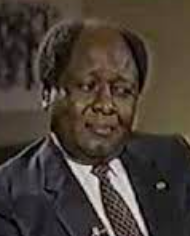
The Fourth Republic of Ghana is inaugurated with Jerry Rawlings as president.

1993 — The Fourth Republic of Ghana is inaugurated with Jerry Rawlings as president

January 7 spans 47 recorded events across recorded history, from 49 BC to 2025. Below is a curated digest of the most significant moments tied to this date.

By · Wikipedia

Historical Events 47 events 49 BC – 2025

More major events on January 7

The featured story and these ranked highlights form a quick summary. Every recorded event remains available in the chronology below.

  1. 1738 A peace treaty is signed between Peshwa Bajirao and Jai Singh II following Maratha victory in the Battle of Bhopal. Source
  2. 1927 The first transatlantic commercial telephone service is established from New York City to London. Source
  3. 1922 Dáil Éireann ratifies the Anglo-Irish Treaty by a 64–57 vote. Source

Did you know

In 1993, The Fourth Republic of Ghana is inaugurated with Jerry Rawlings as president. This featured entry focuses on the immediate decision and its direct historical impact.
Did you know

Jerry John Rawlings was a Ghanaian military officer, aviator, politician, and revolutionary who led the country briefly in 1979 and then from 1981 to 2001. This helps explain why the event mattered beyond the initial announcement.

Did you know

He led a military regime until 1993 and then served two terms as the democratically elected president of Ghana. This clarifies the institutional and public response around the event.

Did you know

He was the longest-serving leader in Ghana's history, presiding over the country for 19 years. This shows how the event shaped policy and public communication in the same period.

Did you know

In 1993, The Fourth Republic of Ghana is inaugurated with Jerry Rawlings as president had consequences that extended beyond the first headline. The key context is the institutions involved, the policy shift, and how the public response evolved afterward.


Senate_of_the_Roman_Republic
The Senate of Rome says that Caesar will be declared a public enemy unless he disbands his army, prompting the tribunes who support him to flee to where Caesar is waiting in Ravenna.
Governing and advisory assembly of the aristocracy
The Senate was the governing and advisory assembly of the aristocracy in the ancient Roman Republic. It was not an elected body, but one whose members were appointed by the consuls, and later by the censors, which were appointed by the aristocratic Centuriate Assembly. After a Roman magistrate served his term in office, it usually was followed with automatic appointment to the Senate. According to the Greek historian Polybius, the principal source on the Constitution of the Roman Republic, the Roman Senate was the predominant branch of government. Polybius noted that it was the consuls who led the armies and the civil government in Rome, and it was the Roman assemblies which had the ultimate authority over elections, legislation, and criminal trials. However, since the Senate controlled money, administration, and the details of foreign policy, it had the most control over day-to-day life. The power and authority of the Senate derived from precedent, the high caliber and prestige of the senators, and the Senate's unbroken lineage, which dated back to the founding of the Republic in 509 BC. It developed from the Senate of the Roman Kingdom, and became the Senate of the Roman Empire.
-49
Constantinople
The people of Constantinople revolt, lynch the unpopular official Nikephoritzes and proclaim Nikephoros Botaneiates as emperor.
Capital of the Eastern Roman and Ottoman empires
Constantinople, the modern Istanbul, was the capital of the Roman and Byzantine Empire from 330 until its takeover by the Ottoman Empire in 1453. After this, it continued to function as the Ottoman capital until the abolition of the Ottoman sultanate in 1922. It was located at the core of the modern city of Istanbul, on a peninsula at the southeastern tip of Thrace in Europe; with the Bosporus strait and the ancient cities of Chalcedon and Chrysopolis in Bithynia, Anatolia to the east; the Golden Horn and the citadel of Galata (Pera) to the north; the Sea of Marmara to the south; and the Princes' Islands to the southeast.
1078
Afonso_IV_of_Portugal
Afonso IV becomes King of Portugal.
King of Portugal from 1325 to 1357
Afonso IV, called the Brave, was King of Portugal from 1325 until his death in 1357. He was the only legitimate son of King Denis of Portugal and Elizabeth of Aragon.
1325
François,_Duke_of_Guise
French troops, led by Francis, Duke of Guise, take Calais, the last continental possession of England.
French soldier and politician (1519–1563)
François de Lorraine, 2nd Duke of Guise, 1st Prince of Joinville, and 1st Duke of Aumale, was a French general and statesman. A prominent leader during the Italian War of 1551–1559 and French Wars of Religion, he was assassinated during the siege of Orleans in 1563.
1558
Jamestown
Fire destroys Jamestown, Virginia.
Town and fort established in the Virginia Colony
The Jamestown settlement in the Colony of Virginia was the first permanent English settlement in the Americas. It was located, in what later became James City County, on the northeast bank of the James River, about 2.5 mi (4 km) southwest of present-day Williamsburg. It was established by the Virginia Company of London as "James Fort" on May 4, 1607 O.S. (May 14, 1607 N.S.). It followed earlier, failed English colonization attempts, including the 1585 Roanoke Colony. A river island was selected to evade Spanish naval patrols; however, it was infested with mosquitoes, lacked potable water, and was used by the Paspahegh people. Despite supply missions, only 60 of the original 214 settlers survived the 1609–1610 winter known as Starving Time. In 1612, West Indies tobacco was successfully cultivated, leading to an economic boom for the colony and England.
1608
Galileo_Galilei
Galileo Galilei makes his first observation of the four Galilean moons: Ganymede, Callisto, Io and Europa, although he is not able to distinguish the last two until the following night.
Italian physicist and astronomer (1564–1642)
Galileo di Vincenzo Bonaiuti de' Galilei, commonly referred to as Galileo Galilei or mononymously as Galileo, was an Italian astronomer, physicist, engineer and polymath. He was born in Pisa, then part of the Duchy of Florence. Galileo has been called the father of observational astronomy, classical physics, the scientific method, and modern science.
1610
Tsardom_of_Russia
Battle of Zlatoust: Battle between Bashkir and Tatar rebels and the government troops of the Tsardom of Russia.
It is one of the events of the Bashkir rebellion of 1704–1711.
The Tsardom of Russia, also known as the Tsardom of Moscow, was the centralized Russian state from the assumption of the title of tsar by Ivan IV in 1547 until the foundation of the Russian Empire by Peter the Great in 1721.
1708
Bashkir rebels besiege Yelabuga.
Part of Bashkir rebellion of 1704–1711
Siege of Yelabuga – the siege of the city by bashkir rebels under the command of Kusyum Tyulekeyev.
1708
Bajirao_I
A peace treaty is signed between Peshwa Bajirao and Jai Singh II following Maratha victory in the Battle of Bhopal.
Peshwa of the Maratha Empire from 1720 to 1740
Bajirao I was the 7th Peshwa of the Maratha Empire.
1738
Bank_of_North_America
The first American commercial bank, the Bank of North America, opens.
American bank established in 1781
The Bank of North America was the first chartered bank in the United States, and served as the country's first de facto central bank. It was chartered by the Congress of the Confederation on May 26, 1781, and opened in Philadelphia, Pennsylvania, on January 7, 1782.
1782
Jean-Pierre_Blanchard
Frenchman Jean-Pierre Blanchard and American John Jeffries travel from Dover, England, to Calais, France, in a gas balloon.
French inventor (1753–1809)
Jean-Pierre François Blanchard was a French inventor, best known as a pioneer of gas balloon flight, who distinguished himself in the conquest of the air in a balloon. Notable for his successful hydrogen balloon flight in Paris on 2 March 1784, Blanchard later moved to London and undertook flights with varying propulsion mechanisms. His historic achievement came on 7 January 1785, crossing the English Channel from Dover Castle to Guînes in about 2½ hours, receiving acclaim from Louis XVI and earning a substantial pension.
1785
HMS_Beagle
HMS Beagle, with Charles Darwin on board, drops anchor off the Chonos Archipelago.
10-gun brig-sloop of the Royal Navy; notably carried Charles Darwin
HMS Beagle was a Cherokee-class 10-gun brig-sloop of the Royal Navy, one of more than 100 ships of this class. The vessel, constructed at a cost of £7,803, was launched on 11 May 1820 from the Woolwich Dockyard on the River Thames. Later reports say the ship took part in celebrations of the coronation of George IV, passing under the old London Bridge, and was the first rigged man-of-war afloat upriver of the bridge. There was no immediate need for Beagle, so she "lay in ordinary", moored afloat but without masts or rigging. She was then adapted as a survey barque and took part in three survey expeditions.
1835
Kingstree_jail_fire
The Kingstree jail fire kills 22 freedmen in Reconstruction-era South Carolina.
Deaths in custody, South Carolina, 1867
The Kingstree jail fire killed 22 prisoners on the evening of Monday, January 7, 1867, in the Williamsburg County seat of Kingstree, South Carolina, United States. One white prisoner escaped the building and survived, but all of the African-American prisoners, incarcerated on the third floor, were killed. Attempts to rescue the 19 men and 3 women left in the building were ineffective. By the time action was taken, the billowing smoke and heat were overwhelming.
1867
Thomas_Edison
Thomas Edison makes a kinetoscopic film of someone sneezing.
On the same day, his employee, William Kennedy Dickson, receives a patent for motion picture film.
Thomas Alva Edison was an American inventor and businessman known for his work on the incandescent light bulb, the phonograph, electric power distribution and early motion pictures. The merger of the Edison General Electric Company and the competitor Thomson-Houston Electric Company resulted in the formation of General Electric. Edison registered 1,093 patents in the United States.
1894
The distress signal "CQD" is established only to be replaced two years later by "SOS".
Internationally recognized means for obtaining help
A distress signal, also known as a distress call, is an internationally recognized means for obtaining help. Distress signals are communicated by transmitting radio signals, displaying a visually observable item or illumination, or making a sound audible from a distance.
1904
Montenegro
Montenegrin guerrilla fighters rebel against the planned annexation of Montenegro by Serbia, but fail.
Country in Southeast Europe
Montenegro is a country in Southeast Europe, on the Balkan Peninsula. Its 25 municipalities have a total population of 633,158 people in an area of 13,883 km2. It is bordered by Serbia to the northeast, Bosnia and Herzegovina to the northwest, Kosovo to the east, Albania to the southeast, and Croatia to the west, and has a coastline along the Adriatic Sea to the southwest. The capital and largest city is Podgorica, while Cetinje is the Old Royal Capital and cultural centre.
1919
New_York_State_Assembly
The New York State Assembly refuses to seat five duly elected Socialist assemblymen.
Lower house of the New York State Legislature
The New York State Assembly is the lower house of the New York State Legislature, with the New York State Senate being the upper house. There are 150 seats in the Assembly. Assembly members serve two-year terms without term limits.
1920
Dáil_Éireann
Dáil Éireann ratifies the Anglo-Irish Treaty by a 64–57 vote.
Lower house of the Oireachtas (Irish parliament)
Dáil Éireann is the lower house and principal chamber of the Oireachtas, which also includes the president of Ireland and a senate called Seanad Éireann. It consists of 174 members, each known as a Teachta Dála. TDs represent 43 constituencies and are directly elected for terms not exceeding five years, on the system of proportional representation using the single transferable vote (PR-STV). Its powers are similar to those of lower houses under many other bicameral parliamentary systems and it is by far the dominant branch of the Oireachtas. Subject to the limits imposed by the Constitution of Ireland, it has the power to pass any law it wishes, and to nominate and remove the Taoiseach. Since 1922, it has met in Leinster House in Dublin.
1922
History_of_the_telephone
The first transatlantic commercial telephone service is established from New York City to London.
This history of the telephone chronicles the development of the electrical telephone, and includes a brief overview of its predecessors. The first telephone patent was granted to Alexander Graham Bell in 1876.
1927
1928_Thames_flood
A disastrous flood of the River Thames kills 14 people and causes extensive damage to much of riverside London.
Combined storm surge and river flood of the River Thames
The 1928 Thames flood was a disastrous flood of the River Thames that affected much of riverside London on 7 January 1928, as well as places further downriver. Fourteen people died and thousands were made homeless when floodwaters poured over the top of the Thames Embankment and part of the Chelsea Embankment collapsed. It was the last major flood to affect central London, and, along with the disastrous North Sea flood of 1953, helped lead to the implementation of new flood control measures that culminated in the construction of the Thames Barrier in the 1970s.
1928
Guy_Menzies
Guy Menzies flies the first solo non-stop trans-Tasman flight (from Australia to New Zealand) in 11 hours and 45 minutes, crash-landing on New Zealand's west coast.
Australian aviator (1909–1940)
Guy Lambton Menzies was an Australian aviator who flew the first solo trans-Tasman flight, from Sydney, Australia, to the West Coast of New Zealand, on 7 January 1931.
1931
Benito_Mussolini
Benito Mussolini and French Foreign Minister Pierre Laval sign the Franco-Italian Agreement.
Dictator of Italy from 1922 to 1943
Benito Amilcare Andrea Mussolini was an Italian politician, journalist, and dictator who led the Kingdom of Italy as a fascist dictatorship from 1922 until his overthrow in 1943. Known under his rule as Il Duce, he founded fascism in 1919 with the creation of the Fasci Italiani di Combattimento, which became the National Fascist Party (PNF) in 1921. Mussolini was appointed Prime Minister of Italy after the March on Rome in 1922, establishing a totalitarian dictatorship. He oversaw Italy's participation in World War II as a prominent member of the Axis Powers, and was executed by the Italian resistance near the end of the war in 1945.
1935
Winter_War
Winter War: Battle of Raate Road: The Finnish 9th Division finally defeat the numerically superior Soviet forces on the Raate-Suomussalmi road.
1939–1940 war between the Soviet Union and Finland
The Winter War was a war between the Soviet Union and Finland. It began with a Soviet invasion of Finland on 30 November 1939, three months after the outbreak of World War II, and ended three and a half months later with the Moscow Peace Treaty on 13 March 1940. Despite superior military strength, especially in tanks and aircraft, the Soviet Union suffered severe losses and initially made little headway. The League of Nations deemed the attack illegal and expelled the Soviet Union from its organization.
1940
Kentucky_Air_National_Guard
Kentucky Air National Guard pilot Thomas Mantell crashes while in pursuit of a supposed UFO.
Unit of the US Air National Guard for the State of Kentucky
The Kentucky Air National Guard (KY ANG) is the aerial militia of the U.S. state of Kentucky. It is a reserve of the United States Air Force and along with the Kentucky Army National Guard, an element of the Kentucky National Guard of the larger United States National Guard Bureau.
1948
1950_Sverdlovsk_plane_crash
In the Sverdlovsk air disaster, all 19 of those on board are killed, including almost the entire national ice hockey team (VVS Moscow) of the Soviet Air Force – 11 players, as well as a team doctor and a masseur.
Soviet Air Force crash near Yekaterinburg, Russia
The Sverdlovsk plane crash of 7 January 1950 killed all 19 people on board, including almost the entire ice hockey team of the Soviet Air Forces – 11 players, as well as a team doctor and a masseur. The team was on board a twin-engined Lisunov Li-2 transport aircraft, a licensed Soviet-built version of the DC-3, heading to a match against Dzerzhinets Chelyabinsk. Due to poor weather at Chelyabinsk, the flight diverted to Sverdlovsk. The crew attempted four approaches but during the fifth approach to Koltsovo Airport the aircraft crashed near the airport in a heavy snowstorm with strong winds.
1950
Georgetown–IBM experiment: The first public demonstration of a machine translation system is held in New York at the head office of IBM.
1954 demonstration of machine translation
The Georgetown–IBM experiment was an influential demonstration of machine translation, which was performed on January 7, 1954. Developed jointly by Georgetown University and IBM, the experiment involved completely automatic translation of more than sixty Russian sentences into English.
1954
Marian_Anderson
Contralto Marian Anderson becomes the first person of color to perform at the Metropolitan Opera in Giuseppe Verdi's Un ballo in maschera.
African-American contralto (1897–1993)
Marian Anderson was an American contralto. She performed a wide range of music, from opera to spirituals. Anderson performed with renowned orchestras in major concert and recital venues throughout the United States and Europe between 1925 and 1965.
1955
Cuba
The United States recognizes the new Cuban government of Fidel Castro.
Country in the Caribbean
Cuba, officially the Republic of Cuba, is an island country in the Caribbean. It comprises the eponymous main island as well as 4,195 islands, islets, and cays. Situated at the convergence of the Caribbean Sea, Gulf of Mexico, and Atlantic Ocean, Cuba is located east of the Yucatán Peninsula, south of both Florida and the Bahamas, west of Hispaniola, and north of Jamaica and the Cayman Islands. Havana is the largest city and capital. Cuba is the third-most populous country in the Caribbean after Haiti and Dominican Republic, with about 10 million inhabitants. It is the largest country in the Caribbean by area. Culturally, Cuba is considered part of Latin America.
1959
Surveyor_program
Surveyor program: Surveyor 7, the last spacecraft in the Surveyor series, lifts off from Cape Canaveral Launch Complex 36A.
1960s NASA program to soft-land robotic probes on the Moon
The Surveyor program was a NASA program that, from June 1966 through January 1968, sent seven robotic spacecraft to the surface of the Moon. Its primary goal was to demonstrate the feasibility of soft landings on the Moon. The Surveyor craft were the first American spacecraft to achieve soft landing on an extraterrestrial body. The missions called for the craft to travel directly to the Moon on an impact trajectory, a journey that lasted 63 to 65 hours, and ended with a deceleration of just over three minutes to a soft landing.
1968
Iberia_Flight_602
Iberia Flight 602 crashes near Ibiza Airport, killing all 104 people on board.
1972 aviation accident in Spain
Iberia Flight 602 was a domestic scheduled passenger flight operated by a Sud Aviation SE 210 Caravelle that took off from Valencia, Spain, bound for the Balearic island of Ibiza, which flew into the side of a mountain near Ibiza Airport. All 98 passengers and 6 crew died in the crash.
1972
Mark_Essex
In his second shooting spree of the week, Mark Essex fatally shoots seven people and wounds five others at Howard Johnson's Hotel in New Orleans, before being shot to death by police officers.
American mass murderer (1949–1973)
Mark James Robert Essex was an American serial sniper and black nationalist known as the "New Orleans Sniper" who killed a total of nine people, including five police officers, and wounded twelve others, in two separate attacks in New Orleans on December 31, 1972, and January 7, 1973. Essex was killed by police in the second armed confrontation.
1973
Sino-Vietnamese_War
Third Indochina War: Cambodian–Vietnamese War: Phnom Penh falls to the advancing Vietnamese troops, driving out Pol Pot and the Khmer Rouge.
War between China and Vietnam in 1979
The Sino-Vietnamese War was a war which occurred in early 1979 between China and Vietnam. China launched an offensive ostensibly in response to Vietnam's invasion and occupation of Cambodia in 1978, which ended the rule of the Khmer Rouge. The conflict lasted for about a month, with China withdrawing its troops in March 1979.
1979
Jimmy_Carter
U.S.
President Jimmy Carter authorizes legislation giving $1.5 billion in loans to bail out the Chrysler Corporation.
James Earl Carter Jr. was an American politician and humanitarian who served as the 39th president of the United States from 1977 to 1981. A member of the Democratic Party, Carter served as the 76th governor of Georgia from 1971 to 1975 and in the Georgia State Senate from 1963 to 1967. He lived longer than any other president in U.S. history, reaching age 100.
1980
Brunei
Brunei becomes the sixth member of the Association of Southeast Asian Nations (ASEAN).
Country in Southeast Asia
Brunei, officially Brunei Darussalam, is a country in Southeast Asia, situated on the northern coast of the island of Borneo. Apart from its coastline on the South China Sea, it is completely surrounded by the Malaysian state of Sarawak, with its territory bifurcated by the Sarawak district of Limbang. Brunei is the only sovereign state entirely on Borneo; the remainder of the island is divided between its multi-landmass neighbours of Malaysia and Indonesia. As of 2025, the country had a population of 466,330, of whom approximately 64,409 resided in the capital and largest city of Bandar Seri Begawan. Its official language is Malay, and Sunni Islam is the state religion of the country, although other religions are nominally tolerated. The government of Brunei is an absolute monarchy ruled by the Sultan, and it implements a fusion of English common law and jurisprudence inspired by Islam, including sharia.
1984
JAXA
Japan Aerospace Exploration Agency launches Sakigake, Japan's first interplanetary spacecraft and the first deep space probe to be launched by any country other than the United States or the Soviet Union.
Japan's national air and space agency
The Japan Aerospace Exploration Agency (JAXA) is the operator of the Japanese space program and Japan's national aeronautics research agency. It was formed in 2003 through the merger of the Institute of Space and Astronautical Science, the National Aerospace Laboratory of Japan, and the National Space Development Agency of Japan.
1985
Sutton_United_F.C.
Sutton United, a team in the fifth tier of English league football, defeated top-tier Coventry City in one of the biggest upsets in FA Cup history.
English football club in London
Sutton United Football Club is a professional association football club from Sutton, South London, England. The team competes in the National League, the fifth level of the English football league system.
1989
Roger_Lafontant
Roger Lafontant, former leader of the Tonton Macoute in Haiti under François Duvalier, attempts a coup d'état, which ends in his arrest.
Haitian minister and leader of the Tonton Macoutes
Roger Lafontant was the former leader of the Tonton Macoutes and a former minister in the government of Haitian dictator Jean-Claude Duvalier. He was the leader of an attempted coup d'état in January 1991, an effort which ultimately led to his death.
1991
Bosnian_War
Bosnian War: The Bosnian Army executes a surprise attack at the village of Kravica in Srebrenica.
1992–1995 armed conflict in Bosnia and Herzegovina
The Bosnian War was an armed conflict that took place in Bosnia and Herzegovina, from 1992 until 1995. Following several earlier violent incidents, the war is commonly seen as having started on 6 April 1992 when the newly independent Republic of Bosnia and Herzegovina was internationally recognized. It ended on 21 November 1995 when the Dayton Accords were initialed. The main belligerents were the forces of the government of the Republic of Bosnia and Herzegovina, and those of the breakaway proto-states of the Republic of Herzeg-Bosnia and the Republika Srpska which were led and supplied by Croatia and Serbia, respectively.
1993
British_Aerospace_Jetstream_41
A British Aerospace Jetstream 41 operating as United Express Flight 6291 crashes in Gahanna, Ohio, killing five of the eight people on board.
Turboprop-powered regional airliner
The British Aerospace Jetstream 41 is a turboprop-powered feederliner and regional airliner, designed by British Aerospace as a stretched version of the Jetstream 31. Intended to compete directly with 30-seat aircraft like the Embraer Brasilia, Dornier 328 and Saab 340, the new design eventually accommodated 29 passengers in a two-by-one arrangement like the Jetstream 31. Trans States Airlines of the US was the biggest operator of Jetstream 41s in the world, with 25 in the fleet.
1994
Impeachment_of_Bill_Clinton
The Senate trial in the impeachment of U.S.
President Bill Clinton begins.
Bill Clinton, the 42nd president of the United States, was impeached by the United States House of Representatives of the 105th United States Congress on December 19, 1998. The House adopted two articles of impeachment against Clinton, with the specific charges against Clinton being lying under oath and obstruction of justice. Two other articles had been considered but were rejected by the House vote.
1999
Hot_air_balloon
A hot air balloon crashes near Carterton, New Zealand, killing all 11 people on board.
Lighter-than-air aircraft
A hot air balloon is a lighter-than-air aircraft consisting of a bag, called an envelope, which contains heated air. Suspended beneath is a gondola or wicker basket, which carries passengers and a source of heat, in most cases an open flame caused by burning liquid propane. The heated air inside the envelope makes it buoyant, since it has a lower density than the colder air outside the envelope. As with all aircraft, hot air balloons cannot fly beyond the atmosphere. The envelope does not have to be sealed at the bottom, since the air inside the envelope is at about the same pressure as the surrounding air. In modern sport balloons the envelope is generally made from nylon fabric, and the inlet of the balloon is made from a fire-resistant material such as Nomex. Modern balloons have been made in many shapes, such as rocket ships and the shapes of various commercial products, though the traditional shape is used for most non-commercial and many commercial applications.
2012
Charlie_Hebdo_shooting
Two gunmen commit mass murder at the offices of Charlie Hebdo in Paris, executing twelve people and wounding eleven others.
2015 terrorist attack in Paris, France
On 7 January 2015, at about 11:30 a.m. in Paris, France, the employees of the French satirical weekly magazine Charlie Hebdo were targeted in a terrorist shooting attack by two French-born Algerian Muslim brothers, Saïd Kouachi and Chérif Kouachi. Armed with rifles and other weapons, the duo murdered 12 people and injured 11 others; they identified themselves as members of al-Qaeda in the Arabian Peninsula, which claimed responsibility for the attack. They fled after the shooting, triggering a manhunt, and were killed by the GIGN on 9 January. The Kouachi brothers' attack was followed by several related Islamist terrorist attacks across the Île-de-France between 7 and 9 January 2015, including the Hypercacher kosher supermarket siege, in which a French-born Malian Muslim took hostages and murdered four people before being killed by French commandos.
2015
January_2015_Sanaa_bombing
A car bomb explodes outside a police college in the Yemeni capital Sanaa with at least 38 people reported dead and more than 63 injured.
Terrorist attack in Yemen
On 7 January 2015, a car bomb was detonated in front of a police academy in the Yemeni capital Sanaa, killing at least 38 people and injuring more than 60 others. This was the third major attack in the country in less than a month, after the deadliest attack in the country during 2014, as well as the second major bombing in less than a month, after the 2014 Rada' bombings and the 2014 Ibb bombing.
2015
2019–20_Puerto_Rico_earthquakes
The 6.4Mw 2019–20 Puerto Rico earthquakes kill four and injure nine in southern Puerto Rico.
Starting on December 28, 2019, and progressing into 2020, the southwestern part of the island of Puerto Rico was struck by an earthquake swarm, including 11 that were of magnitude 5 or greater. The largest and most damaging of this sequence was a magnitude 6.4 Mw, which occurred on January 7 at 04:24 AST (08:24 UTC), with a maximum felt intensity of VIII (Severe) on the Modified Mercalli intensity scale. At least one person was killed, and several others were injured. A 5.8 Mwearthquake the previous day caused the destruction of a natural arch, a tourist attraction at Punta Ventana in Guayanilla. A 5.9 Mwaftershock on Saturday, January 11, damaged many structures, including several historical buildings as well as modern high-rises in the city of Ponce.
2020
The longest U.S.
House of Representatives speaker election since the December 1859 – February 1860 U.S. speaker election concludes and Kevin McCarthy is elected 55th Speaker of the United States House of Representatives.
At the opening of the 118th United States Congress, the members-elect of the House of Representatives elected in the 2022 midterms held an election for its speaker, marking the 128th speaker election since the office was created in 1789. It began on January 3, 2023, and concluded in the early morning hours of January 7 when Kevin McCarthy of California, leader of the House Republican Conference, won a majority of votes cast on the fifteenth ballot. After the longest speaker election since December 1859 – February 1860, McCarthy won the speakership by making concessions to Republican Party hardliners, who had refused to support him through several rounds of voting, finding him too weak and untrustworthy.
2023
January_2025_Southern_California_wildfires
A series of wildfires ravage the Greater Los Angeles area, resulting in at least 16 deaths and 13,401 structures destroyed.
Series of wildfires in California, United States
From January 7 to 31, 2025, 14 destructive wildfires affected the Los Angeles metropolitan area and San Diego County in California, United States. The fires were exacerbated by drought conditions, low humidity, a buildup of vegetation from the previous winter, and hurricane-force Santa Ana winds, which in some places reached 100 miles per hour. The wildfires killed at least 31 people, forced more than 200,000 to evacuate, destroyed more than 18,000 homes and structures, and burned more than 57,529 acres of land.
2025

History runs on facts, and this project runs on coffee!

Your support is incredibly helpful and genuinely appreciated.

Support with a coffee ☕