July 19 in History

Joe Walker flies a North American X-15 to a record altitude of 106,010 meters (3

1963 — Joe Walker flies a North American X-15 to a record altitude of 106,010 meters (347,800 feet) on X-15 Flight 90

Exceeding an altitude of 100 km, this flight qualifies as a human spaceflight under international convention.

July 19 spans 60 recorded events across recorded history, from 64 to 2018. Below is a curated digest of the most significant moments tied to this date.

By · Wikipedia

Historical Events 60 events 64 – 2018

More major events on July 19

The featured story and these ranked highlights form a quick summary. Every recorded event remains available in the chronology below.

  1. 1843 Brunel's steamship the SS Great Britain is launched, becoming the first ocean-going craft with an iron hull and screw propeller, becoming the largest vessel afloat in the world. Source
  2. 1983 The first three-dimensional reconstruction of a human head in a CT is published. Source
  3. 1848 Women's rights: A two-day Women's Rights Convention opens in Seneca Falls, New York. Source

Did you know

In 1963, Joe Walker flies a North American X-15 to a record altitude of 106,010 meters (347,800 feet) on X-15 Flight 90. Exceeding an altitude of 100 km, this flight qualifies as a human spaceflight under international convention. This featured entry focuses on the immediate decision and its direct historical impact.

Did you know

Human spaceflight is spaceflight with a crew or passengers aboard a spacecraft, often with the spacecraft being operated directly by the onboard crew. This helps explain why the event mattered beyond the initial announcement.

Did you know

Spacecraft can also be remotely operated from ground stations on Earth, or autonomously, without any direct human involvement. This clarifies the institutional and public response around the event.

Did you know

People trained for spaceflight are called astronauts, cosmonauts (Russian), or taikonauts (Chinese); and non-professionals are referred to as spaceflight participants or spacefarers. This shows how the event shaped policy and public communication in the same period.

Did you know

Humans have had a continuous presence in space since 2 November 2000, on the International Space Station (ISS). This helps explain why the event mattered beyond the initial announcement.


The Great Fire of Rome causes widespread devastation and rages on for six days, destroying half of the city.
Calendar year
AD 64 (LXIV) was a leap year starting on Sunday of the Julian calendar, the 64th Year of the Anno Domini designation, the 64th year of the 1st millennium, the 64th year of the 1st century, and the 4th year of the 7th decade. At the time, it was known as the Year of the Consulship of Bassus and Crassus. The denomination AD 64 for this year has been used since the early medieval period, when the Anno Domini calendar era became the prevalent method in Europe for naming years.
64
Leontius_(usurper)
Leontius, Roman usurper, is crowned Eastern emperor at Tarsus (modern Turkey).
He is recognized in Antioch and makes it his capital.
Leontius was a general of the Eastern Roman Empire and claimant to the throne who led a rebellion against Emperor Zeno in 484–488.
484
AD_711
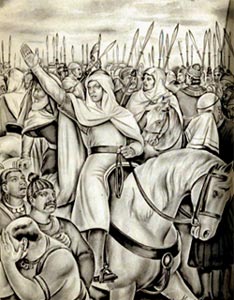
Umayyad conquest of Hispania: Battle of Guadalete: Umayyad forces under Tariq ibn Ziyad defeat the Visigoths led by King Roderic.
Calendar year
Year 711 (DCCXI) was a common year starting on Thursday of the Julian calendar. The denomination 711 for this year has been used since the early medieval period, when the Anno Domini calendar era became the prevalent method in Europe for naming years.
711
Bardanes Tourkos is proclaimed emperor by rebellious Byzantine troops.
Byzantine general of Armenian origin
Bardanes, nicknamed Tourkos, "the Turk", was a Byzantine general who launched an unsuccessful rebellion against Emperor Nikephoros I in 803. Although a major supporter of Byzantine empress Irene of Athens, soon after her overthrow he was appointed by Nikephoros as commander-in-chief of the Anatolian armies. From this position, he launched a revolt in July 803, probably in opposition to Nikephoros's economic and religious policies. His troops marched towards Constantinople, but failed to win popular support. At this point, some of his major supporters deserted him and, reluctant to engage the loyalist forces in battle, Bardanes gave up and chose to surrender himself. He retired as a monk to a monastery he had founded. There he was blinded, possibly on Nikephoros's orders. He was of Turkic origin.
803
Battle_of_Simancas
Battle of Simancas: King Ramiro II of León defeats the Moorish army under Caliph Abd-al-Rahman III near the city of Simancas.
Battle of the Reconquista in 939 AD
The Battle of Simancas was a military battle that started on 19 July 939 in the Iberian Peninsula between the troops of the King of León Ramiro II and Cordovan caliph Abd al-Rahman III near the walls of the city of Simancas.
939
Arab–Byzantine_wars
Arab–Byzantine wars: Battle of Apamea: Fatimids defeat a Byzantine army near Apamea.
Series of wars between the 7th and 11th centuries
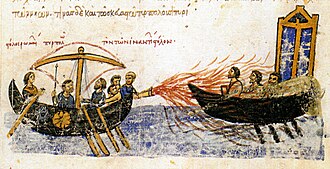
The Arab–Byzantine wars or Muslim–Byzantine wars were a series of wars from the 7th to 11th centuries between the successive Islamic caliphates and the Byzantine Empire. Following the Byzantine defeat at the Battle of the Yarmuk, Muslim armies conquered most Byzantine territory in the Levant, Egypt and North Africa within decades. Arab expansion subsequently slowed to a more gradual rate, following two failed sieges of the Byzantine capital of Constantinople in the late 7th and early 8th centuries. By the mid-9th century, the Byzantines had partially recovered and proceeded to recapture some of their lost territory in Anatolia in the following decades.
998
Wars_of_Scottish_Independence
Wars of Scottish Independence: The English win a decisive victory over the Scots in the battle of Halidon Hill.
War of national liberation between Scotland and England
The Scottish wars (1296–1357) were two extended military conflicts in which the Kingdom of England attempted to establish control over the Kingdom of Scotland. In spite of significant temporary successes, the English efforts in both wars ultimately failed due to Scottish resistance and Scotland remained an independent country. The wars were part of a great crisis for Scotland, and the period became one of the most defining times in its history.
1333
Italian_War_of_1542–1546
Italian War of 1542–46: The first Siege of Boulogne begins.
Ninth phase of the Italian Wars
The Italian War of 1542–1546 was a conflict late in the Italian Wars, pitting Francis I of France and Suleiman I of the Ottoman Empire against the Holy Roman Emperor Charles V and Henry VIII of England. The course of the war saw extensive fighting in Italy, France, and the Low Countries, as well as attempted invasions of Spain and England. The conflict was inconclusive and ruinously expensive for the major participants.
1544
Tudor_period
The Tudor warship Mary Rose sinks off Portsmouth; in 1982 the wreck is salvaged in one of the most complex and expensive projects in the history of maritime archaeology.
Period of English history (1485–1603) under the Tudor dynasty
In England and Wales, the Tudor period occurred between 1485 and 1603, including the Elizabethan era. The Tudor period coincides with the reign of the House of Tudor, which began with the accession of Henry VII and ended with the death of Elizabeth I. Under the Tudor dynasty, art, architecture, trade, exploration, and commerce flourished. Historian John Guy (1988) argued that "England was economically healthier, more expensive, and more optimistic under the Tudors" than at any time since the ancient Roman occupation.
1545
Lady_Jane_Grey
The attempt to install Lady Jane Grey as Queen of England collapses after only nine days.
Disputed Queen of England and Ireland in 1553
Lady Jane Grey, also known as Lady Jane Dudley after her marriage, and nicknamed the "Nine Days Queen", was an English noblewoman who was proclaimed Queen of England and Ireland on 10 July 1553 and reigned until she was deposed by the Privy Council of England, which proclaimed her cousin, Mary I, as the new Queen on 19 July. Jane was later beheaded for high treason.
1553
Anglo-Spanish_War_(1585–1604)
Anglo-Spanish War: Battle of Gravelines: The Spanish Armada is sighted in the English Channel.
War between the kingdoms of Spain and England
The Anglo-Spanish War (1585–1604) was an intermittent conflict between Habsburg Spain and the Kingdom of England that was never formally declared. It began with England's military expedition in 1585 to what was then the Spanish Netherlands under the command of Robert Dudley, Earl of Leicester, in support of the Dutch rebellion against Spanish Habsburg rule.
1588
Haudenosaunee
Representatives of the Iroquois Confederacy sign the Nanfan Treaty, ceding a large territory north of the Ohio River to England.
Indigenous confederacy in North America
The Haudenosaunee Confederacy, also known as the Iroquois, are a confederacy of Iroquoian-speaking Native Americans and First Nations peoples in northeast North America. They were known by the French during the colonial years as the Iroquois League, and later as the Iroquois Confederacy. They have also been called the Six Nations.
1701
Great_Northern_War
Great Northern War: A numerically superior Polish-Saxon army of Augustus II the Strong, operating from an advantageous defensive position, is defeated by a Swedish army half its size under the command of King Charles XII in the Battle of Klissow.
Swedish-Russian conflict (1700–1721)
In the Great Northern War (1700–1721) a coalition led by Russia successfully contested the supremacy of Sweden in Northern, Central and Eastern Europe. The initial leaders of the anti-Swedish alliance were Peter I of Russia, Frederick IV of Denmark–Norway and Augustus II the Strong of Saxony-Poland-Lithuania. Frederick IV and Augustus II were defeated by Sweden, under Charles XII, and forced out of the alliance in 1700 and 1706, respectively, but rejoined it in 1709 after the defeat of Charles XII at the Battle of Poltava. George I of Great Britain and the Electorate of Hanover joined the coalition in 1714 for Hanover and in 1717 for Britain, and Frederick William I of Brandenburg-Prussia joined it in 1715.
1702
Military_of_the_Ottoman_Empire
The Ottoman army defeats the Iranian army under Nader Shah in the battle of Baghdad.
The Military of the Ottoman Empire was the armed forces of the Ottoman Empire. It was founded in 1299 and dissolved in 1922.
1733
Schäffer_affair
Unsuccessful in his attempt to conquer the Kingdom of Hawaiʻi for the Russian-American Company, Georg Anton Schäffer is forced to admit defeat and leave Kauaʻi.
Attempt to claim the Hawaiian Kingdom for the Russian Empire (1815–17)
The Schäffer affair was a diplomatic episode instigated in 1815 by Georg Anton Schäffer who attempted to seize the Kingdom of Hawaii for the Russian Empire. After two years, his scheme failed and he returned to Germany.
1817
George_IV
Coronation of George IV of the United Kingdom.
King of the United Kingdom from 1820 to 1830
George IV was King of the United Kingdom of Great Britain and Ireland and King of Hanover from 29 January 1820 until his death in 1830. At the time of his accession to the throne, he was acting as prince regent for his father, King George III, having done so since 5 February 1811 during his father's final mental illness.
1821
The British Medical Association is founded as the Provincial Medical and Surgical Association by Sir Charles Hastings at a meeting in the Board Room of the Worcester Infirmary.
Registered trade union for doctors
The British Medical Association (BMA) is a registered trade union and professional body for doctors in the United Kingdom. It does not regulate or certify doctors, a responsibility which lies with the General Medical Council. The BMA has a range of representative and scientific committees and is recognised by National Health Service (NHS) employers alongside the Hospital Consultants and Specialists Association as one of two national contract negotiators for doctors.
1832
Isambard_Kingdom_Brunel
Brunel's steamship the SS Great Britain is launched, becoming the first ocean-going craft with an iron hull and screw propeller, becoming the largest vessel afloat in the world.
English civil and marine engineer (1806–1859)
Isambard Kingdom Brunel was an English civil and marine engineer considered "one of the greatest figures of the Industrial Revolution", "perhaps the most eminent Victorian engineer", and one whose work "altered the lives of almost every person in Britain, and millions abroad". The first engineer of the Great Western Railway (GWR), he was responsible for the design and construction of its London–Bristol main line. His maritime career saw the construction of the largest steamships in the world at the time, the SS Great Western, SS Great Britain, and SS Great Eastern. His career was marred by continual financial and engineering setbacks.
1843
Great_New_York_City_Fire_of_1845
Great New York City Fire of 1845: The last great fire to affect Manhattan begins early in the morning and is subdued that afternoon.
The fire kills four firefighters and 26 civilians and destroys 345 buildings.
The Great New York City Fire of 1845 broke out on July 19, 1845, in Lower Manhattan, New York City. The fire started in a whale oil and candle manufacturing establishment and quickly spread to other wooden structures. It reached a warehouse at 38 Broad Street where combustible saltpeter was stored and caused a massive explosion that spread the fire even farther.
1845
Women's_rights
Women's rights: A two-day Women's Rights Convention opens in Seneca Falls, New York.
Rights claimed for women and girls worldwide
Women's rights are the rights and entitlements claimed for women and girls worldwide. They formed the basis for the women's rights movement in the 19th century and the feminist movements during the 20th and 21st centuries. In some countries, these rights are institutionalized or supported by law, local custom, and behavior, whereas in others, they are ignored and suppressed. They differ from broader notions of human rights through claims of an inherent historical and traditional bias against the exercise of rights by women and girls, in favor of men and boys.
1848
American_Civil_War
American Civil War: Morgan's Raid: At Buffington Island in Ohio, Confederate General John Hunt Morgan's raid into the north is mostly thwarted when a large group of his men are captured while trying to escape across the Ohio River.
1861–1865 conflict in the United States
The American Civil War was a civil war in the United States between the Union and the Confederacy, which was formed in 1861 by states that had seceded from the Union to preserve slavery in the United States. The South saw slavery as threatened because of the election of Abraham Lincoln and the growing abolitionist movement in the North. The war ended with Union victory, the dissolution of the Confederacy and the abolition of slavery, freeing four million African Americans.
1863
Taiping_Rebellion
Taiping Rebellion: Third Battle of Nanking: The Qing dynasty finally defeats the Taiping Heavenly Kingdom.
Major rebellion in China (1850–1864)
The Taiping Rebellion, also known as the Taiping Civil War, Revolution, or Movement, was a civil war in late imperial China between the Qing dynasty and the rebel Taiping Heavenly Kingdom. The conflict lasted 14 years, from its outbreak in 1850 until the fall of Taiping-controlled Nanjing — which had been renamed to Tianjing — in 1864. The last rebel forces were defeated in August 1871. Estimates of the conflict's death toll range between 20 to 30 million people, representing 5–10% of China's population at that time, while higher estimates range from 73 to 100 million, roughly up to one quarter of the Chinese population at that time, making it perhaps the deadliest civil war in all of human history. While the Qing ultimately defeated the rebellion, the victory came at a great cost to the state's economic and political viability.
1864
Franco-Prussian_War
Franco-Prussian War: France declares war on Prussia.
War from 1870 to 1871
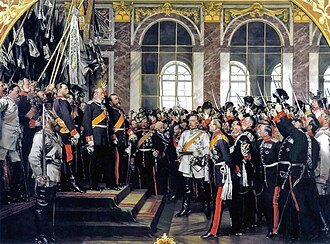
The Franco-Prussian War, occasionally known as the Franco-German War, and sometimes referred to in France as the War of 1870, was a conflict between France and the North German Confederation led by Prussia. Lasting from 19 July 1870 to 28 January 1871, the conflict was caused primarily by France's determination to reassert its dominant position in continental Europe, which appeared in question following the decisive Prussian victory over Austria in 1866.
1870
Paris_Metro_Line_1
The first line of the Paris Metro opens for operation.
Oldest rapid transit line of Paris, France
Paris Metro Line 1 is one of the sixteen lines of the Paris Metro. It connects La Défense in the northwest and Château de Vincennes in the southeast. With a length of 16.5 km (10.3 mi), it constitutes an important east–west transportation route within the City of Paris. Excluding Réseau Express Régional (RER) commuter lines, it is the second busiest line on the network with 181.2 million travellers in 2017 or 750,000 people per day on average in Fall 2025.
1900
Maurice_Garin
Maurice Garin wins the first Tour de France.
French cyclist (1871–1957)
Maurice-François Garin was an Italian-French road bicycle racer best known for winning the inaugural Tour de France in 1903, and for being stripped of his title in the second Tour in 1904 along with eight others, for cheating. He was of Italian origin but adopted French nationality on 21 December 1901.
1903
World_War_I
World War I: Battle of Fromelles: British and Australian troops attack German trenches as part of the Battle of the Somme.
Global conflict from 1914 to 1918
World War I, or the First World War, also known as the Great War, was a global conflict between two coalitions: the Allies and the Central Powers. Major theatres of war included Europe and the Middle East, and well as parts of Africa and the Asia-Pacific. One of the deadliest conflicts in history, World War I resulted in an estimated 15 to 22 million deaths, including in mass war crimes against civilians and genocides. The conflict saw important developments in weaponry, including the first large-scale use of machine guns, artillery, aircraft, chemical weapons, and tanks, and was a major factor in the deadly Spanish flu pandemic.
1916
USS_Macon_(ZRS-5)
The rigid airship USS Macon surprises the USS Houston near Clipperton Island with a mail delivery for President Franklin D.
Roosevelt, demonstrating its potential for tracking ships at sea.
USS Macon (ZRS-5) was a rigid airship built and operated by the United States Navy for scouting and served as a "flying aircraft carrier", carrying up to five single-seat Curtiss F9C Sparrowhawk parasite biplanes for scouting or two-seat Fleet N2Y-1s for training. In service for less than two years, the Macon was damaged in a storm and lost off California's Big Sur coast in February 1935, though most of the crew were rescued. The wreckage is listed as the USS Macon Airship Remains on the U.S. National Register of Historic Places.
1934
Spanish_Civil_War
Spanish Civil War: The CNT and UGT call a general strike in Spain – mobilizing workers' militias against the Nationalist forces.
People's Olympiad of Barcelona cancelled.
The Spanish Civil War was fought from 1936 to 1939 between the Republicans and the Nationalist rebels. Republicans loyal to the left-leaning Popular Front government of the Second Spanish Republic included socialists, anarchists, communists, and separatists, supported by the Soviet Union. The opposing Nationalists were an alliance of fascist Falangists, monarchists, conservatives, and traditionalists, supported by Nazi Germany and Fascist Italy. Initially led by a military junta, until General Francisco Franco was appointed supreme leader on 1 October 1936 of what he called the Spanish State. Due to the international political climate at the time, the war was variously viewed as class struggle, religious struggle, or struggle between republican democracy and dictatorship, revolution and counterrevolution, or between fascism and communism. The Nationalists won the war in early 1939, and ruled Spain until Franco's death in November 1975.
1936
World_War_II
World War II: Battle of Cape Spada: The Royal Navy and the Regia Marina clash; the Italian light cruiser Bartolomeo Colleoni sinks, with 121 casualties.
Global conflict (1939–1945)
World War II, or the Second World War, was a global conflict between two coalitions: the Allies and the Axis powers. Nearly all of the world's countries participated, with many engaging in total war on an unprecedented scale. World War II was the deadliest conflict in history, causing the deaths of 60 to 75 million people, a majority of whom were civilians. Millions died as a result of massacres, starvation, disease, and genocides including the Holocaust. After the Allied victory, Germany, Austria, Japan, and Korea were occupied, and German and Japanese leaders were tried for war crimes.
1940
1940_Field_Marshal_Ceremony
Field Marshal Ceremony: First occasion in World War II that Adolf Hitler appoints field marshals due to military achievements.
German military promotion ceremony
The 1940 field marshal ceremony was a promotion ceremony held at the Kroll Opera House in Berlin in which Adolf Hitler promoted twelve generals to the rank of Generalfeldmarschall on 19 July 1940. It was the first occasion in World War II that Hitler appointed field marshals due to military achievements.
1940
Intelligence_Corps_(United_Kingdom)
World War II: Army order 112 forms the Intelligence Corps of the British Army.
Intelligence arm of the British Army
The Intelligence Corps is a corps of the British Army. It is responsible for gathering, analysing and disseminating military intelligence and also for counter-intelligence and security. The Director of the Intelligence Corps is a brigadier.
1940
Second_Happy_Time
World War II: The Second Happy Time of Hitler's submarines comes to an end, as the increasingly effective American convoy system compels them to return to the central Atlantic.
Period of German sinking of merchant ships off the East Coast during the Second World War
The Second Happy Time was a phase in the Battle of the Atlantic during which Axis submarines attacked merchant shipping and Allied naval vessels along the east coast of North America. The First Happy Time was in 1940–41 in the North Atlantic and North Sea. Adolf Hitler and Benito Mussolini declared war on the United States on 11 December 1941, and as a result their navies could begin the Second Happy Time.
1942
Bombing_of_Rome_in_World_War_II
World War II: Rome is heavily bombed by more than 500 Allied aircraft, inflicting thousands of casualties.
Rome, along with Vatican City, was bombed several times during 1943 and 1944, primarily by Allied and to a smaller degree by Axis aircraft, before the city was liberated by the Allies on June 4, 1944. Pope Pius XII was initially unsuccessful in attempting to have Rome declared an open city, through negotiations with U.S. President Franklin D. Roosevelt via Archbishop Francis Spellman. Rome was eventually declared an open city on August 14, 1943 by the defending Italian forces.
1943
Myanmar
Prime Minister of the shadow Burmese government, Bogyoke Aung San and eight others are assassinated.
Country in Southeast Asia
Myanmar, officially the Republic of the Union of Myanmar and also referred to as Burma, is a country in northwest Southeast Asia. It is the largest country by area in Mainland Southeast Asia and has a population of about 55 million. It is bordered by India and Bangladesh to the northwest, China to the northeast, Laos and Thailand to the east and southeast, and the Andaman Sea and the Bay of Bengal to the south and southwest. The country's capital city is Naypyidaw, while its largest city is Yangon.
1947
Lyuh_Woon-hyung
Korean politician Lyuh Woon-hyung is assassinated.
Korean politician (1886–1947)
Lyuh Woon-hyung, also known by his art name Mongyang, was a Korean independence activist and reunification activist.
1947
1952_Summer_Olympics
Opening of the Summer Olympics in Helsinki, Finland.
Multi-sport event in Helsinki, Finland
The 1952 Summer Olympics, officially known as the Games of the XV Olympiad and commonly known as Helsinki 1952, were an international multi-sport event held from 19 July to 3 August 1952 in Helsinki, Finland.
1952
Autobiographical_novel
The largely autobiographical novel The Ordeal of Gilbert Pinfold by Evelyn Waugh is published.
Novel using autofiction techniques
An autobiographical novel, also known as an autobiographical fiction, fictional autobiography, or autobiographical fiction novel, is a type of novel which uses autofiction techniques, or the merging of autobiographical and fictive elements. The literary technique is distinguished from a typical autobiography or memoir by being a work of fiction presented in the same fashion as a typical non-fiction autobiography by "imitating the conventions of an autobiography".
1957
Bizerte_crisis
Tunisia imposes a blockade on the French naval base at Bizerte; the French would capture the entire town four days later.
1961 conflict between France and Tunisia
The Bizerte crisis occurred in July 1961 when Tunisia imposed a blockade on the French naval base at Bizerte, Tunisia, hoping to force its evacuation. The crisis culminated in a three-day battle between French and Tunisian forces that left 630 Tunisians and 24 French dead.
1961
Vietnam_War
Vietnam War: At a rally in Saigon, South Vietnamese Prime Minister Nguyễn Khánh calls for expanding the war into North Vietnam.
1955–1975 war in Southeast Asia
The Vietnam War was an armed conflict in Vietnam, Laos, and Cambodia fought between North Vietnam and South Vietnam and their allies. North Vietnam was supported by the Soviet Union and China, while South Vietnam was supported by the United States and other anti-communist nations. The conflict was the second of the Indochina wars and a proxy war of the Cold War. The Vietnam War was one of the postcolonial wars of national liberation, a theater in the Cold War, and a civil war, with civil warfare a defining feature from the outset. Direct US military involvement escalated from 1965 until US forces were withdrawn in 1973. The fighting spilled into the Laotian and Cambodian civil wars, which ended with all three countries becoming communist in 1975.
1964
Piedmont_Airlines_Flight_22
Piedmont Airlines Flight 22, a Piedmont Airlines Boeing 727-22, and a twin-engine Cessna 310 collide over Hendersonville, North Carolina, USA.
Both aircraft are destroyed and all passengers and crew are killed, including John T. McNaughton, an advisor to Robert McNamara.
Piedmont Airlines Flight 22 was a Piedmont Airlines Boeing 727 that collided with a twin-engine Cessna 310 on July 19, 1967, over Hendersonville, North Carolina, United States. Both aircraft were destroyed and all passengers and crew were killed, including John T. McNaughton, an advisor to U.S. Secretary of Defense Robert McNamara. The aircraft were both operating under instrument flight rules (IFR) and were in radio contact with the Asheville control tower, though on different frequencies. The accident investigation was the first of a major scale conducted by the newly created National Transportation Safety Board. A review of the investigation conducted 39 years after the accident upheld the original findings that had placed primary responsibility on the Cessna pilot.
1967
Chappaquiddick_incident
Chappaquiddick incident: U.S.
Senator Ted Kennedy crashes his car into a tidal pond at Chappaquiddick Island, Massachusetts, killing his passenger Mary Jo Kopechne.
The Chappaquiddick incident occurred on Chappaquiddick Island, Massachusetts, United States, sometime around midnight between July 18 and 19, 1969, when Mary Jo Kopechne died inside the car driven by U.S. Senator Ted Kennedy after he accidentally drove off a narrow bridge into Poucha Pond.
1969
Dhofar_rebellion
Dhofar Rebellion: British SAS units help the Omani government against Popular Front for the Liberation of Oman rebels in the Battle of Mirbat.
1965–1979 insurgency in Oman
The Dhofar rebellion, also known as the Dhofar War, or the 9 June revolution, was a revolution that began in 1965 in the Dhofar region of the Arabian Peninsula against British imperialism and Sultans Said ibn Taimur and Qaboos bin Said of the Al Bu Said dynasty in Oman. The conflict began with the formation of the Dhofar Liberation Front, a Marxist–Leninist group which aimed to create a people's democratic state in the Persian Gulf region. The rebels also held the broader goals of Arab nationalism, which included ending British influence in the region. Sultanic and British goals, on the other hand, were to halt "the spread of communism" as part of the broader Cold War.
1972
Sagarmatha_National_Park
Sagarmatha National Park in Nepal is created.
National Park of Nepal
Sagarmāthā National Park is a national park in the Himalayas of eastern Nepal that was established in 1976 and encompasses an area of 1,148 km2 (443 sq mi) in the Solukhumbu District. It ranges in elevation from 2,845 to 8,848 m and includes Mount Everest. In the north, it borders Qomolangma National Nature Preserve, and Makalu Barun National Park in the east; in the south, it extends to Dudh Kosi river. It is part of the Sacred Himalayan Landscape.
1976
Global_Positioning_System
The world's first Global Positioning System (GPS) signal is transmitted from Navigation Technology Satellite 2 (NTS-2) and received at Rockwell Collins in Cedar Rapids, Iowa, at 12:41 a.m.
Eastern time (ET).
The Global Positioning System (GPS) is a satellite-based hyperbolic navigation system owned by the United States Space Force and operated by Mission Delta 31. It is one of the global navigation satellite systems (GNSS) that provide geolocation and time information to a GPS receiver anywhere on or near the Earth where signal quality permits. It does not require the user to transmit any data, and operates independently of any telephone or Internet reception, though these technologies can enhance the usefulness of the GPS positioning information. It provides critical positioning capabilities to military, civil, and commercial users around the world. Although the United States government created, controls, and maintains GPS, it is freely accessible to anyone with a GPS receiver.
1977
Sandinista_National_Liberation_Front
The Sandinista rebels overthrow the government of the Somoza family in Nicaragua.
Nicaraguan socialist political party founded in 1961
The Sandinista National Liberation Front is a socialist political party in Nicaragua. Its members are called Sandinistas in both English and Spanish. The party is named after Augusto César Sandino, who, in the 1930s, led the resistance against the country's occupation by the United States.
1979
The oil tanker SS Atlantic Empress collides with another oil tanker, causing the largest ever ship-borne oil spill.
Greek oil tanker; collided, sank, and spilled oil in the Caribbean Sea in 1979
SS Atlantic Empress was a Greek oil tanker that in 1979 collided with the oil tanker Aegean Captain in the Caribbean, and eventually sank, having created the fifth largest oil spill on record and the largest ship-based spill having spilled 287,000 metric tonnes of crude oil into the Caribbean Sea. It was built at the Odense Staalskibsværft shipyard in Odense, Denmark, and launched on 16 February 1974.
1979
1980_Summer_Olympics
Opening of the Summer Olympics in Moscow.
Multi-sport event in Moscow, Russian SFSR, Soviet Union
The 1980 Summer Olympics, officially branded as Moscow 1980, were an international multi-sport event held from 19 July to 3 August 1980 in Moscow, Russian SFSR, Soviet Union. The games were the first to be staged in an Eastern Bloc country. They were also the only Summer Olympic Games to be held in a communist state until the 2008 Summer Olympics held in China. These were the final Olympic Games under the IOC Presidency of Michael Morris, 3rd Baron Killanin before he was succeeded by Juan Antonio Samaranch shortly afterward.
1980
Ronald_Reagan
In a private meeting with U.S.
President Ronald Reagan, French President François Mitterrand reveals the existence of the Farewell Dossier, a collection of documents showing the Soviet Union had been stealing American technological research and development.
Ronald Wilson Reagan was an American politician and actor who served as the 40th president of the United States from 1981 to 1989. A member of the Republican Party, he became an important figure in the American conservative movement. The period encompassing his presidency is known as the Reagan era.
1981
Hezbollah
In one of the first militant attacks by Hezbollah, David S.
Dodge, president of the American University of Beirut, is kidnapped.
Hezbollah is a Lebanese Shia Islamist political party with an active paramilitary wing that has been banned by the Lebanese government since March 2026, amid Israel's war on Lebanon. Hezbollah's paramilitary wing is the Jihad Council, and its political wing is the Loyalty to the Resistance Bloc party in the Lebanese Parliament. Its armed strength was assessed to be equivalent to that of a medium-sized army in 2016.
1982
The first three-dimensional reconstruction of a human head in a CT is published.
American radiologist
Michael W. Vannier is a radiologist in Chicago.
1983
The Val di Stava dam collapses, killing 268 people in Val di Stava, Italy.
1985 dam structural failure near Tesero, Italy
The Val di Stava Dam collapse occurred on 19 July 1985, when two tailings dams above the village of Stava, near Tesero, Italy, collapsed. It resulted in one of Italy's worst disasters, killing 268 people, destroying 63 buildings and demolishing eight bridges.
1985
United_Airlines_Flight_232
United Airlines Flight 232 crashes in Sioux City, Iowa, killing 111.
1989 aviation accident in Iowa
United Airlines Flight 232 was a regularly scheduled United Airlines flight from Stapleton International Airport in Denver to O'Hare International Airport in Chicago, continuing to Philadelphia International Airport in Philadelphia, United States. On July 19, 1989, the McDonnell Douglas DC-10 serving the flight crash-landed at Sioux Gateway Airport in Sioux City, Iowa, after suffering a catastrophic failure of its tail-mounted engine due to an unnoticed manufacturing defect in the engine's fan disk, which resulted in the loss of all flight controls. Of the 296 passengers and crew on board, 112 died, while 184 people survived. Thirteen passengers were uninjured.
1989
Via_D'Amelio_bombing
A car bomb kills Judge Paolo Borsellino and five members of his escort.
1992 Mafia killing in Palermo, Italy
The via D'Amelio bombing was a terrorist attack by the Sicilian Mafia, which took place in Palermo, Sicily, Italy, on 19 July 1992. It killed Paolo Borsellino, the anti-Mafia Italian magistrate, and five members of his police escort: Agostino Catalano, Emanuela Loi, Vincenzo Li Muli, Walter Eddie Cosina, and Claudio Traina.
1992
Alas_Chiricanas_Flight_00901
Alas Chiricanas Flight 00901 is destroyed by a bomb after takeoff from Enrique Adolfo Jiménez Airport in Colón, Panama, killing 21.
1994 aircraft bombing in Panama
Alas Chiricanas Flight 00901, registered HP-1202AC, was an Embraer EMB 110 Bandeirante aircraft flying en route from Colón city to Panama City which exploded shortly after departing Enrique Adolfo Jiménez Airport, on the night of July 19, 1994. All 21 on board were killed in the bombing. Twelve of the victims were Jewish. Both Panamanian and American authorities declared the bombing an act of terrorism.
1994
The_Troubles
The Troubles: The Provisional Irish Republican Army resumes a ceasefire to end their 25-year paramilitary campaign to end British rule in Northern Ireland.
1960s–1998 conflict in Northern Ireland
The Troubles were an ethno-nationalist conflict in Northern Ireland that lasted for about 30 years from the late 1960s to 1998. Also known internationally as the Northern Ireland conflict, it began in the late 1960s and is usually deemed to have ended with the Good Friday Agreement of 1998. Although the Troubles mostly took place in Northern Ireland, at times violence spilled over into parts of the Republic of Ireland, England, and mainland Europe.
1997
Guinea
Guinean President Alpha Condé survives an attempted assassination and coup d'état at his residence in Conakry.
Country in West Africa
Guinea, officially the Republic of Guinea, is a coastal country located in West Africa. It borders the Atlantic Ocean to the west, Guinea-Bissau to the northwest, Senegal to the north, Mali to the northeast, Ivory Coast to the southeast, and Sierra Leone and Liberia to the south. It is sometimes referred to as Guinea-Conakry, after its capital Conakry, to distinguish it from other territories in the eponymous region, such as Guinea-Bissau and Equatorial Guinea. At the census held on 1 July 2025, Guinea had a population of over 17.5 million and an area of 245,857 square kilometres (94,926 sq mi).
2011
Syrian_civil_war
Syrian civil war: The People's Protection Units (YPG) capture the city of Kobanî without resistance, starting the Rojava conflict in Northeast Syria.
2011–2024 armed conflict in Syria
The Syrian civil war was an armed conflict that began with the Syrian revolution in March 2011, when popular discontent with the Ba'athist regime ruled by Bashar al-Assad triggered large-scale protests and pro-democracy rallies across Syria, as part of the wider Arab Spring. The Assad regime responded to the protests with lethal force, which led to a series of defections, the emergence of armed opposition groups, and the civilian uprising descending into a civil war. The war lasted almost 14 years and culminated in the fall of the Assad regime in December 2024. Many sources regard this as the end of the civil war even though clashes have continued into 2026.
2012
New_Valley_Governorate
Gunmen in Egypt's western desert province of New Valley Governorate attack a military checkpoint, killing at least 21 soldiers.
Egypt reportedly declares a state of emergency on its border with Sudan.
New Valley, or El Wadi El Gedid, is a governorate of Egypt. It is in the southwestern part of the country, in the south of Egypt Western Desert, between the Nile, northern Sudan, and southeastern Libya.
2014
Knesset
The Knesset passes the controversial Nationality Bill, which defines the State of Israel as the nation-state of the Jewish people.
Unicameral legislature of Israel
The Knesset is the unicameral legislature of Israel.
2018

History runs on facts, and this project runs on coffee!

Your support is incredibly helpful and genuinely appreciated.

Support with a coffee ☕